

How have
new alliances
and rapid
advancements
in technology
contributed to
the largest array
of security challenges
since the cold war?
- Informed Insights
 How have new alliances and rapid advancements in technology contributed to the largest array of security challenges since the cold war?
 - Ten Strategy Games That Explore The Next Decade
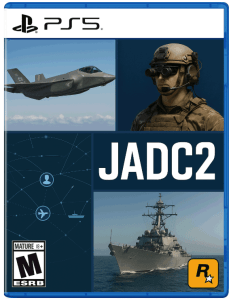 Geopolitics is the new market signal in a world defined by accelerating change and persistent uncertainty. The next decade will not be shaped by a single conflict, theater, or adversary, but by those who achieve decision advantage through data, integration, and speed. These ten hypothetical strategy games—games you wish you could buy—explore the “what if” of the decade ahead and model how power is already being contested: quietly, unevenly, and often outside the battlefield. See if you meet the player requirements, have the necessary security clearance or if your computer has the right OS and enough disk space and ram. … Continue reading
 - Valley of Death | A Strategic Guide to Government Contract Vehicles
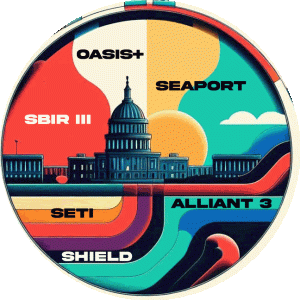 The United States government is far and away the biggest customer in the world. It spends hundreds of billions of dollars each year on defense, intelligence, technology, and professional services in a perpetual race with great power competitors and with a trillion dollar addiction to “the art of the possible” on land, at sea, in space and in cyberspace. Tax payer funds move through a complex and often opaque architecture of contract vehicles that quietly shape who can compete, how fast agencies can buy, and which companies ultimately win sustained access to government missions and ever accelerating technology refresh initiatives. … Continue reading
 - Billionaires at War: High Stakes and High Net Worth
 At the nexus of the business of government and private enterprises, a curious trend has emerged over the years—the Department of Defense’s penchant for partnering with eccentric billionaires to advance their strategic agendas. From the enigmatic Howard Hughes and the CIA’s Project Azorian to contemporary collaborations with figures like Elon Musk and Palmer Luckey, the intersection of wealth, innovation, and military might has woven a fascinating story and changed the course of history. Privateers and Visionaries during the American Revolutionary War During the American Revolutionary War, privateers—private individuals or entities authorized by the government to engage in maritime warfare—played a pivotal role. … Continue reading
 - Unfair Fights
 Unfair fights are no longer hypothetical—they are the operating systems of modern conflict. Adversaries mass cheap improvised munitions, saturate sensors, infiltrate supply chains, attack decision cycles and manipulate with ruthless precision the cost curve in the war between the factories. This report offers an assessment of our new “cheaper is better” reality in modern conflict where the battlefield is no longer defined by technological parity, but by deliberate and economic asymmetry. Across all domains and multiple theaters, adversaries have learned that overwhelming a defender does not require matching sophistication—only exceeding the defenders capacity to respond. This report will unpack how … Continue reading
 - Venture Backed Arsenal
 The U.S. defense sector is undergoing its most profound transformation since the early Cold War, and surprisingly, the epicenter isn’t a Pentagon program office—it’s a cluster of venture-backed startups operating with Silicon Valley speed. Companies like Anduril Industries, Palantir, Shield AI, Epirus, and Vannevar Labs have fused software-native thinking with aggressive capital, forming what many now call the PayPal Mafia of Defense. They are overturning decades of procurement bureaucracy and forcing the traditional primes—Lockheed Martin, Boeing, Northrop Grumman, RTX, General Dynamics, and BAE Systems—to confront a new, uncomfortable reality: innovation is no longer synonymous with size, secrecy, or multibillion-dollar cost-plus contracts. … Continue reading
 - UAP | Unidentified Anomaly or Demand Signal?
 UAP and the Defense Industry: Risks, Markets, and Contracting Opportunities. This report offers an assessment of how the UAP phenomena has shifted from a public spectacle to an engineering and acquisition problem set. This report unpacks the practical implications for defense suppliers, program managers, and capture teams: where risks are exposed for prime contractors, where business opportunities are opening for dual-use innovators and disruptors, and how business development and product strategies should evolve to deliver warfighter decision advantage where the increasing presence of unexplained phenomena are now a big part of battlefield sense making. UAP stopped being a cultural headline and became an … Continue reading
 - China in Silicon Valley
 China’s Ministry of State Security (MSS) is no longer an ocean away. From Palo Alto to Mountain View to Los Gatos and beyond, the MSS has quietly embedded itself in the pitch decks, research labs, venture portfolios, and cloud services platforms that define America’s technological edge. The world’s largest and most secretive intel agency has prosecuted their asymmetric, intel first 100 year technology strategy with a quiet, persistent presence that blends state controlled capital investments in US technology companies, land and resource acquisitions near sensitive military sites, intellectual property theft from US universities and national laboratories, social engineering and academic talent recruiting … Continue reading
 - Ontological Warfare
 Astrophysicists spend their lives describing what is nearly impossible to see. Black holes, gamma-ray bursts, dark matter—none of these can be directly observed. Instead, scientists construct ontologies, systems of relationships and definitions that allow them to reason about phenomena at the edge of human comprehension, and then communicate with clarity to each other about it. Ontologies make the invisible describable. They turn chaos into structured thought. Our world today is no less mysterious. It is governed by machine learning algorithms, autonomous systems, synthetic media, and exponential change that is difficult for humans to perceive. Influence flows not through territory but through data. Yet, like dark matter, … Continue reading
 - China in New Mexico
 China’s Ministry of State Security is no longer an ocean away. It has quietly infiltrated into America’s high deserts — the vast, remote expanses of New Mexico, Nevada and Arizona — where the nation’s most advanced science, weaponry, and space systems are born. From the high-security corridors of Sandia and Los Alamos National Laboratories to the desert test ranges of White Sands and the orbit-tracking arrays of Kirtland Air Force Base in Albuquerque, this is ground zero for the next chapter of great-power competition in the sciences. This report will unpack how Beijing is embedding itself into the “science war” of … Continue reading
 - China in New England
 Assessing Beijing’s Strategic Encirclement of America’s Premier Innovation Ecosystem. From the theft of maritime and autonomy research at elite universities to months-long cyber incursions inside a Massachusetts utility — and a quiet flow of foreign land purchases in Maine — evidence shows Chinese state actors and state-aligned hackers are operating with impunity across New England’s labs, coastlines and utilities. China in New England: No Longer an Ocean Away China’s Ministry of State Security is no longer an ocean away — it’s embedded within the fabric of New England’s economy, technology sector, and research institutions. From Cambridge laboratories to Maine’s coastal farmland, Beijing’s agents, … Continue reading
 - A Dark History of Nocturnal Combat
 The Untold Story of How the Military “Owns The Night” | The December 1989 American invasion of Panama ushered in a new set of war fighting guidelines brought about by the prolific use of night operations systems and doctrine. About 26,000 U.S. soldiers, Marines, and airmen simultaneously seized some twenty objectives while overhead, more than 100 U.S. aircraft sortied in and out of a tight, twenty-mile-radius area of operations. The whole complex undertaking was staged in the dead of night without lights. Operation Just Cause flagged a historic tactical turning point. From that time on, Western military forces were just … Continue reading
 - Algorithmically Boosted Chaos
 In the twenty-first century, the velocity of data has surpassed the velocity of data governance. Algorithms — once designed to optimize human systems — now amplify their chaos. They accelerate markets, radicalize communities, manipulate public opinion, and direct autonomous machines with unsettling precision. This report will explore how algorithms, telemetry, machine vision and machine learning have transformed risk — creating a new ecosystem of instability where data and disruption move hand in hand. The concept of Algorithmically Boosted Chaos describes a world in which every signal, click, and sensor reading contributes to a dynamic feedback loop of volatility, uncertainty, complexity, ambiguity . … Continue reading
 - War Committees | How Congress Quietly Controls Innovation
 Every year, Congress decides how billions of taxpayer dollars are spent on the technologies and weapons that shape America’s military and strategic edge. From hypersonic missiles to advanced AI, from stealth ships to cyber defense programs, the choices made in a handful of committees determine not only what the U.S. can build but also how it maintains global deterrence, power projection and freedom of action in an increasingly contested and complicated world. Those decisions—what gets built, and how much it costs are made not by generals or CEOs, but by members of Congress. This report will guide readers through the key … Continue reading
 - Made In China | AI Chips in Great Power Competition
 New Battlefields and Strategic Competition | Semiconductors are more than microchips; they are the critical infrastructure of modern life. Every smartphone, missile guidance system, and artificial intelligence model depends on them. Their production requires a uniquely complex global supply chain, with design in the United States, fabrication in Taiwan and South Korea, and critical manufacturing equipment supplied by the Netherlands and Japan. Whoever leads in this domain commands both economic and strategic advantage. Since 2018, the United States has tightened export controls to limit China’s access to advanced chips. The reasoning is clear: advanced semiconductors are the foundation for artificial … Continue reading
 - Nowhere To Hide | The AI Revolution in Surveillance & Targeting Sensors
 In a rapidly evolving and ever accelerating world, where technology seems to advance at the speed of light, one field has seen remarkable progress – the development of targeting technologies and surveillance sensors using artificial intelligence and the release of numerous large language models and generative AI tools. New systems equipped with artificial intelligence are transforming the way military and law enforcement agencies operate, providing them with unprecedented capabilities for intelligence gathering, threat detection, and more. The Rise of AI in Surveillance In this report, we will unpack how artificial intelligence has revolutionized the surveillance game, turning what was once slow … Continue reading
 - Robots From Boston | Inside the Innovation Ecosystem
 Boston has long been a crucible of American innovation, but in robotics, the city has carved out an identity that reaches far beyond its academic reputation. What began as experimental projects in the halls of MIT has grown into a thriving ecosystem of companies, labs, and entrepreneurs shaping the way machines interact with the world. From the early visionaries who transformed science fiction concepts into real technologies, to today’s engineers pushing the boundaries of autonomy and artificial intelligence, Boston has emerged as the preeminent robotics hub in the United States. The story of Boston’s robotics rise is as much about … Continue reading
 - Disrupt Five-O | Big Busts with High Tech
 When someone says “Five-O,” most people think of sirens, handcuff’s and the phrase “book em Danno”. Five-O derived from the popular 1980’s television crime show has long been cultural shorthand for the police, the enforcers of the law who patrol our streets and chase criminal suspects. But the reality of policing in the twenty-first century stretches far beyond high speed car chases. Today, non-defense law enforcement agencies wield fleets of aircraft, command maritime units, and deploy advanced surveillance technologies—sometimes rivaling or even surpassing military organizations in size, budget, and operational scope. This report takes readers behind the badge to explore the major law … Continue reading
 - Colors of Money | How the US Funds Innovation, Deterrence and Power Projection
 This report aims to demystify the U.S. federal government’s complex funding system—specifically, the way that appropriated funds are categorized, managed, and constrained by purpose and time. Commonly referred to as the “Color of Money,” these categorizations are not just budget lines in a spreadsheet; they are the legal and operational scaffolding upon which American innovation, defense capability, and day-to-day government function are built. If you want to understand how Washington actually pays for war, innovation, logistics, and operations, your journey to an informed understanding begins here. At first glance, terms like RDT&E, O&M, and Procurement may appear to be the … Continue reading
 - Taking Aim at Drones | The Fight for Aerial Control
 The modern battlefield has been transformed by the rise of unmanned aircraft systems, or drones. In January 2024, a drone strike on a U.S. base in Jordan claimed the lives of three servicemembers and wounded many others—a stark example of how these small yet potent systems are reshaping warfare. This event, among others, has spurred U.S. policymakers to reexamine the threat landscape and devise innovative countermeasures to protect military personnel and critical assets, both at home and overseas. As drones have become more ubiquitous and affordable, they now serve a variety of hostile functions, ranging from surveillance to direct kinetic … Continue reading
 - Anduril’s Edge: A New Era of Defense Innovation
 In the world of defense contractors, where legacy companies like Lockheed Martin, Boeing, General Dynamics and Raytheon have long dominated, one newcomer has shaken things up: Anduril Industries. Founded in 2017 by Palmer Luckey, the creator of Oculus VR, Anduril is pioneering a revolution in how defense technology is developed and deployed, with a sharp focus on artificial intelligence, unmanned systems, and automation. Palmer Luckey’s journey from Silicon Valley innovator to defense industry disruptor is nothing short of remarkable. Known primarily for his work in virtual reality, Luckey’s leap into defense technology might have seemed unexpected. However, his technological vision, entrepreneurial drive, and … Continue reading
 - Winning Wars with Data
 Command and Control in the Age of AI – The modern battlefield is no longer just about tanks, planes, and ships — it is a data-driven domain where speed, precision, and connectivity determine victory. With adversaries rapidly advancing their own capabilities, the United States and its allies are undergoing a significant transformation in command and control (C2) systems to ensure seamless coordination across land, sea, air, space, and cyberspace. From artificial intelligence (AI)-powered decision-making to real-time data fusion from satellites, drones, and sensors, warfare is shifting toward an era where information dominance is as critical as firepower. In this high-stakes … Continue reading
 - The Art of the (Weapons) Deal
 When Donald Trump proclaimed himself the world’s ultimate dealmaker, few imagined that one of his sharpest arenas would be the global arms market. Far from the glitz of Manhattan skyscrapers and gilded hotels, Trump found another high-stakes playground: foreign military sales. Tanks, missiles, and precision-guided bombs — these were the new chips in his version of The Art of the Deal, a realm where the buyers were nations and the negotiations carried life-or-death consequences. Under normal circumstances, the sale of American weapons abroad is a careful dance choreographed by law, diplomacy, and Congressional oversight. The Arms Export Control Act (AECA) … Continue reading
 - Weaponizing Reality
 AI-Driven Disinformation in Geopolitics and War. In the digital age, seeing is no longer believing. With the rapid advancement of artificial intelligence, deepfake technology has evolved from an amusing internet novelty into a weapon capable of rewriting reality itself. Governments, corporations, and intelligence agencies are beginning to grapple with an unsettling question: What happens when AI-generated disinformation is indistinguishable from the truth? The implications of synthetic media are staggering, as the ability to fabricate perfect audio, video, and even entire events erodes the very foundation of trust in our institutions. In a world where deception is automated and infinitely scalable, … Continue reading
 - AI in the Cockpit
 The Rise of Autonomous Wingmen The future of aerial warfare is no longer just about faster jets and better missiles—it’s about collaboration between humans and machines. The U.S. Air Force’s ambitious push toward Collaborative Combat Aircraft (CCA) represents a paradigm shift in how wars will be fought in the sky. Instead of relying solely on manned fighter jets, the next generation of air combat will feature swarms of AI-driven unmanned systems operating alongside human pilots, acting as force multipliers in complex battle scenarios. These highly autonomous aircraft, also known as “loyal wingmen,” promise to extend the capabilities of traditional warplanes … Continue reading
 - The Biggest Art Heist in History
 In the annals of art history, few events are as notorious and enigmatic as the Isabella Stewart Gardner art heist of 1990. The theft of thirteen priceless artworks, including masterpieces by the likes of Vermeer and Rembrandt, from Boston’s Gardner Museum sent shockwaves through the art world, leaving a mystery that remains unsolved to this day. But as we stand on the precipice of 2026, a new kind of art theft is underway—one that doesn’t involve masked intruders slipping through museum security, but rather algorithms quietly siphoning off the essence of creativity itself. James “Whitey” Bulger, the infamous South Boston gangster … Continue reading
 - Hiding Secrets
 From Leonardo Da Vinci to Renaissance Technologies In the annals of history, few figures command as much admiration for their ingenuity and foresight as Leonardo da Vinci. Renowned for his masterpieces of art and groundbreaking engineering sketches, da Vinci was also a man keenly aware of the risks posed by intellectual theft and industrial espionage. Many of his most advanced ideas—designs for flying machines, weapons of war, and architectural innovations—were meticulously recorded in notebooks written in Latin, often backwards. This technique, a form of mirror writing, was likely intended not only to shield his work from prying eyes but also … Continue reading
 - Are You A Terrorist?
 How can you know for sure? In a climate where the term “terrorist” is increasingly wielded as a political weapon, the question “are you a terrorist” reverberates with unsettling urgency. This article dissects the labyrinth of legal definitions, examining how everyday support—often rendered innocuous—might be interpreted as a criminal act under current statutes. The stark language of 18 U.S.C. §§ 2339A and 2339B looms large, as ordinary actions may be construed as “material support” for terrorism. This report aims to inform readers by unpacking the evolution of terrorism legislation from its origins in the 1990s to its modern-day application. Through … Continue reading
 - Drugs, Guns & Drones
 An Addicts Guide to Cartels The war on drugs has entered a new phase, one defined by the fusion of advanced surveillance technology, militarized enforcement, and the relentless adaptation of cartel operations. From the jungles of Central America to the bustling border towns of Mexico, organized crime syndicates have built empires fueled by narcotics, weapons, and human trafficking. In response, the United States has escalated its efforts, deploying special forces and expanding CIA-led drone surveillance flights deep into Mexican territory. This evolving battle raises critical questions about sovereignty, effectiveness, and the unintended consequences of militarized counter-narcotics strategies. This report aims … Continue reading
 - Cocaine Canal: How America Invaded Panama
 In the late 1980s, as the Cold War thawed in Europe, the United States faced a growing crisis in Panama. General Manuel Noriega, a dictator with ties to drug trafficking and communist regimes, was destabilizing the region and threatening the security of the Panama Canal. The US had a complex relationship with Panama, rooted in the history of the Panama Canal. The Canal, a vital artery for global commerce and naval transit, was under US control, but resentment over this foreign presence was growing in Panama. When Noriega annulled the 1989 elections and declared a state of war with the … Continue reading
 - From Wall Street to the Pentagon | The Role of Finance in Modern Warfare
 How AI, Sanctions, and Market Manipulation Are Becoming the Future of Conflict In the modern era, wars are no longer fought solely on battlefields. Instead, economic measures have emerged as the primary weapons of great powers, reshaping global influence and national security strategies. Financial warfare—ranging from AI-driven market manipulation to sanctions and digital currencies—is now a critical component of geopolitical competition. Nations, corporations, and even rogue actors are increasingly leveraging economic tools to gain strategic advantages without firing a single shot. Wall Street is no longer just a hub for financial transactions—it is now a frontline in the battle for … Continue reading
 - Cosmic Conflict: 17 Stages to Space Superiority
 The militarization of space is reshaping global power dynamics as nations recognize its potential as a contested strategic warfighting domain. Space-based technologies, including satellite constellations, directed-energy systems, and autonomous spacecraft, are driving this transformation. These innovations enable capabilities such as real-time surveillance, precision targeting, and advanced missile defense, granting strategic advantages to militarily forces that can master them. This report aims to explore the anatomy of the US Space Force and seventeen key challenges to space militarization, ranging from cybersecurity vulnerabilities to the proliferation of space debris. Emerging technologies bring new threats, such as cyberattacks on satellites and collisions with orbital debris, … Continue reading
 - You’re On My Radar
 During my time with the Air Force lifecycle management center, I worked as a systems engineer in their 30,000 man strong development, test and procurement enterprise focused on delivering the war fighters edge in air, space and cyberspace, with the group responsible for cradle to grave of all air force (and space force) weapon systems. My time there included pivotal roles in the 653rd Electronic Systems Wing, where I contributed to Link 16’s integration into modern battlefield networks and the software to enable long range standoff munitions for combat aircraft (JSOW/JAASM) like the F/A-18 and F-15. Additionally, I supported the 350th … Continue reading
 - Forever Wars and the Authorization for use of Military Force
 The legal and policy frameworks that guide the use of military force by the United States have evolved over time to address a wide spectrum of threats, ranging from terrorism and traditional armed conflicts to the increasingly significant realm of cyber warfare. Central to this evolution are the 2001 Authorization for Use of Military Force (AUMF), the application of international law in cyberspace, and the constitutional dynamics between Congress and the President regarding the deployment of armed forces. These frameworks collectively shape the United States’ approach to modern security challenges while balancing legal, ethical, and political considerations. This report aims … Continue reading
 - LAWS of War: A Concise Guide to DoD Policy on Lethal Autonomy
 Lethal autonomous weapon systems (LAWS) represent a pivotal evolution in military technology, enabling weapons to independently identify, target, and neutralize threats without direct human intervention. These systems rely on sophisticated sensors and advanced algorithms to perform critical tasks traditionally requiring human oversight. While they remain in the nascent stages of development, LAWS hold the promise of operating effectively in communications-denied or degraded environments—settings where conventional systems may fail. This capability could redefine the battlefield, offering strategic advantages in scenarios where maintaining human control is impractical or impossible. Despite widespread speculation, U.S. policy does not prohibit the development or use of … Continue reading
 - Smart Borders: How Technology is Tracking You
 The Changing Landscape of Border Security In our rapidly evolving world filled with geopolitical conflicts, terrorist attacks, human trafficking, arms smuggling, brazen assassinations’ and worse . . . border security technology has begun to radically transform how borders are managed and monitored in real-time. Technology is reshaping the role of human agents, turning them into operators of complex digital systems rather than just frontline enforcers. AI-powered tools analyze migration trends and pattern of life markers, able to detect anomalies and even predict potential threats and security breaches. Smart drones equipped with thermal imaging patrol vast, remote areas that were once impossible … Continue reading
 - Leadership, Technology, and the Nuclear Command Chain: Adapting for an Uncertain Future
 During my time with the Air Force Life Cycle Management Center (AFLCMC), I provided systems engineering and acquisition strategy support to the Air Force’s Nuclear Command, Control, and Communications (NC3) enterprise at the Air Force Nuclear Weapons Center at MITRE and Hanscom AFB in Bedford Massachusetts. Two key systems our teams supported are a vital part of the national leadership command capability (NLCC) which includes the Global Aircrew Strategic Network Terminal (Global ASNT) and the Secure Anti-Jam Reliable Tactical Terminal (SMART-T). GASNT and SMART-T are foundational components in the nuclear command, control, and communications weapon system (AN/USQ-225) providing Air Force wing command posts, … Continue reading
 - Data Center Warfare | The Race to Data Supremacy
 As global conflicts increasingly hinge on data, nations that can control and process information at scale are poised to hold significant power. The ability to gather, analyze, and distribute data rapidly and accurately has emerged as a critical strategic advantage, particularly in military and geopolitical contexts. In a world where decision-making is powered by vast datasets, the race to dominate data is intensifying. In the digital age, data is more than just a resource—it is a force multiplier, a cornerstone of global power rivalries. Nations and corporations alike are racing to harness the capabilities of advanced data centers to gain … Continue reading
 - Too Big to Fail: Financial Titans and Illuminati Theory
 Few phrases in financial history resonate as loudly as “Too Big to Fail” (TBTF). This concept, denoting institutions whose collapse would wreak havoc on the global economy, has become both a marvel of modern financial interconnectedness and a source of profound concern. But what makes these entities so critical, and how have governments around the world attempted to manage the immense risks they pose? This report will examine the intersection of financial institution wealth, power and government legislation enacted to protect consumers and ensure stability in financial markets. The Anatomy of “Too Big to Fail” At its core, TBTF is about … Continue reading
 - Polar Opposition: Americas Big Problem in the Arctic
 The Arctic is no longer a silent, frozen expanse relegated to scientific missions and indigenous habitation. It has transformed into a nexus of strategic competition, driven by melting ice caps, abundant resources, and geopolitical maneuvering. The region, often referred to as the “last frontier,” is poised to play a pivotal role in global security, resource exploitation, and trade routes. The United States, Russia, and China are now engaged in a race to shape the Arctic’s future, each bringing unique strengths and strategies to the table. In this article, we will explore five key concepts shaping the Arctic’s emerging role in … Continue reading
 - Whistleblower Technology: Revelations on the Science of Tomorrow
 In the shadowy world of the business of government and black-budget projects, the line between science fiction and reality often blurs in ways that captivate the imagination and stir up endless speculation. From clandestine moon bases to mysterious energy weapons causing bizarre ailments, these tales of forbidden technologies push the boundaries of what we believe is possible. In this article, we’ll delve into some of the most compelling and controversial topics whispered about in the halls of power. These aren’t just your run-of-the-mill classified projects; they are the stuff of legend, where the truth is often stranger than any Hollywood … Continue reading
 - War’s Game-Changers: Technological Surprise in Great Power Competition
 Technological surprises have often been decisive in shaping the outcomes of conflicts throughout history. These innovations, frequently introduced in the midst of battle, have taken opponents by surprise, leading to dramatic shifts in power dynamics. Whether through the creation of advanced weaponry, the implementation of novel tactics, or the unexpected use of existing technology, these surprises have not only produced immediate asymmetrical impact, but have also redefined military strategies and the broader conduct of military campaigns on land, at sea, in space and in cyberspace. The concept of technological surprise is not new; it has been a recurring theme in warfare … Continue reading
 - Unmanned Arsenal: Emerging Trends in The Business of Drones
 It started like any other day at the Baghdad International Airport. At 12:32 AM, a convoy of three vehicles exited the airport, carrying some of Iran’s most powerful military leaders. Among them was Major General Qassem Soleimani, commander of the Quds Force, the elite special operations unit of the Iranian Revolutionary Guard Corps. Soleimani was a figure of near-mythical status, the architect of Iran’s shadowy military strategy across the Middle East, including attacks on US Forces in Iraq, Syria & elsewhere. His presence anywhere meant trouble was brewing. Unbeknownst to the men in the convoy, they were already in the … Continue reading
 - Unseen Eyes: The Rise of Artificial Super Intelligence
 In the ever-evolving arena of the business of government, the advent of artificial super-intelligence (ASI) promises to be a game-changer. As we stand on the cusp of a new technological revolution, the integration of super-intelligent AI into the espionage toolkit is set to redefine the rules of engagement, offering unparalleled capabilities that could tip the balance of power in unforeseen ways. Artificial super-intelligence (ASI) refers to a level of artificial intelligence that surpasses the cognitive abilities of the most intelligent human minds in all practically relevant areas, including creativity, problem-solving, and emotional intelligence. Unlike narrow AI, which is designed for … Continue reading
 - Killing Americans: From the Boston Massacre to 9/11
 From the bloodstained battlefields of Lexington and Concord to the harrowing aftermath of 9/11, Americans have been relentlessly targeted by adversaries wielding extreme ideologies. They have been sprayed with automatic gunfire, shelled with deck guns from Japanese submarines, blown up with high explosives at sporting events, and more recently blasted with microwave energy beams. Thousands have lost their lives due to acts of terror prosecuted by both state and non-state actors in places like New York City, Oklahoma City, and at embassies in Beirut, Benghazi and elsewhere. However everyday Americans from the city of Boston stand out as they have been slaughtered in a remarkable series of … Continue reading
 - Behind Closed Vaults: The No Rules Game of Other Peoples Money
 The Currency of Power In the vast arena of dirty handed capitalism, there exists a game unlike any other, where the stakes are high, and the players are relentless. Welcome to the world of “other people’s money” – a realm where the pursuit of wealth transcends mere happiness and becomes a testament to the age-old adage of survival of the fittest. Here, individuals and entities engage in a perpetual contest, where the rules are ever-shifting, and the only constant is self-interest. As we delve into this exploration, we’ll uncover the essence of this game, where legitimacy becomes blurred, and huge … Continue reading
 - Exporting Security: The Biden Effect on Foreign Military Sales
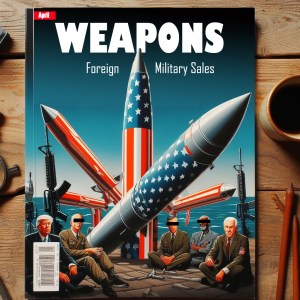 Introduction Foreign Military Sales (FMS) have undergone a remarkable evolution in recent years, driven by a complex interplay of geopolitical dynamics, technological advancements, and shifting alliances. As nation states seek to bolster their defense capabilities amidst a backdrop of global uncertainty, the FMS market has emerged as a critical avenue for the exchange of cutting-edge military technology and equipment, and ensuring the interoperability of allied forces. Over the past year, we have witnessed a huge surge in FMS transactions. In 2023, US FMS deals ballooned to $80.9 billion, and racked up a 55 percent hike in sales and deliveries to foreign countries … Continue reading
 - Charismatic Code: The Art and Science of Cyber Deception
 How does cyber deception out-smart the spy-craft of malicious actors through misdirection? Navigating the ever-changing terrain of cybersecurity requires organizations to embrace innovative defense strategies that transcend conventional approaches. Enter “Cyber Deception Ops” – an advanced trade craft that disrupts the status quo by actively misleading attackers through sophisticated countermeasures. In this exploration, we delve into the fundamentals, strategic implementation, technological enablers, and ethical dimensions of cyber deception. The journey culminates in a comprehensive understanding of how Cyber Deception Ops is reshaping the future of cybersecurity in this new digital age of clever & determined cyber adversaries. Bad Actors & … Continue reading
 - ADA2 | Replicator’s Blueprint for Autonomous Warfare
 Introduction The Department of Defense has embarked on a groundbreaking initiative that promises to reshape the face of conflict: the Replicator initiative. This ambitious undertaking, fueled by a substantial budget allocation, seeks to propel autonomous systems to the forefront of defense strategies in order to counter the military mass of peer adversaries like China & Russia with all-domain attritable autonomous systems (ADA2). As we explore the intricacies of Replicator, a closer examination of its financial underpinnings reveals more than just a technological framework for autonomous warfare—it uncovers the profound economic and geopolitical ramifications of this transformative paradigm shift. Unraveling the … Continue reading
 - Wargaming Tomorrow: Can strategy games help us predict who will win future conflicts?
 Introduction: At the nexus of strategy and simulation, the Pentagon is intensifying its commitment to harness the predictive power of advanced wargaming. Following our previous exploration of gaming skills as a secret weapon in military forces, we dive deeper into the world of virtual conflict scenarios and their potential to forecast the unpredictable landscape of future conflicts. The Rise of Wargaming Analysts: The surge in job listings for wargaming analysts on platforms like USA Jobs signals a pivotal moment in military recruitment. What was once considered a niche skill set reserved for gaming enthusiasts has emerged as a critical requirement for defense … Continue reading



















 pwkinternational.com