

(Updated December 04, 2024) Al Qaeda (AQ, alt. Al Qaida or Al Qa’eda) is a transnational Sunni Islamist terrorist organization with a network of affiliates. The group rose to global prominence after perpetrating the September 11, 2001, attacks (9/11) in the United States. Since then, sustained counterterrorism (CT) efforts by the United States and its partners have weakened the group, particularly in its historic base in Afghanistan. For several years, U.S. officials and international observers have characterized the AQ threat as stemming mainly from the group’s affiliates in Yemen and Africa. The 2024 Annual Threat Assessment (ATA) of the U.S. Intelligence Community described Africa as the “center of gravity in the Sunni global jihad,” although it did not characterize affiliates there as posing a direct threat to the U.S. homeland. U.S. policy efforts, as directed and overseen by Congress, to counter Al Qaeda have included military action, foreign partnerships, sanctions, and law enforcement activities.
In 1988, Osama bin Laden established Al Qaeda from a network of Arab and other foreign veterans of the U.S.-backed Afghan insurgency against the Soviet Union, with the aim of supporting Islamist causes in conflicts around the world. After the 1991 Gulf War, citing opposition to Saudi Arabia’s decision to host U.S. troops and other grievances, the group made the United States its primary target. Bin Laden left his native Saudi Arabia that year for Sudan, until the Taliban took power in Afghanistan in 1996 and offered refuge to AQ members and other armed Islamists.
Al Qaeda conducted terrorist attacks against U.S. and allied targets prior to 9/11, including the 1998 bombings of U.S. embassies in Kenya and Tanzania (after which the United States launched airstrikes against targets in Afghanistan and Sudan) and the 2000 attack on the USS Cole in Yemen. The United States designated Al Qaeda as a Foreign Terrorist Organization (FTO) in 1999. After 9/11, the United States launched military operations to topple the Taliban government in Afghanistan and expanded its CT efforts worldwide. Some AQ leaders fled to Pakistan, where U.S. forces killed Bin Laden in 2011. AQ attacks against U.S. and Western targets worldwide continued in the years after 9/11, but the group has not successfully carried out a major attack inside the United States since then.

The 2011 Navy Seal raid on Abbottabad netted computers and hard drives that contained detailed databases.
The Arabic word for base is . . .
“Al Qaeda”
The Al Qaeda Brand
Al Qaeda’s name has been applied liberally to numerous individuals and groups believed to be engaged in jihadist terrorism. However, while Al Qaeda does provide logistical and financial support to jihadist cells and continues to serve as the inspiration for countless jihadist groups across the globe, bin Laden did not allow any group to carry the brand name “Al Qaeda” without his approval. Groups wishing to join Al Qaeda officially must meet certain requirements before they are granted the right to adopt the name. The path to receiving acceptance from Al Qaeda’s leadership can take several months. Consider the process for the Algerian jihadist group, the Salafist Group for Call and Combat.
In September 2006, both Ayman Al-Zawahiri and the Salafist Group for Call and Combat in Algeria proclaimed that the group was joining Al Qaeda. In his pledge of allegiance, Abu Musab Abdul Wadud, the emir of the group, gave up significant autonomy to bin Laden, conceding, “We will give him the proceedings from our hands and the fruit from our hearts, to continue our jihad in Algeria as soldiers under his . . . instructions. He can use us to strike whomever and wherever he wishes, and he will find nothing but obedience from us and shall only receive what pleases him.”
However, the group continued carrying out terrorist attacks under its own name. It was not until the end of January that Abdul Wadud announced that the group was officially changing its name to Al Qaeda Organization in the Islamic Maghreb. Abdul Wadud explained that the four-month gap between its pledge and the name change was due to waiting for bin Laden’s approval: “We cared about this matter since the first day of the announcement of the joining, but nothing prevented us from concluding it, only after the consultation of Shaykh Osama, may Allah preserve him, and with his permission and choice. This obstacle was removed today with thanks unto Allah.”
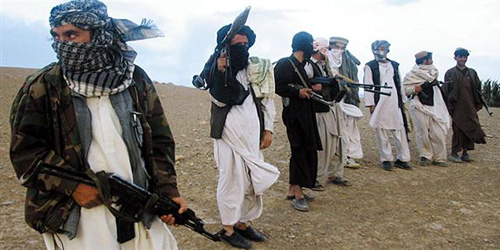
“The reason for this delay is to protect the value of the “Al Qaeda” brand name, which continues to carry the most weight in the global jihadist community.”
Should Al Qaeda prematurely allow a group to adopt its name, that group may embark on actions contrary to Al Qaeda’s ideology that could damage its reputation and embarrass its leaders. Al Qaeda needs to be sure that groups bearing its name operate in line with its long-term vision to protect its status as the leader of the global jihadist movement.
This was evident in the formation of Al Qaeda in Iraq. Abu Musab al-Zarqawi, the leader of Al Qaeda in Iraq until his death last summer, engaged in eight months of negotiations with the leaders of Al Qaeda before pledging his allegiance to bin Laden and merging his Tawhid wal Jihad group with Al Qaeda in October 2004. The reasons for the lengthy negotiations were probably in part due to the difficulty of transmitting secure messages between Zarqawi and the Al Qaeda leadership. However, both sides also likely hesitated due to conflicting beliefs in strategies and tactics on how to wage jihad.
The leaders of Al Qaeda were likely concerned with how a merger with Zarqawi might affect its brand. Zarqawi had risen to fame in Iraq through horrendous filmed decapitations of hostages that generated publicity but alienated many, some of whom Al Qaeda viewed as potential supporters. In a July 2005 letter, Zawahiri reminded Zarqawi “that we are in a media battle in a race for the hearts and minds of our Ummah.” Zawahiri chastised Zarqawi for his brutality, arguing, “Among the things which the feelings of the Muslim populace who love and support you will never find palatable are the scenes of slaughtering the hostages.” Notably, filmed beheadings from Al Qaeda in Iraq had ceased by the time Zarqawi pledged allegiance to bin Laden, perhaps indicating that even Zarqawi understood that maintaining the name of Al Qaeda trumped any publicity from such gruesome scenes of horror.
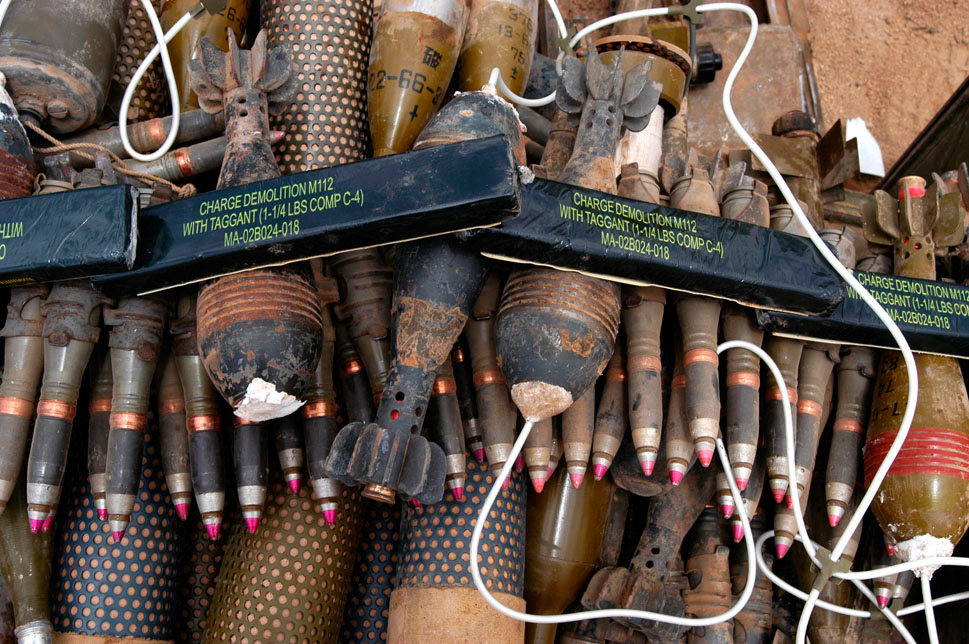
Top Weapons of Jihad
- Improvised explosive devices
- Vehicle borne explosives
- Fertilizer truck bomb
- Suicide vest bomb
- Pipe bomb
- M16A2/A4 assault rifle
- M24 sniper rifle
- M249 machine gun
- AMD-65 rifle
- RPG-7 Rocket Grenade
The decision to carry the Al Qaeda name is not an entirely easy choice for a group. Bearing the brand requires a certain amount of deference to Al Qaeda’s leadership, both operationally and ideologically, which the leaders of some groups might find distasteful. On a security level, any group touting the Al Qaeda name will instantly become an international enemy to countries around the world combating the jihadist threat. At the same time, however, there are immense benefits. The name is so powerful and widely respected within the global jihadist community that merely being associated with it affords a group instant social support, grants it a worldwide audience, and ensures a steady stream of international mujahideen willing to fight alongside the group’s members.
Though distinguishing between groups that are officially part of Al Qaeda and those that are not may seem like splitting hairs, recognizing that not all jihadist groups or individuals are members of Al Qaeda helps us to understand that the “war on terror” is not just a war on Al Qaeda or groups affiliated with it. Rather, the war on terror is a war on a global jihadist movement of which Al Qaeda is only a part, albeit extremely influential. The common thread between all jihadist groups is that they share a similar ideology. Because this ideology does not derive its legitimacy from Al Qaeda or bin Laden, the jihadist movement will continue to exist whether there is a group called Al Qaeda or not. It is this entire movement that must be debased simultaneously, not one single group.
Leadership
After Bin Laden’s death, Ayman al Zawahiri, Bin Laden’s deputy for over a decade, served as AQ’s leader. Some observers attributed purported AQ struggles (including its failure to strike inside the United States) under Zawahiri to what they described as his understated leadership, as compared to Bin Laden’s charisma. Others argued that Zawahiri’s more restrained approach was an asset that created space for AQ affiliates to pursue regionally tailored strategies and make inroads into local communities.
On July 31, 2022, Zawahiri was killed by a U.S. drone strike in Kabul, Afghanistan, though neither AQ nor the Taliban formally acknowledged his death. Al Qaeda has also not announced Zawahiri’s successor, though United Nations sanctions monitors and others assess that the de facto leader of the group is Sayf al Adl. Al Adl reportedly resides in Iran; Iran’s government has allowed some AQ figures to operate in its territory despite historic enmity between Sunni Al Qaeda and Iran’s Shia Islamic Republic. AQ leaders may view Iran as relatively safe from U.S. counterterrorism pressure, while Iranian leaders may view AQ’s presence as leverage against the United States, as well as an opportunity to support another U.S. adversary.
Structure
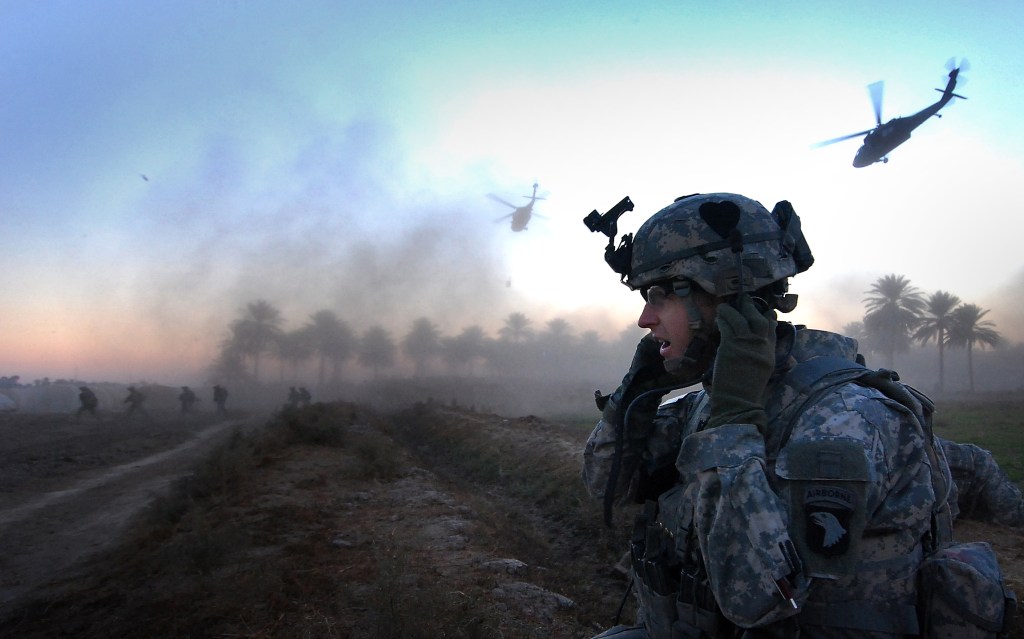
Al Qaeda once had a hierarchical organization and a relatively small and geographically contained membership. The attenuation of AQ core leadership, the growth of regional affiliates, and the rise of the Islamic State (IS) in 2014 (which challenged AQ claims to be the global leader of Islamist terrorism) have changed the organization.
Analysts have long debated how to characterize the shifting ties between AQ leadership and groups that have pledged allegiance to it, as well as the relationships among these self-described affiliates. AQ appears to have “devolved operational responsibility to regional affiliates as it has shifted away from centrally directed plotting,” per the 2022 ATA. The traditional power dynamic may even have reversed, with the affiliates now providing resources and legitimacy to the group’s core leadership; the 2024 ATA assessed that AQ affiliates “on the African continent and Yemen will sustain the global network as the group maintains its strategic intent to target the United States and U.S. citizens.” Al Qaeda may persist as a group that inspires ideologically motivated terrorism against U.S. interests around the world and opportunistically enters (or secures the allegiance of participants in) local conflicts. Changes in the relative balance of these elements of the group’s identity and structure may in turn prompt changes in the focus of U.S. counterterrorism efforts over time.
Status in Afghanistan

The Taliban’s 2021 return to power in Afghanistan has had a mixed impact on Al Qaeda. The two are long-time allies, and U.N. sanctions monitors reported in early 2024 that their “relationship remains strong,” despite Taliban efforts to “constrain some [AQ] activities.” U.N. sanctions monitors also conveyed an assessment from regional governments that Al Qaeda “continues to pose a threat in the region, and potentially beyond,” while also stating that “the group cannot at present project sophisticated attacks at long range.” That latter assessment largely aligns with U.S. government appraisals that Al Qaeda is at an “operational nadir” and maintaining a “low profile” in Afghanistan to comply with Taliban “directives against conducting external operations and recruitment.”
Who Are The Top Ten Al Qaeda Branded Regional Affiliates?

| Al-Qaeda in the Arabian Peninsula (AQAP) Location: Yemen & Saudi Arabia. Formed in 2009 from a merger of Saudi and Yemeni militant cells, AQAP is known for its global outreach and multiple attempts to carry out attacks in the U.S. and Europe. |
| Al-Shabaab Location: Somalia & East Africa Established ties with Al-Qaeda in 2012, Al-Shabaab is the wealthiest affiliate, generating over $100 million annually and wielding significant control in Somalia. |
| Jama’at Nusrat al-Islam wal-Muslimin (JNIM) Location: Mali, Burkina Faso & the Sahel Formed in 2017 through the merger of several militant groups, JNIM operates under Al-Qaeda’s banner, focusing on local insurgencies and targeting foreign interests in West Africa. |
| Al-Qaeda in the Islamic Maghreb (AQIM) Location: North Africa & the Sahel Emerging from Algeria’s civil war in the 1990s and aligning with Al-Qaeda in 2006, AQIM expanded southward, influencing jihadist movements across the Sahel region. |
| Hurras al-Din Location: Syria Established in 2018 as a splinter from Hayat Tahrir al-Sham, this group maintains strong loyalty to Al-Qaeda’s leadership and focuses on long-term jihadist goals in Syria. |
| Hayat Tahrir al-Sham (HTS) Location: Syria (Idlib Province) Originally part of Al-Qaeda’s Nusra Front, HTS broke away in 2017, seeking to distance itself from global jihadism but remains ideologically close to Al-Qaeda in practice. |
| Ansar al-Sharia (Libya) Location: Libya Founded in 2011 during the Libyan civil war, Ansar al-Sharia pledged loyalty to Al-Qaeda and played a pivotal role in local conflicts, including the 2012 Benghazi attacks. |
| Al-Qaeda in the Sinai Peninsula Location: Egypt (Sinai Region) Originating from local Islamist militants, this group declared allegiance to Al-Qaeda in the early 2000s and focuses on Egyptian military and foreign interests. |
| Ansaru (Vanguard for the Protection of Muslims in Black Africa) Location: Nigeria & West Africa A splinter group of Boko Haram, Ansaru aligned with Al-Qaeda in 2012, emphasizing regional jihad against Western influence and local governments. |
| Al-Qaeda in Iraq (AQI) – Legacy Affiliate Location: Iraq (Now Islamic State Origins) Established in 2004, AQI evolved into the Islamic State, though its origins under Al-Qaeda set the stage for future regional dominance and conflicts. |
Global Affiliates
Regional developments, notably the 2003 U.S. invasion of Iraq and the post-2011 instability that engulfed some states after Arab Spring protests, created opportunities for AQ affiliates throughout the Middle East and North Africa. Affiliates have also exploited local conflicts and political crises in Somalia and the Sahel region.
In 2004, the Iraq-based Jordanian national Abu Musab al Zarqawi formed the first AQ affiliate, Al Qaeda in Iraq (AQI). In 2006, AQI renamed itself the Islamic State of Iraq (ISI). As security conditions in Syria deteriorated in 2011, AQI/ISI began operations there as the Nusra Front. The Nusra Front soon became one of the most powerful armed groups in Syria. In 2013, AQI/ISI leader Abu Bakr al Baghdadi attempted to subsume the Nusra Front under his leadership as part of the Islamic State of Iraq and Syria (see CRS In Focus IF10328, The Islamic State: Background, Current Status, and U.S. Policy), an action Nusra and Al Qaeda rejected. In 2017, the Nusra Front merged with other Syrian factions to become Hayat Tahrir al Sham (HTS). HTS leaders, who control most of the northeastern Syrian province of Idlib, have apparently sought to distance themselves from AQ and have targeted some Islamic State personnel in areas under their control. An HTS breakoff group and rival, Hurras al Din, is seen as closer to AQ but weaker than HTS.
U.S.-backed Saudi efforts dismantled an AQ branch in the country by 2005, leaving only scattered cells remaining. In 2009, these cells united with Yemeni AQ operatives to form Al Qaeda in the Arabia Peninsula (AQAP), designated as an FTO that year. AQAP grew rapidly in the context of Yemen’s post-2011 instability and civil war. AQAP has attempted, perhaps more than any other AQ affiliate, to carry out and inspire attacks in the United States and Europe. While “in decline” due to continued CT pressure and internal frictions, the group “remains the most effective terrorist group in Yemen with intent to conduct operations in the region and beyond.” Sayf al Adl’s son reportedly resides in Yemen and “is close to AQAP leadership.”

The strikes by Houthi rebels on Saudi Arabia’s oil facilities have spurred a new arms race to acquire inexpensive weaponised drones as well as build defensive counter-measures (C-sUAS).
As its international reach grew with affiliates like AQAP, Al Qaeda attracted interest from likeminded groups. Al Shabaab, a Somali group designated as an FTO in 2008 whose founders had ties to Al Qaeda, formally pledged allegiance to AQ in 2012. Al Shabaab took over territory in central and southern Somalia in the mid-2000s and has carried out attacks against domestic and international targets in Somalia and neighboring countries. U.S. officials have described the group as Al Qaeda’s largest and wealthiest affiliate. With an estimated 7,000-12,000 fighters, it reportedly generates “over $100 million” in annual revenue. In August 2023, the Somali government launched an offensive against Al Shabaab that has since “stalled.”
Al Qaeda in the Islamic Maghreb (AQIM) first emerged as a faction in Algeria’s 1990s civil conflict. It pledged allegiance to Al Qaeda and rebranded itself as AQIM in 2006-2007. AQIM’s center of gravity moved southward and eastward after 2011, spawning a number of splinter factions and local affiliates. Even as AQIM activity in North Africa has waned, some of those offshoots have strengthened. The most prominent is the Group for Supporting Islam and Muslims (or JNIM, in Arabic), which was formed in 2017 as a merger of AQIM’s Sahel branch, an offshoot known as Al Murabitoun, and two Mali-based groups. Designated as an FTO in 2018, JNIM is most active in Mali and Burkina Faso, where military juntas have seized power, expelled French counterterrorism forces, and strengthened security ties with Russia. JNIM has alternated between a “localized détente” and direct combat with the regional IS affiliate. JNIM has also expanded into parts of coastal West African countries.
The Definition of Winning
To be effective, any challenge to the movement’s legitimacy with respect to its own rules can only come from within the Islamic community. American planners can benefit greatly from the global jihadis’ strategic writings by viewing U.S. actions and strategy in the light of the jihadis’ very different perceptions and philosophy. America’s challenge is great: Though the United States cannot simply absorb strikes crafted to create maximum destruction and refuse to respond, the global jihadis will continue to try to turn any American military response to her disadvantage. While the West cannot afford to neglect the ungoverned regions of the world, the global jihadis will continue to paint U.S. and Western military involvement in the Muslim world as an invasion. The global jihadis make clear that creating instability is a key component of their strategy, and the West must play its role in restoring order and mitigating adverse conditions in regions the jihadis would otherwise try to bring under their sole control. Taliban-style rule should not be the only option offered to the victims of anarchy.

The nuclear material needed for a bomb is small and easy to hide and smuggle.
Many radiation detectors in place at borders and around the world would not be able to detect shielded nuclear material.
The US leads global efforts to counter nuclear terrorism.
Instead, promoters of democracy should make sure such people have other alternatives, forcing the jihadist vision to compete within an open marketplace of ideas. Finally, America’s declared policy of promoting democracy is problematic as it confronts issues of religion and governance that reach beyond the global jihadis into the much broader Islamist movement. The United States would do better to seek common ground with Islam by emphasizing the core beliefs behind its democratic philosophy: representative government that responds to the people and protects human rights and dignity. The United States must also remember that democracy is no panacea; the phenomenon of increasing radicalization of British Muslim youths shows that even the opportunities offered by life in a modern democratic nation may be insufficient to defeat the idea of jihad. Global jihadis’ strategic writings show how they have translated their philosophies and experiences into plans for action; plans they continue to prosecute to this day. To understand and counter their strategy, the United States must take advantage of the insights their writings provide into their ideology, their formative experiences, and their goals.
Conclusion:
The U.S. campaign against Al Qaeda, now in its third decade, spans a wide array of policy areas. The United States has conducted airstrikes on AQ targets in at least seven countries since 2012. In 2021, the United States removed military forces from Afghanistan and initiated Operation Enduring Sentinel as the U.S. mission to conduct “over the horizon” CT operations from outside Afghanistan against threats emanating from within the country. Earlier that year, President Trump ordered the withdrawal of U.S. forces from Somalia; President Biden ordered their redeployment in 2022. Over 1,000 U.S. forces in Niger conducted intelligence, surveillance, and reconnaissance and security cooperation until a 2023 coup; in April 2024, U.S. officials stated plans to withdraw troops after the ruling junta rescinded the U.S. status of forces agreement.
The United States seeks to combat Al Qaeda and other terrorist threats “by, with, and through” local partners, including through the provision of security assistance and, in some cases, logistical, intelligence, and/or advisory support. Some observers have argued that such efforts require U.S. military presence to be successful. The United States also works to bolster partner states’ civilian law enforcement capabilities and strengthen governance.
U.S. policymakers also seek to combat Al Qaeda and other terrorist groups by addressing the drivers of extremist recruitment, by blocking the financing of Al Qaeda and its affiliates through sanctions and other tools, and by prosecuting individuals in the United States for providing support to the group and its affiliates. Congress has addressed the enduring presence of AQ affiliates through the oversight of executive branch counterterrorism policies and practices, as well as the authorization and appropriation of U.S. funds for counterterrorism activities. Periodic deliberations in Congress about the repeal or revision of the 2001 Authorization for the Use of Military Force (AUMF, P.L. 107-40) may also have implications for U.S. efforts against Al Qaeda and its affiliates.
Acknowledgements and Image Credits
{1} The Business of Jihad: Al-Qaeda’s Global Brand of Affiliates. Image Credit: PWK International Advisers.
{2} The 2011 Navy Seal raid on Abbottabad netted computers and hard drives that contained detailed databases. The Arabic word for base is “Al Qaeda”. Image Credit: PWK International Advisers.
{3} “The reason for this delay is to protect the value of the “Al Qaeda” brand name, which continues to carry the most weight in the global jihadist community.” Image Credit: Undisclosed.
{4} Top Weapons of Jihad. Image Credit US Navy Explosive Ordnance Disposal (EOD), Undisclosed.
{5} Operation Patriot Strike Nets AQI Suspects: Capt. George Morris, commander of Co. B, 2-502 Infantry, and his Soldiers hit the ground running in the opening salvo of Operation Patriot Strike in Ubaydi, Dec. 29, 2007. The operation netted ten suspected al-Qaeda conspirators, who were detained. Photo by Sgt. Ben Brody. January 02, 2008.
{6} Status in Afghanistan. Tribal Elders and US Army Interpreters. Image Credit: Undisclosed.
{7} Who Are The Top Ten Al Qaeda Branded Regional Affiliates? Map Image: Negoworks / Getty Images
{8} The strikes by Houthi rebels on Saudi Arabia’s oil facilities have spurred a new arms race to acquire inexpensive weaponized drones as well as build defensive counter-measures (C-sUAS). Image Credit: PWK International Advisers.
{9} The nuclear material needed for a bomb is small and easy to hide and smuggle. Many radiation detectors in place at borders and around the world would not be able to detect shielded nuclear material. The US leads global efforts to counter nuclear terrorism. Image Credit: PWK International Advisers.
{10} Portions of this text are credited to the Congressional Research Service which serves as a nonpartisan shared staff to congressional committees and Members of Congress. It operates solely at the behest of and under the direction of Congress. Information in a CRS Report is designed to inform public understanding of information that has been provided by CRS to Members of Congress in connection with CRS’s institutional role. CRS Reports, as a work of the United States Government, are not subject to copyright protection in the United States. Any CRS Report may be reproduced and distributed in its entirety without permission from CRS. Editorial Credit: Congressional Research Service, April 2024.
About PWK International Advisers
PWK International provides national security consulting and advisory services to clients including Hedge Funds, Financial Analysts, Investment Bankers, Entrepreneurs, Law Firms, Non-profits, Private Corporations, Technology Startups, Foreign Governments, Embassies & Defense Attaché’s, Humanitarian Aid organizations and more.
Services include telephone consultations, analytics & requirements, technology architectures, acquisition strategies, best practice blue prints and roadmaps, expert witness support, and more.
From cognitive partnerships, cyber security, data visualization and mission systems engineering, we bring insights from our direct experience with the U.S. Government and recommend bold plans that take calculated risks to deliver winning strategies in the national security and intelligence sector. PWK International – Your Mission, Assured.


















 pwkinternational.com
Pingback: Forever Wars and the Authorization for use of Military Force |
Pingback: Are You A Terrorist? |