

Introduction:
At the nexus of strategy and simulation, the Pentagon is intensifying its commitment to harness the predictive power of advanced wargaming. Following our previous exploration of gaming skills as a secret weapon in military forces, we dive deeper into the world of virtual conflict scenarios and their potential to forecast the unpredictable landscape of future conflicts.
The Rise of Wargaming Analysts:

The surge in job listings for wargaming analysts on platforms like USA Jobs signals a pivotal moment in military recruitment. What was once considered a niche skill set reserved for gaming enthusiasts has emerged as a critical requirement for defense strategy. The role of a wargaming analyst extends beyond virtual battles; it demands a nuanced understanding of geopolitics, technology, and the ability to decipher the strategic implications of simulated conflict scenarios. As the Pentagon actively seeks individuals with specialized gaming skills, it underscores the realization that wargaming is not merely a recreational activity but a transformative tool in the arsenal of national defense.
Gaming Tomorrow’s Conflicts:
In the crucible of international relations, wargaming transcends its historical roots to simulate and predict the outcomes of potential conflicts. By focusing on flashpoints like India-Pakistan, North Korea, Iran in Gaza, and the complex dynamics between the US and China in the Indo-Pacific region, these simulations go beyond mere war games. They serve as intricate models that factor in political, economic, and technological variables. As military strategists engage in these simulated conflicts, they gain insights into the potential triggers, responses, and consequences, allowing for a more informed and adaptive approach to future geopolitical challenges.
The Art and Science of Wargaming:

Embraced by military academies, including the venerable West Point, the methodology of wargaming is experiencing a renaissance. It is no longer confined to traditional war rooms but extends into virtual environments where algorithms and human decision-making converge. Wargaming is not just about simulating battles; it’s about understanding the intricate dance of strategy and tactics. As technology advances, wargaming becomes a fusion of art and science where analysts, akin to virtual commanders, navigate the complexities of global conflict. The strategic insights gained from these simulations inform military preparedness, allowing for a more proactive and adaptive approach to an ever-changing geopolitical landscape.

Help Wanted: Wargaming Analyst at Joint Chiefs of Staff:
“This position is part of the Organization of the Joint Chiefs of Staff. The incumbent will be responsible for planning, implementing, adjudicating, analyzing, and reporting on conclusions derived from joint wargaming.”
“As a Wargaming Analyst at the GS-0301-13 level, some of your typical work assignments may include: Conducts planning in support of the Chairman’s Globally Integrated Wargame (GIWG) series examining future concepts and required capabilities; Conducts lifecycle planning including wargame design, objectives, analytical objectives, analysis plan, facilities requirements, identification of wargame participants, and all supporting functions; Develops specific policies, procedures, guidelines, and practices for the GIWG program and activities under the Joint Wargaming and Experimentation Division (JWED) and Wargaming Branch (WGB) purview“
As illustrated in the very real job description above, the dynamic nature of the art and science of wargaming lies in its ability to cultivate a generation of military leaders who are not just well-versed in traditional strategy but are also adept at navigating the complexities of the virtual battlefield. At West Point and other military academies, the curriculum is evolving to include advanced wargaming simulations that challenge cadets to think beyond conventional tactics. This approach not only hones their decision-making skills but also fosters an understanding of the interplay between technological advancements and strategic outcomes. As the boundaries between the virtual and the real blur, the next generation of military leaders emerges with a unique skill set, capable of translating insights gained in simulated environments into decisive actions on the global stage.
Predicting the Unseen:
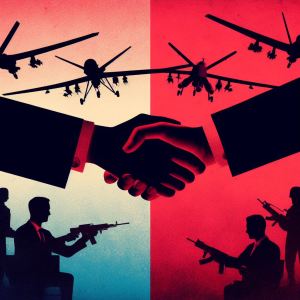
In an era where geopolitical tensions escalate with every passing day, wargaming emerges as a crucial tool in predicting the unseen. As the South China Sea becomes a focal point of international concern and the Korean Peninsula remains a potential flashpoint, wargaming provides a controlled environment to explore myriad scenarios. Analysts, armed with cutting-edge simulation software, can assess the potential outcomes of different strategies, identify vulnerabilities, and refine military responses accordingly. The virtual battlefield, with its ability to simulate the fog of war, becomes a testing ground for strategies, ensuring that military planners are not caught off guard in the face of real-world conflicts.
The power of wargaming in predicting the unseen lies in its capacity to not only simulate conflicts but also to anticipate the unpredictable variables that often define the course of real-world engagements. These simulations serve as laboratories where analysts can introduce unforeseen elements, test the resilience of strategic plans, and adapt in real-time to changing scenarios. Whether it’s the sudden emergence of unconventional tactics or unforeseen diplomatic shifts, wargaming allows military planners to refine their strategies in an environment that mirrors the complexities of the contemporary geopolitical landscape. This predictive adaptability becomes a crucial asset in preparing for the uncertainties that inevitably accompany future conflicts.


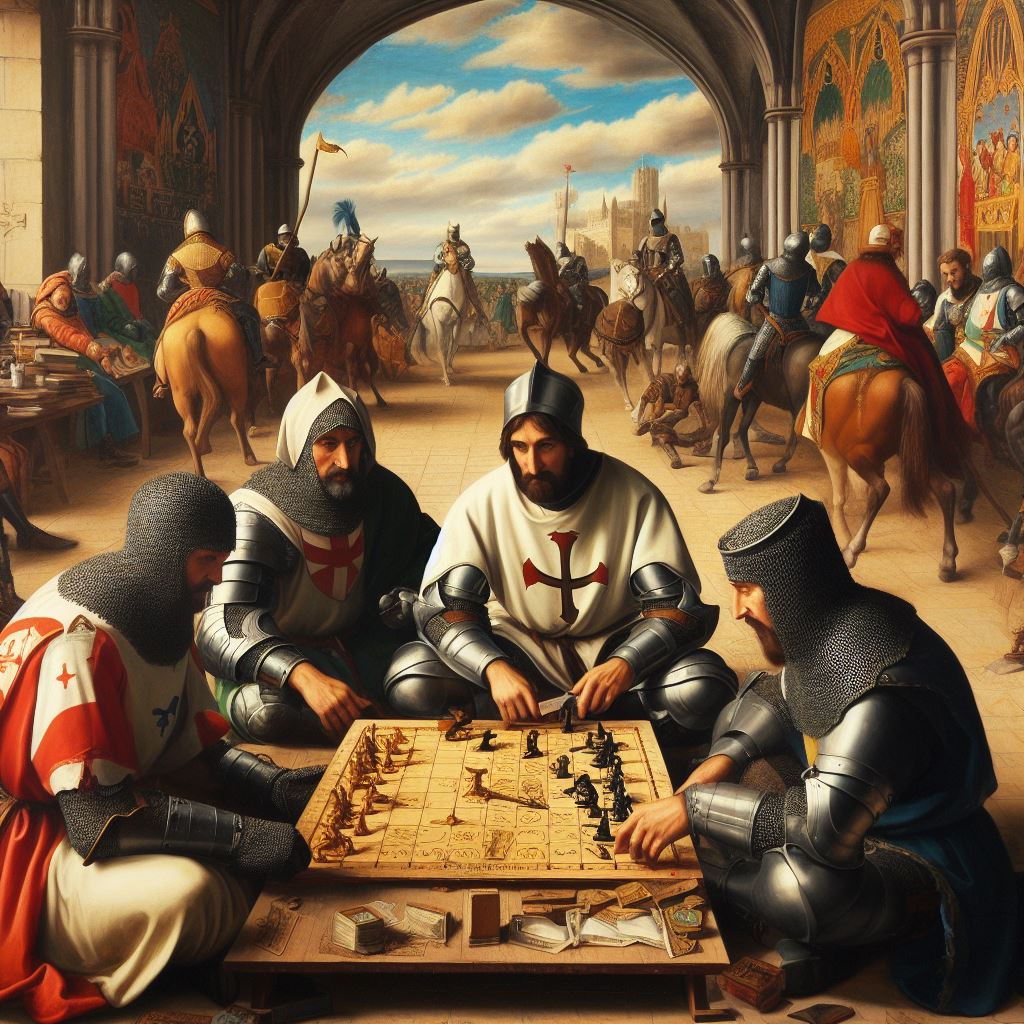

PROFESSIONAL WARGAMERS PAST & PRESENT
| The Knight’s Templar: Established in the early 12th century, were a medieval Christian military order renowned for their role in the Crusades. Beyond their battlefield prowess, these knights were also intellectuals who appreciated the value of strategy games in refining their tactical acumen. |
| RAND Corporation: A non-profit global policy think tank. RAND is renowned for its extensive use of war gaming to analyze national security issues, assess military strategies, and provide evidence-based recommendations to policymakers. |
| U.S. Army War College: A senior educational institution for the U.S. Army. The U.S. Army War College integrates war gaming into its curriculum to educate military leaders on strategic thinking, operational planning, and decision-making in complex and dynamic environments. |
| Atlantic Council: A non-partisan organization promoting international cooperation. The Atlantic Council employs war gaming to examine and address global security issues, fostering collaboration and dialogue among policymakers, experts, and stakeholders. |
| The Institute for the Study of War (ISW) is an American non profit research group and think tank headquartered in Washington DC. ISW provides research and analysis regarding issues of defense and has produced scenarios modeling future conflicts in Ukraine, Taiwan and elsewhere. |
| Center for Strategic and International Studies (CSIS): A bipartisan think tank focusing on international policy. CSIS conducts war games to explore various geopolitical and security challenges, providing actionable policy recommendations to governments and organizations. |
| The Heritage Foundation: A conservative think tank based in Washington, D.C. The Heritage Foundation employs war gaming as a tool for assessing military readiness, evaluating defense budgets, and shaping conservative perspectives on national security. |
| Royal United Services Institute (RUSI): A British defense and security think tank. RUSI utilizes war gaming to assess military capabilities, analyze strategic challenges, and provide insights into defense and security issues for the United Kingdom and beyond. |
| International Institute for Strategic Studies (IISS): A leading global authority on geopolitical and defense issues. IISS engages in war gaming to simulate and analyze regional and global security scenarios, contributing valuable insights to the international security community. |
| Institute for Defense Analyses (IDA): A federally funded research and development center. IDA utilizes war gaming to assess military capabilities, analyze force structures, and support the U.S. Department of Defense in making informed decisions on defense policy. |
Strategists in the Sandbox:

The virtual battlefield is not a mere playground; it’s a sandbox where military planners refine their skills and test their strategies. Wargaming analysts, equipped with gaming consoles and state-of-the-art simulation software, immerse themselves in the complexities of global conflict. This marriage of technological prowess and strategic acumen transforms wargaming into a dynamic and immersive experience. The sandbox becomes a laboratory where analysts explore the consequences of different decisions, refine their understanding of geopolitical dynamics, and develop strategies that can withstand the uncertainties of the modern world. It’s not just about mastering the game; it’s about mastering the art and science of war.
The sandbox of wargaming is not only a testing ground for military strategies but also a crucible for innovation. Within this virtual space, strategists experiment with novel approaches, pushing the boundaries of conventional thinking. The integration of emerging technologies, such as artificial intelligence and machine learning, amplifies the sandbox experience. Analysts explore not only how current strategies fare in simulated conflicts but also how innovative technologies can be harnessed to gain a strategic edge. As the sandbox evolves into a hub of creativity and adaptability, wargaming analysts emerge not just as players but as architects of the future of military strategy. Their ability to envision new paradigms within the sandbox becomes a linchpin in shaping the trajectory of warfare in an ever-changing world.
The First Rule of Fight Club . . .
There continues to be exciting new developments occurring in wargaming communities of practice such as Fight Club USA, Fight Club International & Fight Club United Kingdom.
These fight clubs stand as a unique and dynamic gaming experimentation group dedicated to mastering conflict and competition across all domains. Comprising a diverse membership, including serving military personnel, reservists, government employees, and passionate civilians with a penchant for professional gaming, the club fosters a community united by shared goals and interests. Operating as a grassroots organization, Fight Club distinguishes itself through a flat and less hierarchical structure, guided by a ‘warrior council’ that leads by example rather than imposition.
One of the distinctive features of Fight Club is its unwavering support for students and academia, spanning a spectrum of disciplines such as wargaming, AI, coding, IT networking, cyber, languages, and strategy. The organization’s commitment to inclusivity and innovation is reflected in its less traditional and hierarchical approach to leadership. The ‘warrior council’ exemplifies a leadership style that inspires action rather than enforces it, fostering an environment where every member’s voice holds weight and where leadership is earned through demonstrable commitment and competence.
“A Wargaming Experimentation Group Learning to Fight Across All Domains of Conflict and Competition.”
Jeff Hodges, Fight Club USA

At the core of Fight Club’s mission is the pursuit of broader awareness and inclusion of gaming techniques and procedures within defense and government organizations. Functioning as an experimental ground for new technologies and gaming methods, the group endeavors to bridge the gap between cutting-edge capabilities and widespread adoption. By leveraging gaming and simulations, Fight Club aims to catalyze a cultural shift within defense and government sectors, enhancing the efficacy of operations and strategy. Through its innovative approach, the club seeks to not only inspire its members but also contribute to the larger landscape of national defense and strategic thinking.
Conclusion:
As the Pentagon actively recruits and deploys wargaming analysts, the virtual arena becomes as crucial as the physical battlefield. The surge in interest in wargaming is not a passing trend; it’s a recognition of its transformative potential in shaping military strategy. Our exploration of the evolving landscape of wargaming reveals a symphony of strategy and simulation, where each move echoes in the corridors of national security. The future of conflict prediction lies not in crystal balls but in the hands of those who master the art and science of gaming tomorrow’s wars.
End Note:
For a deeper dive into this subject, explore our first article in this series, “Gaming Skills: The Secret Weapon of Military Forces,”
Acknowledgements and Image Credits
{1} “Simulating the Fog of War in Wargames” Image Credit: PWK International Advisers 16 October 2023
{2} Barrick, Col. Tim, The Operational Wargame Series (OWS), US Marine Corp War Fighting Lab. OWS is a tabletop game that allows the players to simulate combat between 2025 and 2050. The game is focused on the operational level of warfare and ties in the effects of military capabilities across all domains. 23 June 2021
{3} United States Military Academy at West Point, “Cadets from the Wargames club meet up to play games such as Flames of War, 7 Wonders, Band of Brothers, and Pandemic!”
{4} Members of the Joint Chiefs of Staff in the Pentagon conference room, more commonly referred to as “The Tank.” From left to right: Vice Chairman of the Joint Chiefs of Staff Air Force Gen. John E. Hyten; Chairman of the Joint Chiefs of Staff Army Gen. Mark A. Milley; Chief of Staff of the Army Gen. James C. McConville; Commandant of the Marine Corps Gen. David H. Berger; Chief of Naval Operations Adm. Michael M. Gilday; Chief of Staff of the Air Force Gen. Charles Q. Brown Jr.; Chief of the National Guard Bureau Army Gen. Daniel R. Hokanson; and Chief of Space Operations Gen. John W. Raymond. Photo By: Navy Petty Officer 1st Class Carlos M. Vazquez II, DOD VIRIN: 201211-D-WD757-0038.JPG
{5} “Predicting the Un-seen” Image Credit: PWK International Advisers 16 October 2023
{6} “Professional Wargamers Past & Present – five (5) image montage” Image Credit: PWK International Advisers 16 October 2023
{7} “Strategists in the Sandbox” Image Credit: PWK International Advisers 16 October 2023
{8} Hodges, Jeff, Fight Club International, Fight Club USA, Fight Club UK
About PWK International Advisers
PWK International provides national security consulting and advisory services to clients including Hedge Funds, Financial Analysts, Investment Bankers, Entrepreneurs, Law Firms, Non-profits, Private Corporations, Technology Startups, Foreign Governments, Embassies & Defense Attaché’s, Humanitarian Aid organizations and more.
Services include telephone consultations, analytics & requirements, technology architectures, acquisition strategies, best practice blue prints and roadmaps, expert witness support, and more.
From cognitive partnerships, cyber security, data visualization and mission systems engineering, we bring insights from our direct experience with the U.S. Government and recommend bold plans that take calculated risks to deliver winning strategies in the national security and intelligence sector. PWK International – Your Mission, Assured.
















 pwkinternational.com
Pingback: Cocaine Canal: How America Invaded Panama |
Pingback: Unfair Fights |
Pingback: Unfair Fights |
Pingback: Ten Strategy Games That Explore The Next Decade |