

Introduction
The Department of Defense has embarked on a groundbreaking initiative that promises to reshape the face of conflict: the Replicator initiative. This ambitious undertaking, fueled by a substantial budget allocation, seeks to propel autonomous systems to the forefront of defense strategies in order to counter the military mass of peer adversaries like China & Russia with all-domain attritable autonomous systems (ADA2). As we explore the intricacies of Replicator, a closer examination of its financial underpinnings reveals more than just a technological framework for autonomous warfare—it uncovers the profound economic and geopolitical ramifications of this transformative paradigm shift.
Unraveling the Funding Behind Replicator
The Department of Defense’s budget allocation earmarks $500 million dollars specifically for Replicator in 2024, and another $500 million dollars in 2025. With millions allocated to research, development, and implementation, Replicator stands as a testament to the priority placed on cutting-edge defense capabilities that can deter or fight and win in the anti-access area denial (A2AD) battle spaces of todays great power rivalries.
The financial partners and contributors to Replicator further illuminate the efforts gravity. Collaborations with leading tech conglomerates, defense contractors, and research institutions underscore the interdisciplinary nature of this initiative. Companies at the forefront of artificial intelligence, robotics, electronic warfare and cybersecurity are essential cogs in the machinery of Replicator, infusing the initiative with diverse expertise and resources.
Replicator Acquisition Strategy and Contract Award Winners
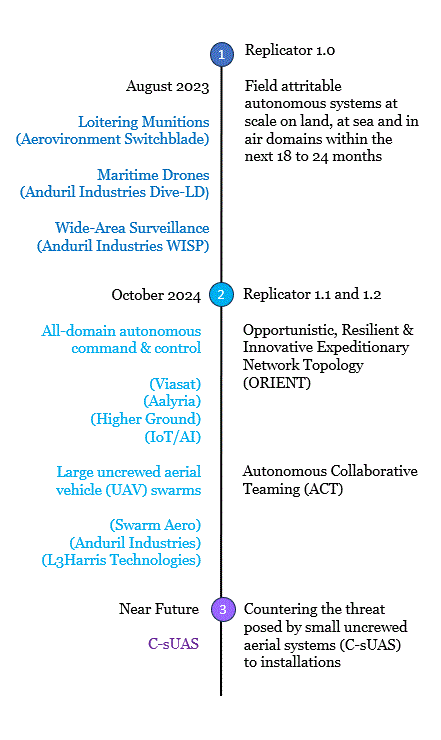
The Blueprint for Autonomous Warfare

At the heart of Replicator lies a blueprint for autonomous warfare. The goals extend beyond the conventional scope of military technology, aiming to usher in a new era where autonomous systems play a central role in defense strategies including deterrence and fight and win. The technological advancements funded by Replicator include cutting-edge developments in artificial intelligence, machine learning, and robotics. These innovations not only enhance the efficiency of military operations but also introduce unprecedented capabilities, challenging the traditional notions of conflict.
Replicator’s emphasis on autonomy introduces a paradigm shift in the very nature of warfare. The blueprint encompasses a diverse array of applications, from unmanned aerial vehicles capable of executing precision strikes to ground-based autonomous vehicles that navigate complex terrains with unparalleled accuracy. As we examine the intricacies of this blueprint, it becomes clear that Replicator is not merely a project; it is a transformative force that transcends the boundaries of conventional military strategy.
The Economic Impact: Defense Spending and Replicator
Beyond its technological implications, Replicator carries a profound economic impact, reshaping the landscape of defense spending. The colossal investment in autonomous warfare technology disrupts traditional budgetary allocations, signaling a shift in the economic dynamics of the defense industry. While skeptics question the financial prudence of such investments, proponents argue that the long-term gains in efficiency, precision, and strategic advantage outweigh the initial expenditures.

“Even when we mobilize our economy and manufacturing base, rarely have America’s war-winning strategies relied solely on matching an adversary, ship for ship or shot for shot”
Deputy Secretary of Defense Kathleen H. Hicks. DoD photo by Lisa Ferdinando.
Replicator’s Impact on Defense Industry
Comparing Replicator’s economic footprint to traditional defense expenditures reveals a changing tide in resource allocation. The economic impact is not confined to government budgets alone; it extends to the defense industry, where contractors adapt to the demand for cutting-edge autonomous technologies. The surge in research and development spending has spurred innovation, creating a ripple effect that permeates through the defense supply chain.

Replicator’s influence extends beyond government circles, permeating the defense industry and reshaping the landscape for contractors and manufacturers. As defense contractors align their strategies with the demands of autonomous warfare, new opportunities and challenges emerge. The competition for lucrative Replicator contracts has catalyzed a race to innovate, with companies vying to secure their position at the forefront of autonomous technology development.
The emergence of Replicator as a catalyst for change within the defense industry prompts a reevaluation of traditional business models. Established players face the imperative to adapt swiftly to the evolving demands of autonomous warfare, while new entrants seize the opportunity to carve a niche in this burgeoning sector. The dynamics of market competition, once defined by traditional weaponry, now pivot towards cutting-edge autonomous systems and corresponding enabling technology.
Replicator At Sea and In The Air
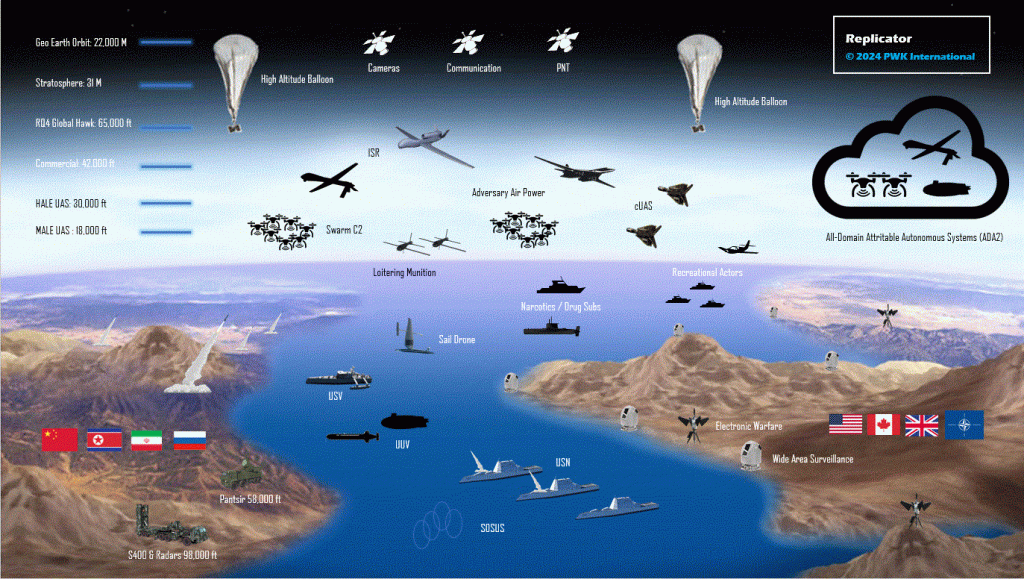
To help assess the real-world impact of Replicator in operationally relevant environments, we created this vignette that showcases the technology in action. From kamikaze drone strikes executed with surgical precision to autonomous sub-surface vehicles navigating hostile and highly contested waters, this OV1 drawing offers a glimpse into the tangible deterrence and/or fight winning outcomes of Replicator’s investment. Early success stories underscore the efforts potential to revolutionize military operations, providing commanders with unprecedented tools for informed decision-making and rapid, precise, automated and affordable kill chains.
Which companies are positioned to win the Replicator race?
| Aerovironment: A pioneer in unmanned aircraft systems, Aerovironment specializes in small drones, including the Switchblade, Raven and Puma systems, widely used by military forces for reconnaissance and surveillance. |
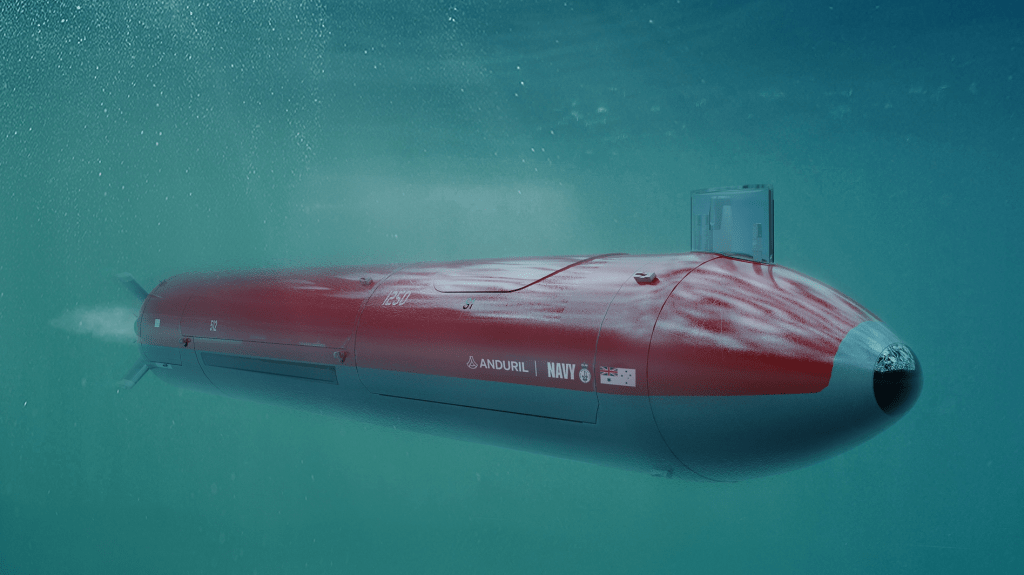
| Anduril Industries: Recognized for its cutting-edge autonomous systems, Anduril Industries develops technology like the Ghost 4 unmanned aerial vehicle and the Anvil autonomous drone deployment platform, contributing to the future of autonomous warfare. |
| FLIR Systems: While renowned for its thermal imaging technology, FLIR also provides unmanned solutions, such as the FLIR Black Hornet, a nano-drone used for military reconnaissance. |
| General Atomics Aeronautical Systems, Inc. (GA-ASI): Known for the Predator and Reaper drone series, GA-ASI is a key player in the development of unmanned aerial systems and autonomous technologies for military applications. |
| Northrop Grumman Corporation: A major player in the defense industry, Northrop Grumman specializes in autonomous systems, including the X-47B unmanned combat air vehicle and the Global Hawk reconnaissance drone. |
| Boeing: Boeing’s expertise extends to autonomous systems, with projects like the Boeing MQ-25 Stingray, an unmanned aerial refueling tanker designed for the U.S. Navy. |
| Lockheed Martin: Involved in the development of autonomous technologies, Lockheed Martin has projects such as autonomous helicopters for the U.S. Army’s Future Vertical Lift program. |
| Kratos Defense & Security Solutions: Focuses on unmanned systems, including target drones and tactical unmanned aerial systems designed for military applications. |
| DJI (Dà-Jiāng Innovations): Known for consumer drones, DJI has ventured into military applications with products like the DJI Matrice series, adapted for various professional and industrial uses. |
| Textron Systems: Specializing in unmanned systems, Textron Systems produces the Shadow Tactical Unmanned Aircraft System (TUAS) used by the U.S. Army. |
| Israeli Aerospace Industries (IAI): A global leader in aerospace and defense, IAI produces a range of unmanned systems, including the Heron and Harop drones. |
| Elbit Systems: Involved in the development of unmanned aerial systems, including the Hermes and Skylark drones. |
| Autonomous Solutions, Inc. (ASI): Focuses on autonomous vehicle technology, with applications in defense, including unmanned ground vehicles for military use. |
The Public and Political Response
As Replicator unfolds, the public’s awareness and perception of autonomous warfare technologies become integral to the discourse. The unveiling of Replicator sparks public debates on the ethical, moral, and strategic implications of investing in autonomous systems. Transparency and public accountability in government decisions come under scrutiny as citizens demand a clearer understanding of the risks and benefits associated with Replicator.
Future Outlook: Replicator and the Evolution of Conflict
Political responses to Replicator vary, reflecting the complex interplay between national security imperatives and public sentiment. Policymakers navigate a delicate balance, weighing the strategic advantages offered by autonomous technologies against the ethical concerns raised by their constituents. The public and political response to Replicator serves as a barometer for the societal acceptance of autonomous warfare and the role of technology in shaping national security policies.

Speculating on the future, we explore the potential trajectory of Replicator and its broader impact on the evolution of conflict. Autonomous systems, once relegated to the realm of science fiction, are poised to become integral components of military arsenals worldwide. The geopolitical landscape may witness a recalibration of power dynamics as nations leverage autonomous technologies to gain strategic advantages on the global stage.
Replicator’s influence extends beyond national borders, shaping international relations and security dynamics. The rise of autonomous warfare introduces a new dimension to conflict resolution, prompting nations to reevaluate their military doctrines and strategic postures. The future outlook for Replicator raises fundamental questions about the nature of warfare in the 21st century and the ethical considerations that govern the use of autonomous systems on a global scale.
Conclusion
Replicator’s Blueprint for Autonomous Warfare is not merely a financial exploration; it is a journey into the heart of a transformative initiative that transcends the boundaries of traditional military strategy. From the labyrinth of defense budgets to the technological blueprint for autonomous warfare, Replicator emerges as a force that reshapes economic, technological, and geopolitical landscapes.
As we navigate the financial intricacies, technological advancements, and real-world implications of Replicator, the interconnectedness of funding, technology, and conflict becomes increasingly evident. The call to follow the money is not just an investigative pursuit; it is an invitation to understand the profound changes that Replicator introduces to the future of conflict. In the currency of defense spending, Replicator marks an investment that extends beyond dollars and cents—it is an investment in the evolution of warfare itself.
Image Credits & Acknowledgements:
{1} ADA2: Replicator’s Blueprint for Autonomous Warfare, Image Credit: PWK International Advisers November 5, 2023.
{2} Sea Hunter is an autonomous unmanned surface vehicle (USV) launched in 2016 as part of the DARPA Anti-Submarine Warfare Continuous Trail Unmanned Vessel (ACTUV) program. Sea Hunter was not originally part of the Replicator Initiative. Image Credit: Petty Officer 3rd Class Aleksandr Freutel, Commander, U.S. 3rd Fleet. Copyright: Public Domain
{3} Deputy Secretary of Defense Kathleen H. Hicks. DoD photo by Lisa Ferdinando.
{4} Lance Cpl. Isiah Enriquez, a rifleman with 1st Battalion, 2nd Marine Regiment, 2nd Marine Division, launches a Switchblade 300 loitering munition during a training exercise at Camp Lejeune, N.C., July 7, 2021. Photo credit: Pfc. Sarah Pysher, United States Marine Corps.
{5} Replicator Vignette Drawing. “Early success stories underscore the efforts potential to revolutionize military operations, providing commanders with unprecedented tools for informed decision-making and rapid, precise, automated and affordable kill chains”. Drawing Credit: PWK International Advisers
{6} Anduril Industries Ghost Shark: Anduril is working on a co-shared $140 million incentive contract to develop an Australian Extra Large Autonomous Underwater Vehicle (XL-UAV) in collaboration with the Royal Australian Navy (RAN) and Defense Science and Technology Group (DSTG). Photo credit Anduril Industries.
{7} FLIR Black Hornet 4: The Black Hornet 4 is a covert UAV that provides situational awareness and incorporates a high-resolution Thermal Imager (TI), and an Electro Optical (EO) camera. Photo credit FLIR
{8} DARPA UAS mesh networking. Photo credit: DARPA
About PWK International Advisers
PWK International provides national security consulting and advisory services to clients including Hedge Funds, Financial Analysts, Investment Bankers, Entrepreneurs, Law Firms, Non-profits, Private Corporations, Technology Startups, Foreign Governments, Embassies & Defense Attaché’s, Humanitarian Aid organizations and more.
Services include telephone consultations, analytics & requirements, technology architectures, acquisition strategies, best practice blue prints and roadmaps, expert witness support, and more.
From cognitive partnerships, cyber security, data visualization and mission systems engineering, we bring insights from our direct experience with the U.S. Government and recommend bold plans that take calculated risks to deliver winning strategies in the national security and intelligence sector. PWK International – Your Mission, Assured.



















 pwkinternational.com
Pingback: Unmanned Arsenal: Emerging Trends in The Business of Drones |
Pingback: Moneyball Conflicts: The Trump Effect on the Business of War |