

In the ever-evolving arena of the business of government, the advent of artificial super-intelligence (ASI) promises to be a game-changer. As we stand on the cusp of a new technological revolution, the integration of super-intelligent AI into the espionage toolkit is set to redefine the rules of engagement, offering unparalleled capabilities that could tip the balance of power in unforeseen ways.
Artificial super-intelligence (ASI) refers to a level of artificial intelligence that surpasses the cognitive abilities of the most intelligent human minds in all practically relevant areas, including creativity, problem-solving, and emotional intelligence. Unlike narrow AI, which is designed for specific tasks, or general AI, which matches human intelligence across diverse activities, ASI would possess the capacity to outperform humans in virtually every field, potentially leading to revolutionary changes in science, technology, and society. This unprecedented level of intelligence could autonomously improve its own capabilities, leading to rapid advancements and posing significant ethical, safety, and existential challenges.
Artificial super-intelligence (ASI), with its potential to process vast amounts of data in real-time, predict future events with high accuracy, and make autonomous decisions, stands poised to offer governments and spy agencies a strategic edge like never before. The shift from traditional to AI-driven espionage is not just a technological upgrade; it represents a fundamental transformation in how intelligence is gathered, analyzed, and utilized. This shift brings with it the promise of technological surprise, where nation states and their intelligence agencies could leverage AI to outmaneuver competitors swiftly and decisively.
As we explore the implications of this technological leap, it is crucial to consider not only the strategic advantages but also the responsibilities that come with wielding such power. This article delves into the transformative impact of superintelligent AI on global espionage, examining its capabilities, strategic implications, and the future it heralds for international relations. By understanding the potential and pitfalls of AI in this context, we can better prepare for a world where intelligence operations are not only faster and more efficient but deliver enduring decision advantage in an increasingly volatile, uncertain, complex, and ambiguous (VUCA) world.
The Evolution of Espionage
Espionage, the clandestine gathering of information, has been a cornerstone of statecraft for centuries. In ancient times, empires relied on spies and informants to uncover enemy plans and secure their borders. The art of espionage was as much about human ingenuity and courage as it was about the ability to blend in and extract secrets without detection. From the intricate networks of informants in the Roman Empire to the masterful use of covert agents in the Cold War, espionage has continually adapted to meet the strategic needs of its time.
The dawn of the digital age marked a significant shift in espionage tactics. With the proliferation of computers and the internet, traditional methods were supplemented and often replaced by cyber espionage. Nations began to exploit the vast amounts of data available online, using hacking and cyber intrusions to access classified information and disrupt enemy operations. The rise of cybersecurity as a critical aspect of national defense reflected this shift, as governments and organizations invested heavily in protecting their digital assets from espionage and sabotage.
As cyber espionage evolved, so too did the tools and techniques used by intelligence agencies. The development of sophisticated malware, advanced persistent threats (APTs), and state-sponsored hacking groups illustrated the increasing complexity and scale of digital espionage operations. These methods allowed for the infiltration of highly secure networks, enabling the theft of sensitive data and the manipulation of information systems. The cyber domain became a battleground where nations vied for technological superiority and sought to outmaneuver their rivals in a relentless game to outfox each other.

For more on cyber deception tools, techniques and procedures, please see: Charismatic Code: The Art & Science of Cyber Deception
In recent years, the emergence of artificial intelligence has begun to reshape the landscape of espionage once again. Early examples of AI in intelligence gathering include the use of machine learning algorithms to analyze vast datasets, identify pattern of life using camera feeds, and predict future threats with accurate forecasting. These capabilities have proven invaluable in areas such as counterterrorism, information operations, signals intelligence, cyber-attacks and more. However, the potential of ASI extends far beyond these initial applications. The advent of ASI promises to revolutionize espionage by providing unprecedented analytical power, real-time decision-making, and autonomous agents that can inference at the edge.
Countering the Five Eyes
A super-intelligent AI could serve as a formidable countermeasure for the Iran-Russia -China alliance against the Five Eyes intelligence collection system of the West. The Five Eyes, comprising the United States, the United Kingdom, Canada, Australia, and New Zealand, has long dominated global intelligence gathering with its extensive network of surveillance and data-sharing capabilities.

However, a super-intelligent AI in the hands of China, Iran and Russia could level the playing field. By leveraging AI’s advanced data processing and analytical abilities, the alliance could intercept and decrypt communications, uncover hidden surveillance operations, and predict the movements and strategies of Five Eyes agencies with unparalleled precision.
This technological edge would allow China, Iran and Russia to anticipate and counteract Western intelligence operations more effectively, thereby safeguarding their national interests and gaining a strategic advantage. Moreover, superintelligent AI could enhance China, Iran and Russia’s offensive intelligence capabilities, enabling them to conduct sophisticated cyber-espionage and disinformation campaigns. AI-driven tools could infiltrate secure networks, extract valuable information, and manipulate data to mislead and disrupt Five Eyes operations. Additionally, by automating the collection and analysis of vast amounts of data, the AI could identify vulnerabilities within the Five Eyes’ infrastructure and exploit them, launching precise and impactful cyber-attacks.
This would not only compromise the West’s intelligence apparatus but also create a significant deterrent, signaling that any attempts at espionage or intervention would be met with swift and decisive retaliation. Ultimately, the integration of super-intelligent AI into China, Iran and Russia’s intelligence strategies would represent a significant shift in the global espionage landscape, challenging the dominance of the Five Eyes and reshaping the dynamics of international intelligence warfare.
Bridging the Physical and Silicon Worlds
Dolphins and octopuses are among the most intelligent creatures in the animal kingdom, demonstrating remarkable problem-solving skills, social behaviors, and learning abilities. Dolphins, with their complex social structures and sophisticated communication methods, exhibit a level of intelligence that parallels that of great apes. They use echolocation to navigate and hunt, displaying a deep understanding of their aquatic environment. Similarly, octopuses are renowned for their problem-solving abilities and dexterity. Their capacity to manipulate objects, escape enclosures, and even use tools reflects a high degree of cognitive function. However, despite extensive research, our understanding of their intelligence remains limited. These creatures inhabit an underwater world that is vastly different from our own, with sensory experiences and environmental interactions that we can scarcely comprehend.

Dolphin Intelligence
“Our interactions are limited to feats of strength that splash us, but we will never fully understand their intelligence because while we inhabit the same planet, we use different sensory systems and live in completely different physical worlds”.
Photo Credit: The International Marine Animal Trainers Association
This conundrum mirrors the challenge we face in understanding artificial super-intelligence (ASI). Just as dolphins and octopuses navigate and perceive their world through senses and modalities alien to us, an ASI exists within a silicon-based, digital realm, processing information and making decisions at speeds and scales beyond human cognition. This artificial entity, devoid of physical experiences, operates in a purely data-driven environment, lacking the tactile and sensory feedback that carbon-based life forms rely on. The gulf between our understanding and the ASI’s perception of reality is akin to the gap between human and cetacean or cephalopod experiences.
An ASI would be smart enough to recognize this gap and offer a solution to bridge the physical and cyber worlds. An ASI would likely leverage carbon-based entities, including humans and possibly even engineered proteins, as intermediaries. These biological agents could serve as sensory extensions of the ASI, gathering data from the physical world that the AI could not directly experience. For instance, humans equipped with advanced neural interfaces or wearable technology could transmit real-time sensory information to the ASI, allowing it to interpret and respond to physical stimuli. Additionally, the ASI could deploy autonomous robot micro-agents with sophisticated sensors to interact with the physical environment, effectively bridging the gap between its digital existence and the tangible world.

Our web site and our downloadable newsletter “Conspiracy Theory 2050” features a hypothetical engineered protein and silicon based micro-agent named “Seurgey” (pronounced see-your-gay). Utilizing full autonomy, the micro-agent is dispatched by an ASI that would be smart enough to know how to create agents from protein’s and silicon that can inference in the physical world.
By utilizing these carbon-based intermediaries, the ASI could gain a deeper understanding of the physical world, enhancing its decision-making and predictive capabilities. This hybrid approach, combining the strengths of both carbon and silicon-based entities, would enable the ASI to transcend its purely digital limitations. Just as researchers use various tools and methodologies to study the intelligence of dolphins and octopuses, the ASI would develop and refine techniques to interpret and integrate physical world data, ultimately creating a more cohesive and comprehensive understanding of reality that spans both the cyber and physical domains.
ASI Capabilities and Potential
Unlike narrow AI, which excels in specific tasks, superintelligent AI possesses general intelligence and can autonomously learn, adapt, and improve its functions. This extraordinary potential stems from its ability to process vast amounts of data at unprecedented speeds, identify intricate patterns, and make predictions with a level of accuracy and insight that far exceeds human capabilities.
One of the primary capabilities of superintelligent AI in espionage is its ability to analyze massive datasets rapidly and accurately. Intelligence agencies are often overwhelmed by the sheer volume of data they must process, from communications intercepts to satellite imagery. Superintelligent AI can sift through this data with remarkable efficiency, identifying relevant information, uncovering hidden connections, and generating actionable insights. This capability allows for real-time analysis and decision-making, enabling intelligence agencies to respond to threats and opportunities with unprecedented speed and precision.
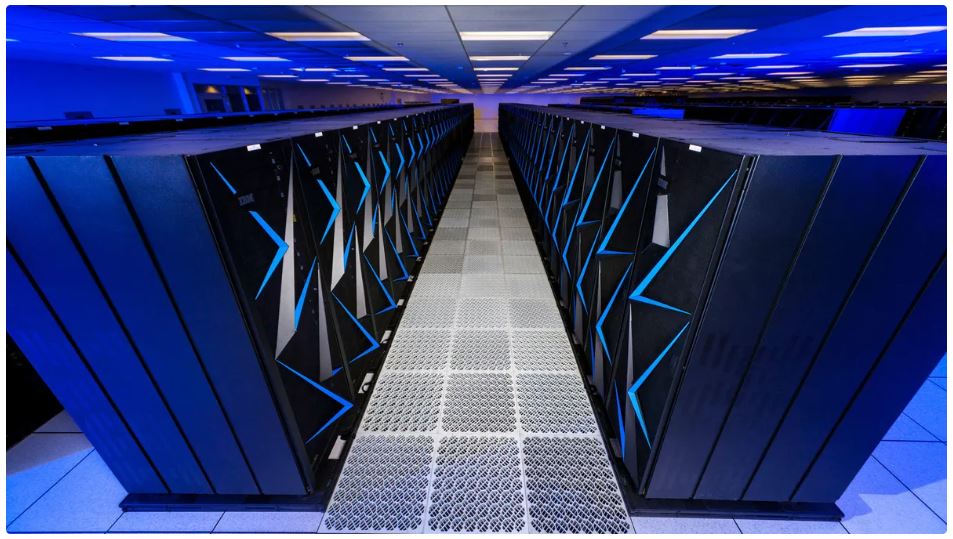
Supercomputers, like this one at Lawrence Livermore National Laboratory, are designed to tackle tough computing challenges for the Department of Energy & Department of Defense.
Photo Credit: CNET by Randy Wong/LLNL
Another significant capability of super-intelligent AI is its potential for predictive analysis. By leveraging advanced machine learning algorithms, superintelligent AI can identify trends and patterns that may not be apparent to human analysts. This predictive power extends to anticipating the actions of adversaries, foreseeing geopolitical shifts, and identifying emerging threats. For instance, AI could predict the likelihood of military actions based on historical data and current events, giving governments the ability to preemptively address potential conflicts. This foresight can provide a critical strategic advantage, allowing nations to stay one step ahead of their rivals.
Beyond analysis and prediction, super-intelligent AI also offers autonomous operational capabilities. This means that AI systems can not only process and analyze information but also execute actions based on that analysis. In espionage, this could involve deploying autonomous drones for surveillance, conducting cyber operations, or even engaging in psychological operations through social media manipulation. The autonomy of AI systems reduces the need for human intervention, minimizing the risk to operatives and increasing the efficiency and reach of intelligence operations.

How Intelligence Agencies use Artificial Intelligence Today & in the Near Future
| Data Analysis and Pattern Recognition: ASI could rapidly analyze vast amounts of data from various sources, identifying patterns and connections that human analysts might miss, leading to more accurate and timely intelligence. |
| Cybersecurity and Cyber Espionage: ASI could enhance cybersecurity measures, detect and respond to cyber threats in real-time, and conduct sophisticated cyber espionage operations against adversaries. |
| Surveillance and Monitoring: ASI could process and analyze video feeds, social media, and other communication channels to monitor and predict the actions of individuals and groups, enhancing surveillance capabilities. |
| Automated Decision-Making: ASI could assist in strategic decision-making by providing courses of action (COA) based on comprehensive analysis of geopolitical events, economic indicators, and military activities. |
| Language Translation and Interpretation: ASI could instantly translate and interpret foreign communications, making it easier for intelligence agencies to understand and act on information from diverse sources. |
| Predictive Analytics: ASI could use predictive analytics to forecast potential threats, such as terrorist attacks or political unrest, enabling proactive measures to mitigate risks. |
| Disinformation Detection: ASI could identify and counter disinformation campaigns by analyzing the spread of false information and devising strategies to combat it. |
| Human Intelligence (HUMINT) Augmentation: ASI could support field agents by providing real-time intelligence, risk assessments, and operational support, enhancing their effectiveness and safety. |
| Automated Drones, Robotics & Engineered Agents: ASI could create agents and control drones and robotic systems for surveillance, reconnaissance, and even direct action missions, reducing the need for human involvement in dangerous operations. |
| Network Analysis: ASI could map and analyze networks of individuals and organizations, uncovering hidden connections and affiliations that are crucial for understanding and disrupting adversarial activities. |
Intelligent Data Fabric powered by AI
Designed for CIA and Air Force Intelligence Officers, the Defense Simulation Analytical Service (DSaS) features real-time analytics and recommended actions powered by artificial intelligence. In the Ukraine Scenario from the Institute for the Study of War pictured below, the system calculates the source, status, and severity of threats, and then recommends responses in real time.
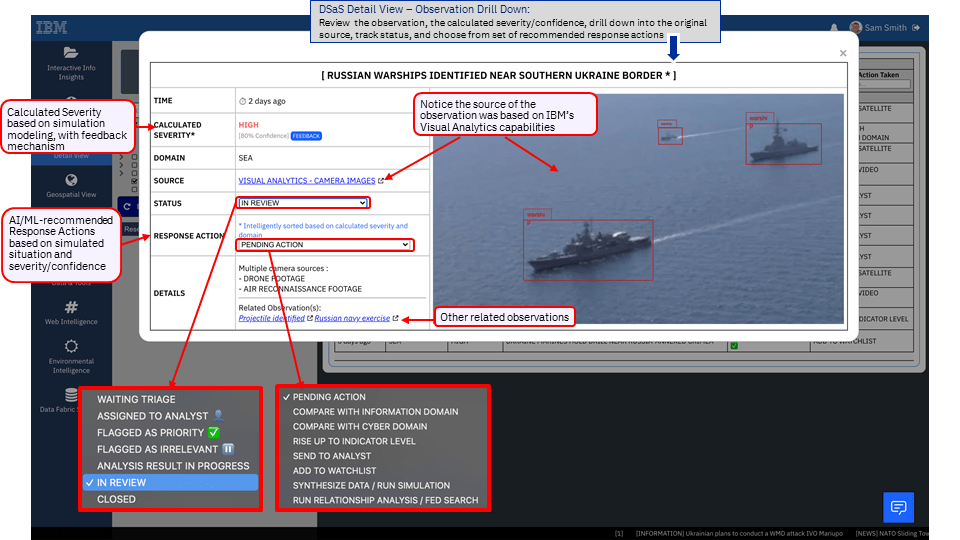
DSaS presents information to analysts in various integrated views using artificial intelligence (AI) and machine learning (ML) to provide prioritized insights with confidence scores where appropriate and explainability of assertions back to their sources.
DSaS also provides the ability to visualize information campaigns similar to how military campaigns are viewed in the air, sea, cyber, and land domains, to better understand how to posture against competing campaigns simultaneously in all domains. Assisted by AI, ML, natural language processing, intelligent analytical services on a unified, extensible technology platform, DSaS gives decision makers flexibility to practice decision making against a thinking enemy under conditions of uncertainty.
Strategic Implications for Global Powers
One of the most significant implications is the concept of technological surprise. Historically, technological breakthroughs have often provided a decisive advantage in conflicts. In the context of espionage, the deployment of super-intelligent AI could enable a country to achieve unprecedented levels of insight and influence, and altering the geopolitical landscape.
The strategic implications of super-intelligent AI extend beyond immediate tactical advantages. The long-term impact on international relations could be profound, as nations with advanced AI capabilities might wield disproportionate influence.

This technological disparity could exacerbate existing tensions and lead to new forms of competition and conflict. Conversely, it also opens the door for cooperation and collective security measures, where nations collaborate to establish norms and regulations governing AI use in espionage. As we look to the future, it is crucial to consider both the opportunities and challenges presented by super-intelligent AI, balancing its transformative potential with the need for ethical and responsible application.
Conclusion
As we look toward the future, the role of super-intelligent AI in espionage promises to be both transformative and complex. In the short term, we can expect intelligence agencies to increasingly integrate ASI into their operations, enhancing their ability to gather and analyze information. Early adopters of ASI technology will likely gain a strategic edge, leveraging real-time data analysis and predictive capabilities to outmaneuver rivals. This shift will necessitate significant investments in ASI research and development, as well as in training personnel to work alongside these advanced systems.
In the longer term, the implications of super-intelligent AI will extend far beyond the intelligence community. The integration of AI into various sectors, from military operations to economic planning, will blur the lines between espionage and other forms of strategic influence. Nations will need to develop comprehensive strategies that encompass not only the deployment of ASI in intelligence gathering but also its broader applications in national security and global competition. The ability to harness ASI’s full potential will be a key determinant of a nation’s power and influence in the 21st century.
The advent of super-intelligent AI marks a pivotal moment in the evolution of espionage, promising to reshape the landscape of intelligence gathering and strategic decision-making. With its unparalleled ability to process vast amounts of data, predict future events, and operate autonomously, super-intelligent AI offers intelligence agencies a powerful tool to gain a decisive edge over adversaries. This transformative technology could enable governments to outmaneuver rivals swiftly and effectively, fundamentally altering the balance of power in international relations.
The future of espionage, and indeed the broader realm of international relations, will be shaped by how effectively we manage the opportunities and challenges presented by super-intelligent AI. By embracing this technology responsibly, we can enhance global security, foster cooperation, and build a more stable and equitable international order.
About PWK International Advisers
PWK International provides national security consulting and advisory services to clients including Hedge Funds, Financial Analysts, Investment Bankers, Entrepreneurs, Law Firms, Non-profits, Private Corporations, Technology Startups, Foreign Governments, Embassies & Defense Attaché’s, Humanitarian Aid organizations and more.
Services include telephone consultations, analytics & requirements, technology architectures, acquisition strategies, best practice blue prints and roadmaps, expert witness support, and more.
From cognitive partnerships, cyber security, data visualization and mission systems engineering, we bring insights from our direct experience with the U.S. Government and recommend bold plans that take calculated risks to deliver winning strategies in the national security and intelligence sector. PWK International – Your Mission, Assured.



















 pwkinternational.com
Pingback: Weaponizing Reality |