
Technological surprises have often been decisive in shaping the outcomes of conflicts throughout history. These innovations, frequently introduced in the midst of battle, have taken opponents by surprise, leading to dramatic shifts in power dynamics. Whether through the creation of advanced weaponry, the implementation of novel tactics, or the unexpected use of existing technology, these surprises have not only produced immediate asymmetrical impact, but have also redefined military strategies and the broader conduct of military campaigns on land, at sea, in space and in cyberspace.
The concept of technological surprise is not new; it has been a recurring theme in warfare for centuries. From the invention of the longbow in medieval Europe to the sudden appearance of stealth technology in the late 20th century, history is replete with examples where one side gained a decisive advantage through innovation. These surprises often force a rapid reassessment of tactics, strategy, and even the political and industrial landscape, as nations scramble to adapt to the new era of technological and industrial production competition.
In many cases, the impact of these technological surprises extends far beyond the battlefield. They can alter the trajectory of entire conflicts, influence the development of future military technologies, and even change the nature of warfare itself. The sinking of the battleship Roma by a guided bomb, the innovative use of bouncing bombs by the Dam Busters, and the deployment of semi-submersible drones by Ukrainian forces are just a few examples of how technological surprise has led to asymmetric outcomes in warfare.
As we explore seven key instances of technological surprise in military history, we will see how these innovations have not only shifted the balance of power in specific conflicts but also set the stage for new eras of combat. Each example illustrates the profound impact that unexpected technological advances can have, underscoring the importance of innovation and adaptability in the ever-evolving landscape of today’s anti-access area denial (A2AD) great power rivalries.
The Dam Busters
In May 1943, a daring mission by the Royal Air Force’s 617 Squadron, later known as the Dam Busters, introduced a new kind of technological surprise in World War II. The mission, codenamed Operation Chastise, aimed to destroy key German dams in the Ruhr Valley, crippling the Nazi war machine by flooding factories and disrupting hydroelectric power. The success of the mission hinged on a revolutionary new weapon: the “bouncing bomb,” designed by engineer Barnes Wallis.
The bouncing bomb was a cylindrical, spinning device that skipped over the water’s surface before sinking at the dams base and detonating against the walls. The challenge lay in its precise deployment, requiring low-altitude flight and extreme accuracy. Despite the inherent dangers, the Dam Busters executed the mission with remarkable skill, breaching the Möhne and Edersee dams. The resulting floods devastated the industrial heartland of Germany, causing significant material damage and diverting resources away from the Eastern and Western Fronts.

Operation Chastise was not just a tactical success but a strategic one, demonstrating how innovative technology, when combined with audacious strategy, could lead to disproportionate effects. The Dam Busters’ raid remains a quintessential example of how technological surprise can alter the course of a conflict, leveraging ingenuity to achieve significant military and symbolic victories.
FritzX: Worlds First Precision Glide Bomb
In September 1943, the German Luftwaffe deployed a groundbreaking weapon that would become a forever imitated example of technological surprise in naval warfare. The Fritz X, an early precision-guided bomb, was used to devastating effect against the Italian battleship Roma. This radio-controlled bomb was capable of striking with unprecedented accuracy, bypassing traditional defenses.
The impact of the Fritz X on the Roma was catastrophic. A direct hit led to the ship’s destruction, resulting in the loss of 1,350 lives, including Admiral Carlo Bergamini. This marked a significant shift in naval warfare, demonstrating that even the most heavily armored ships were vulnerable to the worlds first precision-guided munitions. The success of the Fritz X also underscored the increasing importance of technology in achieving tactical superiority, foreshadowing the modern era of smart weapons and precision strikes.

The sinking of the Roma had far-reaching consequences. It not only showcased the deadly potential of guided bombs but also signaled a new era where air power and advanced technology could decisively alter the balance of power at sea. The Fritz X’s deployment marked a turning point, forcing navies worldwide to rethink their strategies and defenses against this emerging threat, setting the stage for future developments in missile technology and naval warfare tactics.
Unmanned Surface Vessel and Semi-Submersibles
In the ongoing conflict between Ukraine and Russia, technological surprise once again plays a critical role, this time through the innovative use of semi-submersible drones by Ukrainian forces. These drones, small and difficult to detect, were used to strike Russian warships, including the flagship Moskva. The attacks showcased the effectiveness of unconventional warfare tactics, where low-cost, high-impact technologies can deliver significant blows against a superior force.

This development marked a significant shift in naval engagements, highlighting how smaller nations can leverage technology to challenge larger, more traditional military powers. The use of semi-submersible drones in Ukraine not only disrupted Russian naval operations but also demonstrated the evolving nature of warfare, where ingenuity and surprise can overcome sheer military might. The success of these drones has implications beyond the immediate conflict, signaling a broader trend in military strategy where asymmetric tools increasingly define the battlefield.
Alan Turings Machine to Decipher the Enigma’s Codes
During World War II, the Allied forces faced a formidable challenge in breaking the German military’s encrypted communications, protected by the Enigma machine. This complex device generated millions of possible code combinations, making it seemingly impenetrable. However, the technological surprise came when British cryptologists, led by Alan Turing, developed the Bombe machine to decipher the Enigma’s codes.

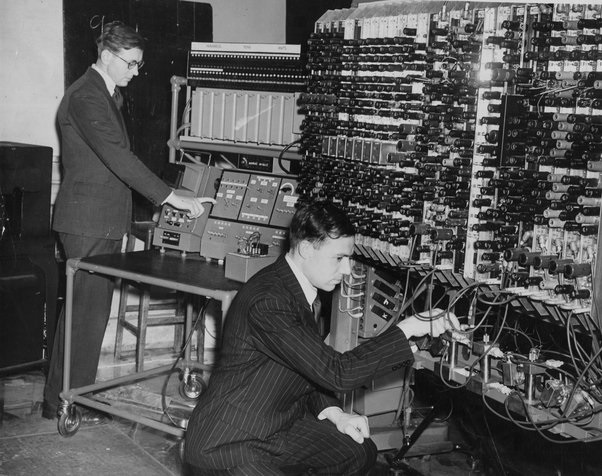
The successful decryption of Enigma messages provided the Allies with critical intelligence, enabling them to anticipate and counter German operations. This breakthrough not only shortened the war but also laid the groundwork for modern computing, illustrating the profound impact of technological surprise in warfare, only to go on to bigger success as a dual use technology in the commercial markets.
Stealthy Naval Vessels
In the modern era, the U.S. Navy’s development of stealth ships introduced a significant technological surprise in naval warfare. These ships, designed with advanced materials and unique angular structures, are capable of evading radar detection, giving them a substantial tactical advantage. The introduction of stealth technology has transformed naval engagements, making it increasingly difficult for adversaries to track and target these vessels. This innovation represents a shift towards more sophisticated, technology-driven strategies in warfare, where invisibility and surprise can determine the outcome of naval operations.

For a comprehensive deep dive into the Navies new DD(X) Stealth Destroyer Surface Combatant, please see:
A Taxpayers Guide to Stealth Destroyers
Stinger Shoulder Fired Antiaircraft Missiles
During the Soviet-Afghan War, the introduction of portable Stinger missiles by the Mujahideen in the mid-1980s became a technological surprise that drastically altered the conflict’s dynamics. These shoulder-fired, heat-seeking missiles enabled Afghan guerrillas to target Soviet helicopters and aircraft with unprecedented effectiveness. Before the arrival of the Stingers, Soviet air superiority allowed them to dominate the battlefield, using helicopters to transport troops, conduct reconnaissance, and carry out devastating airstrikes. However, the sudden ability of the Mujahideen to shoot down these aircraft significantly shifted the balance of power.
The impact of the Stinger missiles was immediate and profound. Soviet helicopters, once a symbol of overwhelming power, became vulnerable targets, forcing the Soviet military to alter its tactics and reconsider its air operations. The effectiveness of the Stingers not only boosted the morale of the Mujahideen but also hastened the Soviet Union’s decision to withdraw from Afghanistan. This episode underscores how a seemingly small technological innovation, when used strategically, can surprise a more powerful adversary and dramatically change the course of a conflict.

For a comprehensive deep dive into the Afghan War with the Soviets, the Mujahedeen and their asymmetrical technological surprise sponsored by the CIA, please see:
Night Vision Technology
The Vietnam War introduced a new dimension of technological surprise with the U.S. military’s deployment of night vision technology. This advancement allowed American forces to conduct operations in darkness, an environment where they previously had limited capability. The use of night vision devices, like the Starlight Scope, provided U.S. troops with a significant tactical advantage, enabling them to ambush Viet Cong forces under the cover of night. This capability not only enhanced the effectiveness of nighttime operations but also instilled fear and confusion among the enemy, who were unprepared for such encounters.
Night vision technology represented a dramatic shift in how warfare was conducted, highlighting the importance of technological superiority in achieving tactical surprise. The ability to “see” in the dark allowed U.S. forces to dominate nocturnal battles, which had previously been the domain of guerrilla fighters familiar with the terrain. This surprise element disrupted the Viet Cong’s operations, forcing them to adapt their strategies and avoid engagements during the night. The deployment of night vision technology in Vietnam marked a significant evolution in combat tactics and underscored the enduring impact of technological surprise in modern warfare.
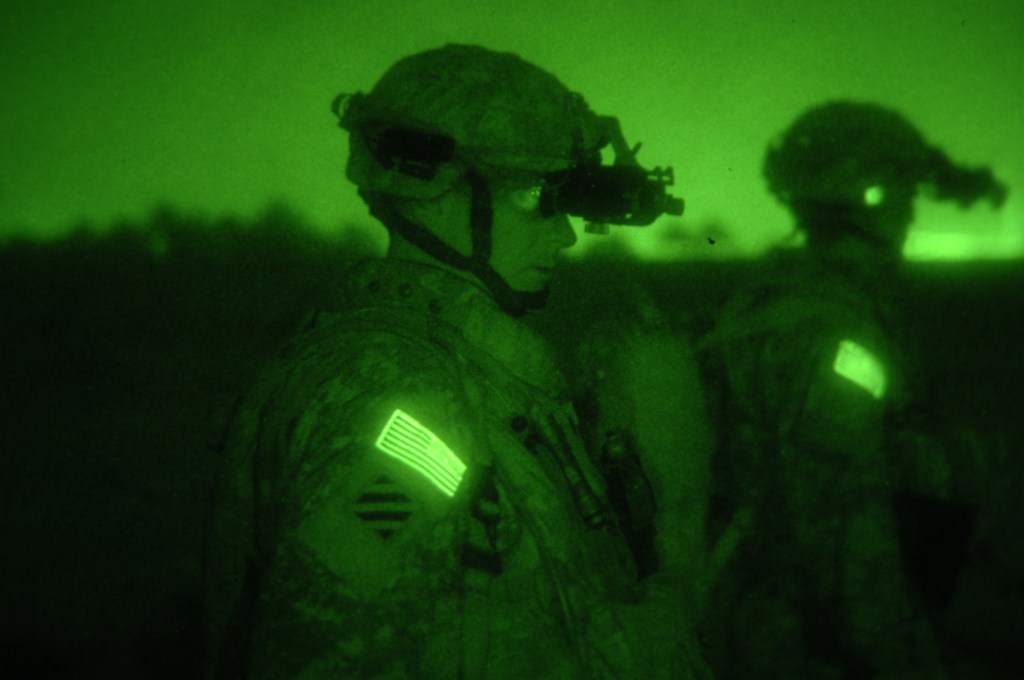
For a comprehensive deep dive into the history and development of night tactics in creating technological battlefield surprise, please see:
Hypersonic Freedom of Action
In the modern arms race, the development of hypersonic missiles represents a significant technological surprise, dramatically shifting the dynamics of global military power. These missiles, capable of traveling at speeds exceeding Mach 5, can evade current missile defense systems due to their speed and maneuverability. The introduction of hypersonic technology by countries like Russia, China, and the United States has sparked concerns over a new arms race, as these weapons could deliver rapid, devastating strikes with little warning, altering the balance of power and redefining strategic deterrence in the 21st century.

Dual Use Technologies
Many technological surprises that originated in military contexts have evolved into dual-use technologies with significant commercial applications. One prominent example is GPS, initially developed by the U.S. Department of Defense for precise military navigation. Over time, GPS technology has been adapted for civilian use, becoming a cornerstone of modern navigation systems in everything from smartphones to vehicles, enabling applications like ride-sharing, logistics, and geolocation services that are integral to the global economy.
Alan Turing’s work during World War II, particularly his development of the Bombe machine to break the Enigma code, laid the groundwork for modern computing. The principles and innovations that emerged from this effort eventually transcended their military origins, giving rise to the digital computers that power today’s world. From personal computing to complex data processing in industries like finance, healthcare, and entertainment, Turing’s technological surprise has fundamentally transformed both military and civilian life.

Similarly, the development of the internet, which began as a military communication network known as ARPANET, illustrates the dual-use trajectory of technological surprises. Initially designed to ensure secure communication in the event of nuclear war, the internet has since evolved into the backbone of global communication and commerce. This transition from a specialized military tool to a universal platform for information exchange highlights the profound and far-reaching impact that military innovations can have when they are adapted for civilian use.
Conclusion
The examples of technological surprise explored in this article highlight the profound impact that unexpected innovations can have on the outcome of conflicts and the evolution of military strategies. These instances demonstrate how ingenuity and technological advancements can level the playing field, disrupt conventional tactics, and redefine the rules of warfare. As history shows, the ability to surprise an adversary with novel technologies often determines the course of battles and, ultimately, the fate of nations.
Looking forward, the role of technological surprise will only grow as new innovations continue to emerge at an accelerating pace. In an era where cyber warfare, hypersonic missiles, and unmanned systems are becoming central to military strategy, the element of surprise remains a critical factor. Nations that can harness and deploy these technologies effectively will have a significant strategic advantage in shaping the future of global security.
In a rapidly changing world, where the next breakthrough could arrive at any moment, staying ahead of adversaries on land, at sea, in space and in cyberspace is essential. Whether through stealth, speed, precision, or computing power, the ability to achieve and maintain technological surprise and enduring decision advantage will continue to be a decisive factor in delivering the right war winning capability, when and where needed.
About PWK International Advisers
PWK International provides national security consulting and advisory services to clients including Hedge Funds, Financial Analysts, Investment Bankers, Entrepreneurs, Law Firms, Non-profits, Private Corporations, Technology Startups, Foreign Governments, Embassies & Defense Attaché’s, Humanitarian Aid organizations and more.
Services include telephone consultations, analytics & requirements, technology architectures, acquisition strategies, best practice blue prints and roadmaps, expert witness support, and more.
From cognitive partnerships, cyber security, data visualization and mission systems engineering, we bring insights from our direct experience with the U.S. Government and recommend bold plans that take calculated risks to deliver winning strategies in the national security and intelligence sector. PWK International – Your Mission, Assured.


















 pwkinternational.com