

The Changing Landscape of Border Security
In our rapidly evolving world filled with geopolitical conflicts, terrorist attacks, human trafficking, arms smuggling, brazen assassinations’ and worse . . . border security technology has begun to radically transform how borders are managed and monitored in real-time. Technology is reshaping the role of human agents, turning them into operators of complex digital systems rather than just frontline enforcers. AI-powered tools analyze migration trends and pattern of life markers, able to detect anomalies and even predict potential threats and security breaches. Smart drones equipped with thermal imaging patrol vast, remote areas that were once impossible to monitor, providing unparalleled situational awareness.
Historical Evolution of Border Technologies
For centuries, borders were managed through rudimentary methods—fortified walls, guard posts, and manual inspections. The Great Wall of China, perhaps history’s most famous border defense, exemplifies how ancient societies relied on physical structures to deter invasions. Similarly, early modern borders were marked by barriers and fortified checkpoints designed to control trade, migration and narcotics smuggling. These methods, however, were static and offered limited flexibility in responding to dynamic threats like weapons trafficking or mass illegal crossings.
The mid-20th century saw a dramatic shift as technology became a critical part of border security. Radar and sonar systems, originally developed for military use during World War II, were adapted to detect movement across land and water. Surveillance cameras became staples in high-traffic border zones, providing continuous monitoring without requiring physical presence. The Cold War further accelerated the use of border technology, as superpowers like the United States and the Soviet Union deployed advanced sensors to monitor crossings and detect infiltrations. In some cases, these tools were coupled with physical deterrents, such as the Berlin Wall, which combined barriers with cutting-edge surveillance systems.
By the early 21st century, the rise of globalization and digital innovation revolutionized border management. Nations began integrating real-time data collection with centralized systems, enabling more precise control over border activities. For example, radio-frequency identification (RFID) technology allowed vehicles and goods to cross borders faster while maintaining strict oversight. Meanwhile, biometric passports and electronic visa systems simplified travel for legitimate visitors but made it harder for unauthorized individuals to bypass border controls. In the wake of the 9/11 attacks, the United States pioneered many of these advancements, incorporating them into initiatives like the Secure Border Initiative and the deployment of “virtual fences” along the southern border.

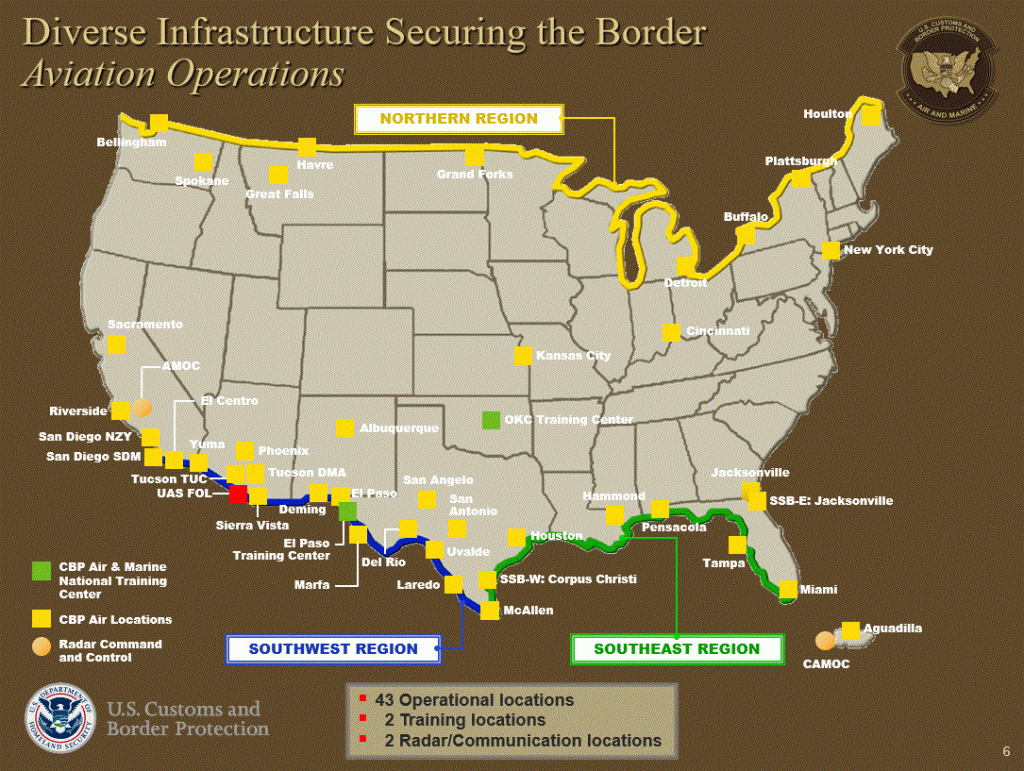


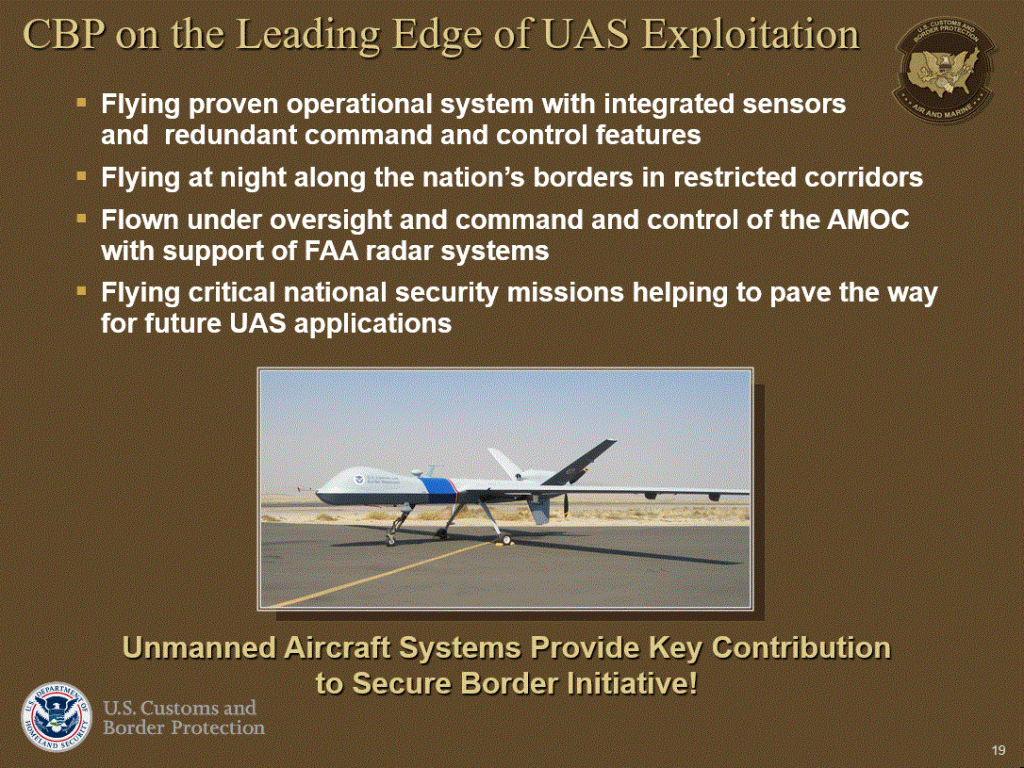

U.S. Customs and Border Protection (a part of the Department of Homeland Security) is the United States largest federal law enforcement agency charged with securing the nation’s borders and facilitating international travel and trade. Their top priority is to keep terrorists and their weapons from entering the United States (see charts above and below).
However, even as technology became more sophisticated, it exposed gaps in implementation. Systems like virtual fences were prone to technical malfunctions, while others struggled to adapt to rapidly changing threats. Furthermore, the reliance on technology highlighted disparities between wealthy and developing nations, with the former capable of deploying expensive systems while the latter often relied on outdated methods. This evolution sets the stage for today’s advanced border technologies, which promise greater efficiency but that also bring new challenges.
Weapons Seized at the US Southern Border 2021 – 2024
Data Source: USA Department of Homeland Security.

Technological Innovations Shaping Borders Today
Modern border security is defined by a fusion of cutting-edge technologies, each tailored to address specific challenges. Among the most transformative tools is artificial intelligence (AI), which analyzes vast amounts of data to detect irregularities in real-time. AI systems predict migration patterns by analyzing weather, economic conditions, and geopolitical events, enabling authorities to allocate resources more efficiently. Machine learning algorithms are also used to scan surveillance footage for unusual activity, reducing the workload for human operators. In tandem with AI, advanced data analytics platforms integrate information from drones, ground sensors, and satellite feeds, creating a unified picture of border conditions.
Drones have revolutionized border patrols by offering unmatched coverage and flexibility. Equipped with high-resolution cameras, infrared sensors, and even radar systems, drones provide real-time aerial surveillance of difficult-to-access areas. For example, U.S. Customs and Border Protection uses Predator B drones to monitor the southern border, allowing agents to respond quickly to detected threats. These unmanned aerial systems (UAS) operate at a fraction of the cost of manned patrols while covering more ground. However, their deployment raises concerns about airspace management and privacy, particularly in regions where their surveillance extends into civilian areas.

For a comprehensive deep dive into the new era of artificial intelligence powered surveillance, please see:
Nowhere to Hide: The AI Revolution in Surveillance and Targeting Sensors.
Biometric systems represent another significant leap in border technology. Facial recognition cameras at airports and checkpoints quickly verify identities, cross-referencing them with global databases to flag potential security risks. Fingerprint and iris scanning have also streamlined the processing of travelers and asylum seekers, reducing wait times while enhancing accuracy. Programs like the European Union’s Entry/Exit System (EES) exemplify how biometric data is becoming integral to border security. However, critics argue that these systems risk excluding individuals due to technical errors or algorithmic biases, making accountability a critical priority.
Finally, the Internet of Things (IoT) has enabled a new era of “smart borders.” Networked sensors, automated license plate readers, and real-time environmental monitors work in concert to detect and respond to potential breaches. For instance, smart fences along parts of the U.S.-Mexico border can identify vibrations caused by human movement while ignoring non-threats like wildlife. These technologies, while promising, require robust cybersecurity measures to prevent hacking or sabotage. As innovation accelerates, the challenge lies in ensuring that these systems remain secure, ethical, and effective in safeguarding borders without overstepping civil liberties.

Todays Border Tech
Which companies provide the advanced technology now deployed at “smart borders”?
| Integrated Fixed Towers (IFT) – General Dynamics Mission Systems (Fairfax, VA) These towers are equipped with cameras and radar systems to monitor border activity and provide real-time situational awareness to U.S. Customs and Border Protection (CBP). |
| Predator B Drones – General Atomics Aeronautical Systems (Poway, CA) These unmanned aerial systems (UAS) are used for surveillance over vast and difficult-to-patrol areas, providing infrared and high-resolution imaging capabilities. |
| Fiber-Optic Sensors – Corning Incorporated (Corning, NY) Installed along border barriers, these sensors detect vibrations and movement, alerting CBP agents to potential breaches or activity. |
| Non-Intrusive Inspection Systems – Leidos (Reston, VA) These scanning technologies are deployed at ports of entry to detect contraband such as drugs and weapons in vehicles and cargo without requiring manual searches. |
| Seismic Ground Sensors – Raytheon Technologies (Arlington, VA) These sensors identify underground activity, such as tunnel construction or movement, helping to combat human and drug trafficking. |
| Remote Video Surveillance Systems (RVSS) – L3Harris Technologies (Melbourne, FL) RVSS utilizes day and night cameras mounted on towers to provide 24/7 monitoring across border regions. |
| Facial Recognition Software – IDEMIA (Reston, VA) Used at border crossings, this technology verifies the identities of individuals by matching facial features with passport or visa records. |
| Aerostats (Surveillance Balloons) – Tethered Aerostat Radar System (TARS), L3Harris Technologies (Melbourne, FL) These balloons are equipped with radar and provide wide-area surveillance from high altitudes, particularly along the southern border. |
| AI-Enhanced Border Analytics – Palantir Technologies (Denver, CO) Palantir’s software aids in analyzing data from multiple sources, improving threat detection and resource allocation. |
| Portable X-Ray Systems – Rapiscan Systems (Torrance, CA) Deployed at checkpoints, these systems screen vehicles and containers for hidden contraband without physical inspection. |
The Future of Border Security
The future of border security lies in the integration of even more advanced technologies, pushing the boundaries of automation and intelligence. Autonomous robots capable of patrolling land and sea borders are already being tested, offering the potential to operate in extreme conditions without human intervention. Meanwhile, quantum encryption technologies promise to secure sensitive communication channels, ensuring border agencies can safely transmit data without fear of interception. These tools, combined with real-time data sharing between nations, could transform border management into a globalized, interconnected system that adapts rapidly to emerging threats.
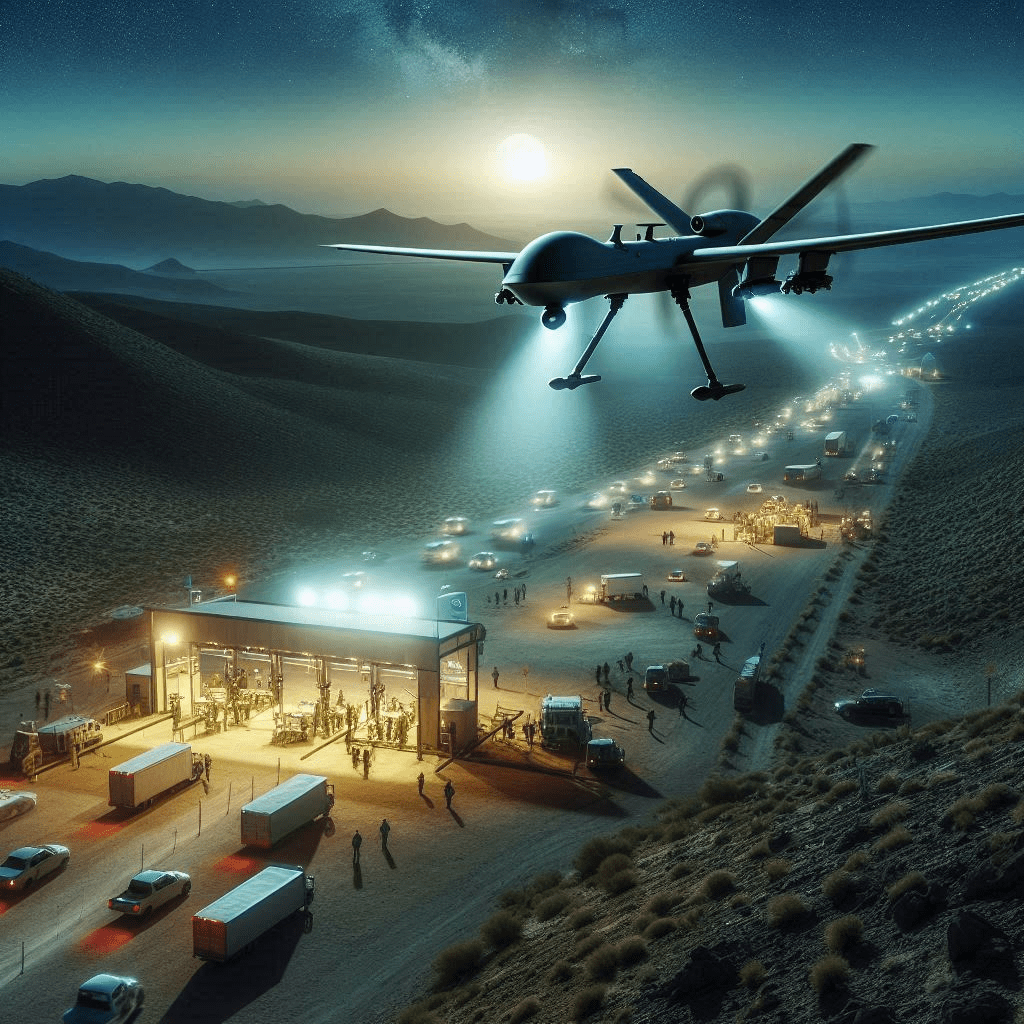
Mexico agrees to invest $1.5B in ‘smart’ border technology.
However, these advancements also raise critical ethical and operational concerns. The use of AI and autonomous systems risks reducing human oversight in decisions that have profound implications for individual rights, such as granting asylum or detaining travelers. Additionally, as borders become more digital, the risk of cyberattacks grows, threatening to paralyze entire systems. Governments must balance innovation with robust legal frameworks, ensuring transparency and accountability in the deployment of these tools. Collaboration between nations will also be key to addressing challenges such as transnational crime, climate-induced migration, and global supply chain vulnerabilities.
Border technology represents a critical intersection of security, innovation, and geopolitics. The tools of tomorrow offer unprecedented opportunities to enhance border safety and efficiency, but they also require careful stewardship to prevent misuse or unintended consequences. As nations race to adopt these systems, they must ensure that their borders remain not just secure, but also just. The future of border security will depend not only on the technology itself but also on how it is integrated into society with fairness, ethics, and a commitment to protecting human rights.
Impacts of President Trump Administration
President Trump’s previous administration emphasized strong physical barriers, increased personnel, and technology at the border. Combining this with Musk’s technological expertise and futuristic vision could lead to the integration of cutting-edge innovations like AI-driven surveillance systems, autonomous drones, and enhanced biometric systems. Musk’s companies, such as Tesla and SpaceX, might offer solutions for solar-powered border infrastructure or satellite-driven communication systems through Starlink to ensure real-time data connectivity in remote areas.
Trump’s administration might also push for automation and AI to streamline border processing. For example, Musk’s focus on AI (as seen with Neuralink) could influence the development of faster biometric identification systems or predictive algorithms for identifying high-risk individuals before they reach the border. Similarly, Musk’s interest in tunneling technology, showcased by The Boring Company, might contribute to detecting or disrupting underground smuggling operations. However, such changes could also spark debates about privacy, ethics, and the militarization of borders, as these technologies would raise questions about how to balance security and civil liberties. This partnership could redefine border management but would require careful planning and oversight to avoid overreach.

Tomorrows Border Tech
New cutting-edge technologies promise to strengthen border security while improving efficiency through automation and adaptability in diverse operational environments including airports, ports, train stations and border crossing sites.
| AI-Powered Risk Engines by Travizory (Headquartered in Lausanne, Switzerland) Travizory offers AI-driven platforms that analyze vast amounts of traveler data, including booking patterns and travel routes, to identify potential threats before individuals reach the border. Their technology enhances real-time intelligence and decision-making for border officials. |
| Robotic Surveillance Dogs by Ghost Robotics (Philadelphia, Pennsylvania, USA) These robotic quadrupeds are equipped with cameras and sensors to patrol remote or rugged border areas. They are designed to work alongside human agents, offering continuous surveillance in challenging environments. |
| Digital Travel Credentials (DTCs) by Entrust (Shakopee, Minnesota, USA) Entrust is testing secure, passport-free identity verification systems that utilize biometric data. This experimental technology aims to replace physical travel documents with digital credentials stored securely on mobile devices. |
| Portable Biometrics Collection by IDEMIA (Courbevoie, France) IDEMIA is piloting mobile biometric kits that allow for remote enrollment and verification of fingerprints, iris scans, and facial recognition. This system is particularly suited for checkpoints far from established border crossings. |
| Unmanned Aerial Systems by Anduril Industries (Irvine, California, USA) Anduril is developing advanced autonomous networks (Lattice), sensors and drones with AI capabilities to patrol vast border areas. These drones provide live video feeds and can detect unauthorized crossings, enhancing situational awareness for border agents. |
Conclusion
The rapid evolution of border technology signifies a pivotal shift in how nations secure their boundaries while facilitating global connectivity. Innovations like AI surveillance, drones, biometric systems, and IoT-enabled smart borders have redefined the landscape, offering enhanced security, automation, AI powered analytics and operational efficiency. These tools allow governments to monitor vast areas with precision, analyze patterns in real-time, and streamline border crossings. However, the integration of these technologies also introduces new challenges, including concerns over privacy, cybersecurity, and equitable access to advanced systems. The true test lies in achieving a balance between advancing security measures and upholding fundamental human rights.

The Fiscal Year 2024 Homeland Security Appropriations Act provides $61.8 billion in total discretionary funding to help meet increased operational needs at our border.
As countries embrace these innovations, collaboration across borders will become essential. Issues like migration, transnational crime, and global supply chain management require solutions that extend beyond individual nations. Future technologies, such as quantum encryption and autonomous robotics, promise even greater capabilities, but their success will depend on the ethical frameworks and governance systems surrounding their use. Ultimately, the future of border security will not be defined solely by the technology deployed but by the policies, transparency, and international cooperation that ensure these tools secure our borders, enhance global trade and keep us all safe.
Acknowledgements and Image Credits
{1} Smart Borders: How Technology is Tracking You. Image Credit: PWK International Advisers, 17 November 2024.
{2} Office of Customs and Border Protection Air and Marine Presentation. FAA UAS Tech Conference. Presented by Michael J. Pitts, Director, UAS Program Office, U.S. Customs and Border Protection Office of CBP Air and Marine.
{3} Weapons Seized at the US Southern Border 2021 – 2024. Credit: USA Department of Homeland Security. 16 November 2024.
{4} Border Tech. Which companies provide the advanced technology now deployed at “smart borders”? Image Credit: Undisclosed
{5} Mexico agrees to invest $1.5B in ‘smart’ border technology. Mexican President Andres Manuel López Obrador agreed to spend $1.5 billion over the next two years to improve “smart” border technology. Image Credit: PWK International Advisers. 15 October 2024.
{6} Future Border Tech. New cutting-edge technologies promise to strengthen border security while improving efficiency through automation and adaptability in diverse operational environments including airports, ports, and border crossing sites. Image Credit: PWK International Advisers. 18 October 2024.
{7} The Fiscal Year 2024 Homeland Security Appropriations Act provides $61.8 billion in total discretionary funding to help meet increased operational needs at our border. Image Credit: Ghost Robotics.
{8} Our un-biased analysis includes mention of specific border technology enterprises from around the world. All registered trade marks and trade names are the property of their respective owners.
About PWK International Advisers
PWK International provides national security consulting and advisory services to clients including Hedge Funds, Financial Analysts, Investment Bankers, Entrepreneurs, Law Firms, Non-profits, Private Corporations, Technology Startups, Foreign Governments, Embassies & Defense Attaché’s, Humanitarian Aid organizations and more.
Services include telephone consultations, analytics & requirements, technology architectures, acquisition strategies, best practice blue prints and roadmaps, expert witness support, and more.
From cognitive partnerships, cyber security, data visualization and mission systems engineering, we bring insights from our direct experience with the U.S. Government and recommend bold plans that take calculated risks to deliver winning strategies in the national security and intelligence sector. PWK International – Your Mission, Assured.


















 pwkinternational.com
Pingback: Drugs, Guns & Drones: An Addicts Guide to Cartels |
Pingback: Are You A Terrorist? |
Pingback: Nowhere To Hide | The AI Revolution in Surveillance & Targeting Sensors |