
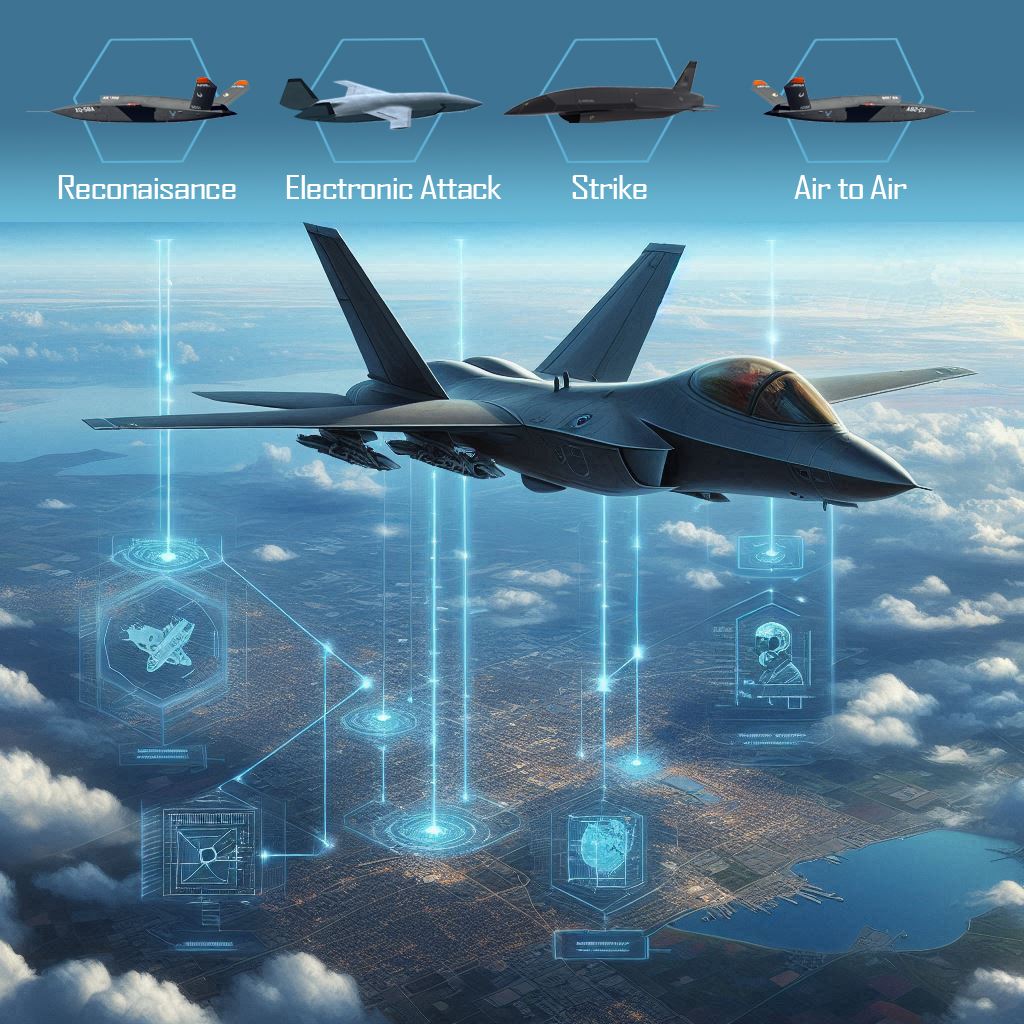
The Rise of Autonomous Wingmen The future of aerial warfare is no longer just about faster jets and better missiles—it’s about collaboration between humans and machines. The U.S. Air Force’s ambitious push toward Collaborative Combat Aircraft (CCA) represents a paradigm shift in how wars will be fought in the sky. Instead of relying solely on manned fighter jets, the next generation of air combat will feature swarms of AI-driven unmanned systems operating alongside human pilots, acting as force multipliers in complex battle scenarios. These highly autonomous aircraft, also known as “loyal wingmen,” promise to extend the capabilities of traditional warplanes while reducing risk to human operators.
The CCA initiative isn’t just theoretical; it’s already taking shape with multiple prototypes under development by defense giants like Lockheed Martin, Boeing, Anduril Industries, and General Atomics. These companies are racing to build AI-driven aircraft that can execute reconnaissance, electronic warfare, and even strike missions with minimal human oversight. Some, like the YFQ-42A and YFQ-44A, have been selected as key test platforms for the Air Force, signaling a future where squadrons will consist of both manned and unmanned fighters working in unison. The goal is clear: outmaneuver adversaries by leveraging speed, intelligence, and expendability—capabilities that only autonomous systems can bring to the fight.
Yet, this technological leap comes with challenges. Integrating artificial intelligence into real-world combat scenarios requires breakthroughs in machine learning, trust-based autonomy, and secure communications. Ethical and legal concerns also loom large—can AI truly be trusted to make lethal decisions in high-stakes environments? As the Pentagon presses forward with CCAs, it must navigate these hurdles while ensuring that human pilots remain in control of the most critical aspects of warfare. The balance between autonomy and accountability will define the success of this next-generation air combat revolution.
Ultimately, Collaborative Combat Aircraft represent more than just another military innovation; they signal the dawn of a new era in warfare. By blending AI-driven autonomy with human decision-making, the Air Force is laying the groundwork for a future where machines don’t just assist in combat—they actively shape its outcome. As technology matures and CCA platforms become operational, the world may soon witness the first air battles fought by pilots and their robotic wingmen—an evolution that could change military strategy forever.

Chapter 1: The Rise of Collaborative Combat Aircraft
For decades, the concept of unmanned aircraft in military operations was largely limited to reconnaissance drones and remote-controlled strike platforms. The Predator and Reaper drones, for example, revolutionized surveillance and targeted strikes but required human operators for most critical functions. However, the rapid advancements in artificial intelligence, sensor fusion, and autonomous decision-making have paved the way for a new category of unmanned aerial systems—Collaborative Combat Aircraft (CCA). Unlike their predecessors, CCAs are designed to operate semi-independently, using AI to execute complex missions while working alongside manned aircraft in high-threat environments.
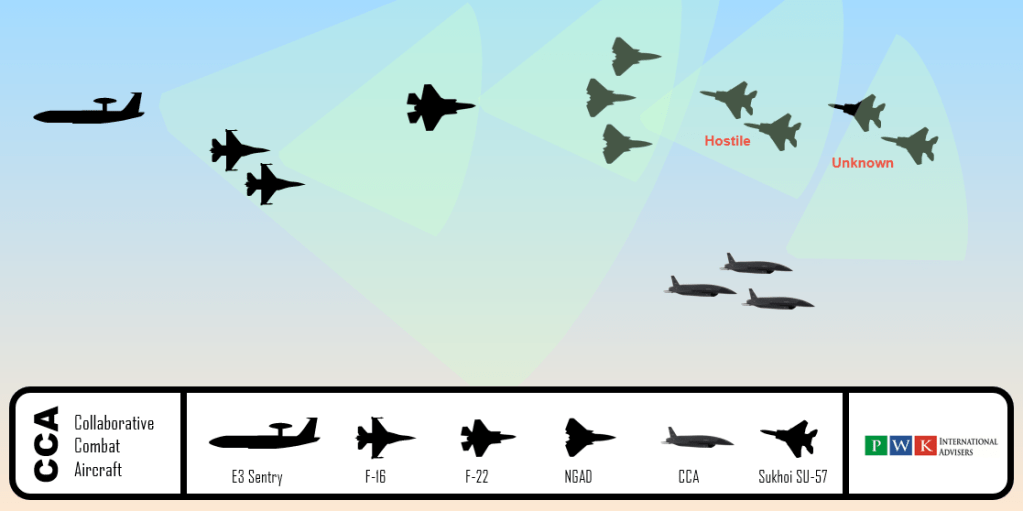
The U.S. Air Force has identified CCA as a key pillar of its future air combat strategy, aiming to augment traditional fighter squadrons with autonomous wingmen capable of executing a wide range of tasks. These aircraft will be able to carry out suppression of enemy air defenses, electronic warfare, and even air-to-air combat, significantly enhancing the capabilities of existing platforms like the F-22 Raptor and F-35 Lightning II. By leveraging AI, CCAs will reduce pilot workload, expand operational reach, and introduce a level of expendability that traditional fighter jets simply cannot offer. The Air Force envisions a scenario where a single pilot could command multiple CCAs, creating a force-multiplying effect that could overwhelm adversaries in contested airspace.


Several defense contractors have already begun developing prototype CCAs, each with unique capabilities tailored to different mission sets. General Atomics’ YFQ-42A and Anduril Industries’ YFQ-44A are among the most notable, offering stealthy designs and modular payload options that allow them to adapt to various combat scenarios. Boeing’s MQ-28A Ghost Bat, originally designed for the Royal Australian Air Force, has also garnered attention as a model for future collaborative combat systems. These aircraft are designed to function as part of a “combat cloud,” where real-time data sharing between manned and unmanned assets allows for coordinated strikes, adaptive targeting, and a level of situational awareness far beyond what human pilots alone could achieve.
The shift toward CCA is not just about technological superiority—it’s also about cost and scalability. Modern fighter jets like the F-35 cost over $80 million per unit, while an advanced CCA could be built for a fraction of that price. This affordability allows the military to field larger numbers of autonomous aircraft without sacrificing capability, reshaping the economics of air combat. Additionally, because CCAs are designed to be expendable, they can take on high-risk missions that would be too dangerous for human pilots, such as penetrating heavily defended airspace or engaging in first-strike operations. As the Pentagon continues to invest in this next-generation aerial warfare strategy, CCAs are poised to become an integral part of the Air Force’s vision for 21st-century combat.
Chapter 2: The Loyal Wingman Concept
The heart of the Collaborative Combat Aircraft (CCA) initiative lies in the concept of the “Loyal Wingman”—an AI-powered unmanned aircraft designed to operate in tandem with manned fighter jets. Unlike traditional drones, which require direct human control, these autonomous systems leverage artificial intelligence to process battlefield data, identify threats, and execute missions with minimal oversight. The idea is to create a symbiotic relationship between manned and unmanned aircraft, where pilots can direct their robotic wingmen to perform reconnaissance, electronic warfare, or even engage enemy targets while they focus on higher-level strategic decisions. This approach not only enhances the lethality of a fighter squadron but also reduces the risks faced by human pilots in contested airspace.
The Loyal Wingman concept is being actively developed by multiple defense firms, each bringing unique innovations to the table. Boeing’s MQ-28A Ghost Bat, originally developed for the Royal Australian Air Force, is one of the most advanced examples, designed to fly alongside manned aircraft and execute a variety of support missions. The U.S. Air Force, meanwhile, has contracted companies like Anduril Industries, General Atomics, Lockheed Martin, and Northrop Grumman to develop their own versions of these autonomous combat aircraft. Anduril’s YFQ-44A and General Atomics’ YFQ-42A are two key prototypes undergoing testing, with an emphasis on modular design and AI-driven adaptability. These aircraft are expected to play a pivotal role in shaping the Air Force’s future combat doctrine, where a handful of manned fighters can command swarms of loyal wingmen to overwhelm adversaries.

A key advantage of the Loyal Wingman model is its ability to extend the reach and survivability of a fighter squadron. Traditional manned aircraft are limited by pilot endurance and the inherent risk of being shot down in high-threat environments. By deploying CCAs as force multipliers, commanders can send unmanned aircraft ahead to scout enemy positions, jam enemy radar, or even draw enemy fire—preserving the effectiveness of human pilots and their more expensive aircraft. These unmanned systems can also be equipped with weapons, allowing them to engage enemy fighters or air defenses independently. In essence, they function as both shields and spears, protecting manned assets while amplifying offensive firepower.
However, integrating Loyal Wingmen into combat operations presents several challenges. AI decision-making in high-speed aerial combat must be extremely precise, requiring advances in machine learning, real-time data processing, and battlefield adaptability. Secure communication links between manned and unmanned aircraft must be resilient against electronic warfare threats, preventing adversaries from jamming or hijacking autonomous systems. Additionally, military planners must address ethical and legal concerns, ensuring that AI-powered aircraft adhere to strict rules of engagement and do not make unauthorized lethal decisions. Despite these hurdles, the momentum behind the Loyal Wingman initiative continues to grow, as nations recognize that the future of air combat will depend on the seamless integration of human and machine warfare.


These are the companies at the forefront of developing collaborative combat aircraft, integrating advanced autonomous technologies to enhance the effectiveness and flexibility of future air combat operations.
| Anduril Industries (Irvine, California): Anduril is developing the YFQ-44A, an unmanned combat aerial vehicle designed to operate alongside manned fighter jets, enhancing mission capabilities through advanced autonomy and AI integration. |
| General Atomics Aeronautical Systems (Poway, California): General Atomics is working on the YFQ-42A, an uncrewed fighter prototype intended to augment manned aircraft in combat scenarios, leveraging advanced autonomous technologies. |
| Boeing Defense, Space & Security (Arlington, Virginia): Boeing has been awarded a contract to design and build Collaborative Combat Aircraft that can autonomously team with manned platforms, enhancing operational effectiveness. |
| Lockheed Martin Aeronautics (Fort Worth, Texas): Lockheed Martin is developing CCA platforms capable of autonomous operations in contested environments, aiming to provide force multiplication and increased mission flexibility. |
| Northrop Grumman Aerospace Systems (Redondo Beach, California): Northrop Grumman is engaged in designing autonomous CCA platforms to operate in conjunction with manned aircraft, focusing on advanced mission capabilities and survivability. |
| BAE Systems (Farnborough, United Kingdom): BAE Systems is in discussions with Japanese defense groups to develop low-cost drones that operate alongside next-generation fighter jets as part of the Global Combat Air Programme (GCAP). |
| Kratos Defense & Security Solutions (San Diego, California): Kratos is developing the XQ-58A Valkyrie, a stealthy unmanned combat aerial vehicle designed to support manned aircraft in various missions, including electronic warfare and strike operations. |
| Blue Force Technologies (Morrisville, North Carolina): Blue Force Technologies, acquired by Anduril, initially designed the “Fury” UCAV as an aggressor platform, which has been adapted for the USAF’s CCA program to augment manned fighters in air-to-air missions. |
| Boeing Australia (Brisbane, Australia): Boeing Australia is developing the MQ-28A Ghost Bat, an autonomous “loyal wingman” platform designed to operate alongside manned aircraft, enhancing the Royal Australian Air Force’s combat capabilities. |
| Mitsubishi Heavy Industries (Tokyo, Japan): Mitsubishi is collaborating with BAE Systems and other partners in the GCAP to develop next-generation fighter jets integrated with unmanned systems for enhanced operational capabilities. |
| Leonardo S.p.A. (Rome, Italy): Leonardo is participating in the GCAP, focusing on integrating advanced technologies into next-generation fighter jets, including collaboration with unmanned systems. |
| Airbus Defence and Space (Leiden, Netherlands): Airbus is involved in the “Future Combat Air System” (FCAS) program, which includes developing unmanned systems designed to operate alongside manned aircraft in a networked combat environment. |
| Turkish Aerospace Industries (Ankara, Turkey): TAI is developing the “ANKA” series of unmanned aerial vehicles, focusing on integrating these platforms into operations alongside manned aircraft for enhanced mission effectiveness. |
Chapter 3: AI and Autonomy in Collaborative Combat Aircraft
At the core of the Collaborative Combat Aircraft (CCA) initiative is artificial intelligence (AI), which enables these unmanned systems to operate with unprecedented autonomy. Unlike traditional remotely piloted aircraft, which require constant human control, CCAs are designed to make real-time tactical decisions in dynamic combat environments. These AI-powered systems can assess threats, adapt to changing battle conditions, and execute missions with minimal human intervention. This level of autonomy allows pilots of manned aircraft to delegate complex tasks—such as surveillance, electronic warfare, and even strike missions—to their robotic counterparts, effectively transforming aerial combat into a highly networked and distributed operation.
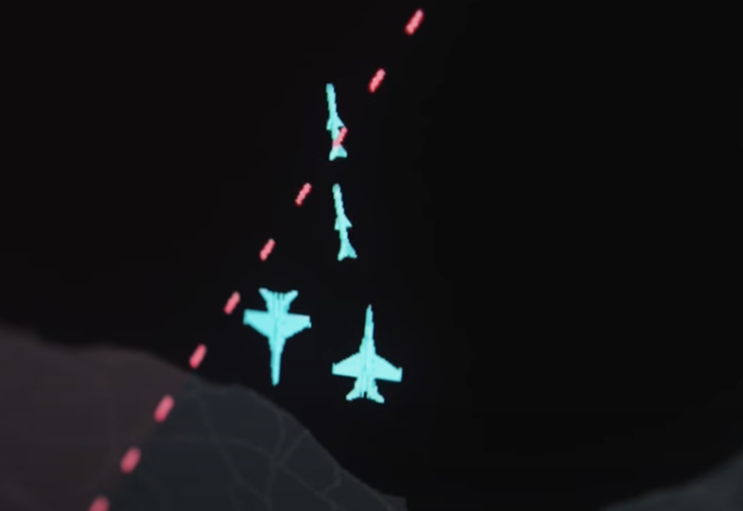
The AI that powers CCAs is built on advanced machine learning algorithms, which are trained on vast amounts of flight and combat data. By analyzing real-world and simulated engagements, these systems learn to recognize enemy tactics, predict threats, and optimize their own responses. For example, an AI-powered CCA can detect an incoming missile and automatically maneuver to evade it, or it can coordinate with other unmanned systems to execute a multi-pronged attack on an enemy target. The ability to process vast amounts of sensor data at machine speed gives these autonomous aircraft a significant edge in the modern battlespace, where rapid decision-making can mean the difference between victory and defeat.
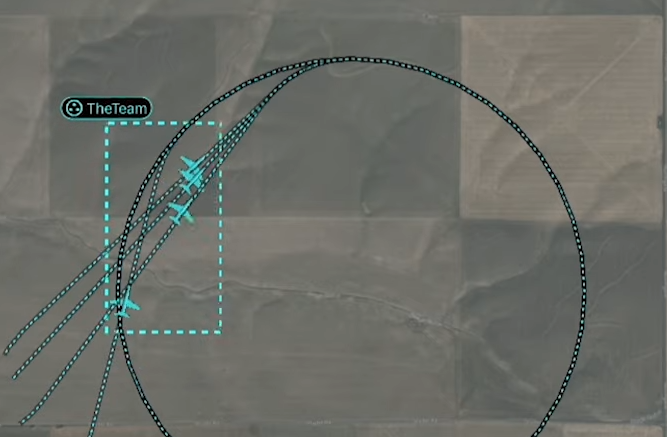
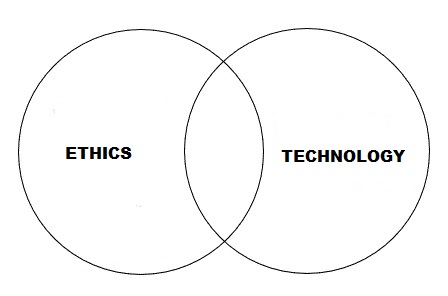
However, the integration of AI into combat aircraft raises critical challenges, particularly in the areas of trust and reliability. While AI can process information faster than a human pilot, it must also make decisions within strict operational constraints to prevent unintended consequences. The Pentagon has emphasized that all lethal actions taken by CCAs must remain under human control, ensuring that AI operates within an ethical and legal framework. Additionally, AI-driven systems must be hardened against adversarial cyber threats, as enemies could attempt to disrupt, deceive, or even hijack these autonomous platforms. Robust cybersecurity measures, redundancy protocols, and real-time human oversight will be essential to ensuring that AI-powered CCAs function effectively in contested environments.
Looking ahead, the role of AI in aerial warfare will only expand as technology continues to evolve. Future iterations of CCAs may feature advanced forms of swarm intelligence, where multiple autonomous aircraft operate in coordinated groups to execute complex missions. These AI-driven swarms could revolutionize battlefield strategy by overwhelming enemy defenses, conducting distributed surveillance, or dynamically reconfiguring their tactics based on real-time data. While human pilots will remain central to decision-making, the increasing sophistication of AI means that the future of air combat will be defined by a seamless partnership between man and machine.

Chapter 4: The Strategic Impact of Collaborative Combat Aircraft
The introduction of Collaborative Combat Aircraft (CCA) is set to reshape the strategic balance of airpower, offering militaries a new way to project force while minimizing risk to human pilots. Traditionally, air dominance has been achieved through technological superiority in manned fighter jets, but the rising costs of advanced aircraft and the growing complexity of modern warfare have created a need for a more scalable solution. CCAs provide exactly that—affordable, mass-producible platforms that can be deployed in large numbers to complement and enhance existing fleets. By leveraging AI-driven autonomous systems, air forces can extend their reach, execute missions in heavily contested airspace, and reduce the need for manned fighters to engage in high-risk operations.
Beyond individual engagements, CCAs are expected to play a crucial role in shaping broader military strategies. A key advantage of these platforms is their ability to integrate seamlessly into multi-domain operations, where air, land, sea, space, and cyber forces work in unison. CCAs can act as intelligence nodes, gathering and distributing real-time battlefield data across an entire military network. This capability enhances decision-making for commanders and creates a more adaptive, resilient force capable of responding to emerging threats with unprecedented speed. Additionally, the presence of autonomous combat aircraft in contested regions serves as a deterrent, complicating an adversary’s ability to plan and execute hostile actions without facing overwhelming resistance.
However, the rise of CCAs also introduces new challenges in military planning and doctrine. Nations developing these systems must consider how to integrate them into existing combat formations, redefine pilot training programs, and establish new rules of engagement for AI-driven warfare. Additionally, adversaries will likely respond with countermeasures, including electronic warfare techniques designed to disrupt or neutralize autonomous aircraft. As the technology advances, military strategists will need to continually refine their approaches to ensure that CCAs remain a force multiplier rather than a vulnerability. Ultimately, the success of CCAs will depend on how effectively they are deployed, maintained, and integrated into the evolving landscape of modern warfare.

Chapter 5: Challenges and Ethical Considerations
While Collaborative Combat Aircraft (CCA) offer transformative advantages, their development and deployment raise significant challenges—both technical and ethical. One of the foremost concerns is the reliability of AI in high-stakes combat situations. Unlike human pilots, AI-driven aircraft must make split-second decisions based on sensor data, often in unpredictable environments where enemy tactics are constantly evolving. Ensuring that AI can distinguish between friend and foe, adapt to rapidly changing battle conditions, and operate without unintended consequences requires extensive testing and validation. Additionally, secure communication links between manned and unmanned aircraft must be hardened against cyber threats, as adversaries will likely attempt to disrupt or manipulate autonomous systems.
Beyond the technical hurdles, the ethical implications of AI-driven warfare remain a topic of intense debate. The use of autonomous systems in lethal operations raises questions about accountability and decision-making in combat. While the Pentagon has emphasized that human operators will retain control over lethal force, the increasing autonomy of CCAs blurs the line between human and machine decision-making. There is also the risk of escalation—if one nation deploys fully autonomous weapons, others may feel pressured to do the same, leading to an arms race in AI-driven warfare. To address these concerns, policymakers and military leaders must establish clear guidelines on the role of AI in combat, ensuring compliance with international laws and ethical standards.
Finally, the deployment of CCAs could have far-reaching geopolitical consequences. As nations invest in autonomous airpower, traditional military alliances and strategic doctrines may shift, with smaller nations gaining access to capabilities previously reserved for major powers. This democratization of advanced combat technology could alter the balance of power in key regions, making conflicts more complex and unpredictable. Additionally, adversaries will seek to counter CCAs with electronic warfare, anti-drone defenses, and their own autonomous systems, setting the stage for a new era of aerial combat. As the world moves closer to AI-integrated warfare, the military must not only harness the power of CCAs but also prepare for the challenges that come with them.

Chapter 6: The Future of Collaborative Combat Aircraft
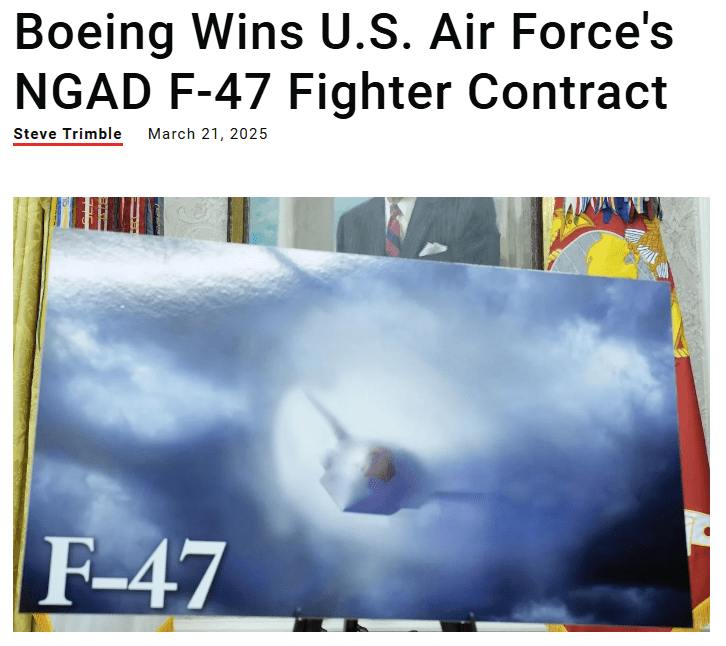
The future of Collaborative Combat Aircraft (CCA) lies in continued technological advancements and deeper integration into modern air forces. As AI-driven autonomy improves, future CCAs will become more capable of executing complex missions with minimal human intervention. Developments in machine learning, sensor fusion, and swarm technology will enable these aircraft to operate in coordinated groups, dynamically adjusting their tactics based on battlefield conditions. Additionally, advances in stealth, electronic warfare, and next-generation propulsion systems will allow CCAs to penetrate highly contested environments, providing air forces with a strategic edge in future conflicts. The U.S. Air Force has already committed to fielding CCAs alongside its sixth-generation Next Generation Air Dominance (NGAD) fighter, ensuring that autonomous wingmen will play a central role in future air combat.
Beyond the U.S., other nations are investing heavily in autonomous combat aircraft, signaling a global shift toward AI-driven warfare. Programs such as the UK’s Tempest, Europe’s Future Combat Air System (FCAS), and Australia’s MQ-28A Ghost Bat demonstrate that CCAs are not just an American initiative but a critical element of next-generation military strategy worldwide. As countries race to develop their own versions of collaborative combat aircraft, international cooperation and competition will shape the evolution of these systems. However, with this technological race comes the risk of proliferation, as more nations—both allies and adversaries—seek to acquire autonomous combat capabilities, potentially altering the geopolitical landscape in unpredictable ways.
In the coming years, military planners will need to address key questions about how CCAs will be used, regulated, and countered. Integrating these systems into existing command structures, refining AI decision-making protocols, and establishing global norms for their deployment will be crucial to ensuring that AI-powered warfare remains controlled and accountable. Despite the challenges, one thing is clear: Collaborative Combat Aircraft are here to stay, and they will redefine airpower for decades to come. The next battles in the sky will not just be fought by pilots but by their AI-driven wingmen, ushering in a new era of machine-assisted warfare.

Chapter 7: Integrating CCAs into the Modern Battlespace
As Collaborative Combat Aircraft (CCA) move from concept to operational reality, integrating them into existing military structures presents both opportunities and challenges. Unlike traditional fighter jets, which operate within well-established doctrines, CCAs require new strategies for command, control, and coordination. The U.S. Air Force envisions a system where a single pilot can direct multiple autonomous wingmen, but this will necessitate new training programs and decision-making frameworks. Additionally, integrating CCAs into current force structures requires seamless communication networks that allow manned and unmanned systems to share real-time data, respond to threats dynamically, and execute coordinated strikes. Ensuring interoperability between CCAs and legacy platforms like the F-35 and future systems such as the Next Generation Air Dominance (NGAD) fighter will be critical for maximizing their effectiveness.
One of the biggest hurdles in CCA integration is the unpredictability of real-world combat scenarios. While AI-driven aircraft excel in controlled test environments, their ability to function under the chaos of battle remains a pressing concern. Situations involving electronic warfare, cyberattacks, and contested communications could disrupt CCA operations, making redundancy and fail-safes essential. Furthermore, military planners must determine the right balance between human oversight and machine autonomy. While CCAs are designed to reduce pilot workload, they must also operate within a framework that ensures compliance with the rules of engagement and prevents unintended escalation in conflicts. As adversaries develop countermeasures to disrupt or neutralize autonomous systems, the military must continuously refine CCA tactics to maintain a strategic advantage.
Despite these challenges, the successful integration of CCAs has the potential to revolutionize modern warfare. By combining AI-driven unmanned systems with human decision-making, air forces can create a more resilient, adaptive, and lethal fighting force. Future battlefields will likely feature large-scale operations where manned fighters, CCAs, and other autonomous platforms collaborate in real-time, executing complex missions with unprecedented efficiency. As technology advances and operational doctrines evolve, CCAs will transition from experimental assets to indispensable components of air combat strategy. The nations that successfully integrate these systems into their military forces will not only gain a tactical edge but also redefine the very nature of air superiority in the 21st century.
Top Six Takeaways
- AI-Powered Warfare is Here to Stay – Collaborative Combat Aircraft represent a major shift in air combat, leveraging AI to enhance mission effectiveness and reduce risk to human pilots.
- Manned-Unmanned Teaming is the Future – CCAs will work alongside manned fighter jets, acting as force multipliers that expand operational reach and combat capabilities.
- Global Competition is Heating Up – The U.S., UK, Australia, and other nations are investing heavily in CCAs, setting the stage for a new era of AI-driven military competition.
- Challenges in AI Decision-Making Remain – Ensuring that AI-powered aircraft can operate reliably in chaotic combat environments while adhering to ethical and legal standards remains a major hurdle.
- Cybersecurity and Countermeasures Will Shape the Battlefield – Adversaries will develop electronic warfare and hacking techniques to disrupt CCAs, making secure communication and resilience a top priority.
- The Next Decade Will Define the Role of AI in War – How militaries deploy and regulate CCAs will determine whether they become a revolutionary advantage or a source of instability in global security.
Conclusion: The Dawn of AI-Driven Air Combat
The rise of Collaborative Combat Aircraft (CCA) marks a transformative moment in the history of aerial warfare. By combining artificial intelligence, autonomous systems, and advanced combat capabilities, CCAs promise to enhance the effectiveness of modern air forces while reducing the risks faced by human pilots. What began as an experimental initiative is now rapidly evolving into an essential component of future military strategy. With major defense companies like Anduril, Boeing, and General Atomics racing to develop cutting-edge prototypes, it is only a matter of time before autonomous wingmen become fully integrated into combat operations. However, alongside the benefits come challenges—technical, ethical, and strategic—that must be addressed to ensure these systems function as reliable and responsible tools of warfare.
The global race to develop CCAs is not just about technological advancement but also about maintaining strategic superiority. Nations that successfully implement AI-driven combat systems will reshape the balance of power in the skies, creating new deterrence structures and changing the way wars are fought. As military planners refine operational doctrines, pilot training programs, and cybersecurity measures, the future battlespace will become increasingly defined by human-machine collaboration. Yet, questions remain: How much autonomy should these systems have? What safeguards can prevent AI from making unintended lethal decisions? How will adversaries counter the rise of autonomous warfare? These concerns must be carefully navigated to ensure that CCAs remain an asset rather than a liability.
Looking ahead, the next decade will determine whether CCAs fulfill their promise as force multipliers or become a source of unforeseen complications. If properly integrated, they could revolutionize aerial combat, offering air forces an unprecedented mix of speed, adaptability, and firepower. However, as history has shown, every leap in military technology brings unintended consequences. Policymakers, defense officials, and technologists must work together to ensure that CCAs are deployed responsibly and effectively. The nations that master this transition will not only lead the next era of airpower but will also define the ethical and strategic frameworks that govern AI-driven warfare in the 21st century.
Acknowledgements and Image Credits:
“AI In The Cockpit” The Rise of Autonomous Wingmen is an expert network report researched and written by PWK International Managing Director David E. Tashji. (C) 2026 PWK International. All Rights Reserved. Required Attribution: (C) PWK International 2026
No part of this publication may be reproduced, stored in a retrieval system, or transmitted in any form or by any means—electronic, mechanical, photocopying, recording, scanning, or otherwise—without the prior written permission of the author, except in the case of brief quotations embodied in critical articles, reviews, or academic work, or as otherwise permitted by applicable copyright law.
“AI In The Cockpit” and all associated content, including but not limited to the report title, cover design, internal design, maps, engineering drawings, infographics and chapter structure are the intellectual property of the author. Unauthorized use, adaptation, translation, or distribution of this work, in whole or in part, is strictly prohibited.
This report is a work of non-fiction based on publicly available information, expert interviews, and independent analysis. While every effort has been made to provide accurate and up-to-date information, the author makes no warranties, express or implied, regarding completeness or fitness for a particular purpose. The views expressed are those of the author and do not necessarily represent the views of any employer, client, or affiliated organization.
All company names, product names, and trademarks mentioned in this report are the property of their respective owners and are used for identification purposes only. No endorsement by, or affiliation with, any third party is implied.
{2} Our un-biased report includes mention of numerous investment firms, technology disruptors and their battlefield advantage innovations. All registered trade marks and trade names are the property of the respective owners.
{1} AI in the Cockpit: The Rise of Autonomous Wingmen. Image Credit: PWK International Advisers. 17 March 2025.
{2a} Hostile aircraft detection and engagement vignette, collaborative combat aircraft scenario. Image Credit: PWK International Advisers. 05 March 2025.
{2b} The AI stack of autonomous combat aircraft. Chart Credit: PWK International Advisers. 11 March 2025.
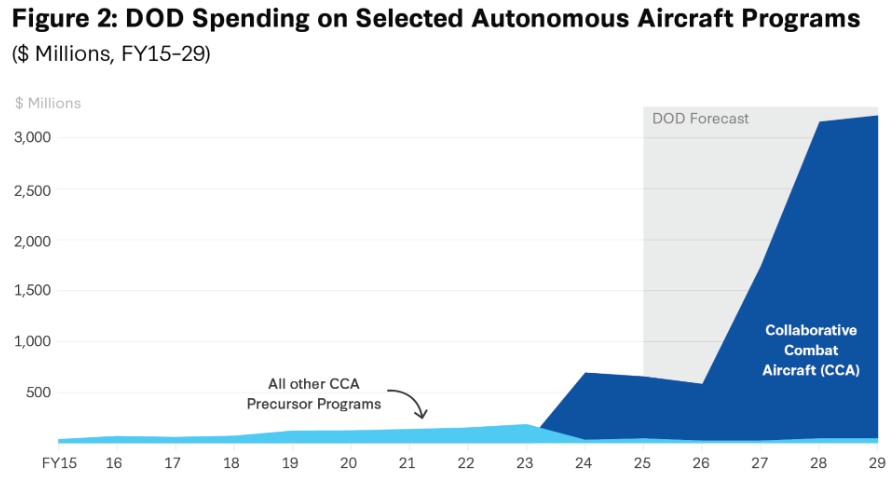
{2c} DoD spending on selected autonomous aircraft programs. Chart Credit: Center for Strategic and International Studies | CSIS.
{3} The U.S. Air Force has identified CCA as a key pillar of its future air combat strategy, aiming to augment traditional fighter squadrons with autonomous wingmen capable of executing a wide range of tasks. Image Credit: US Air Force and Anduril Industries.
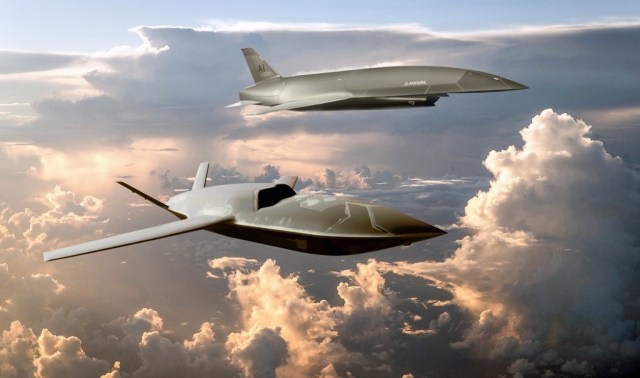
{4} A key advantage of the Loyal Wingman model is its ability to extend the reach and survivability of a fighter squadron. Image Credit: Boeing.
{5} These companies are at the forefront of developing collaborative combat aircraft, integrating advanced autonomous technologies to enhance the effectiveness and flexibility of future air combat operations. Image Credit: PWK International Advisers. 17 March 2025. All registered trade marks and trade names are the property of the respective owners.
{6} The AI that powers CCAs is built on advanced machine learning algorithms, which are trained on vast amounts of flight and combat data. Image Credits: Anduril Industries.
{7} The Strategic Impact of Collaborative Combat Aircraft. Image Credit: Northrop Grumman Corporation.
{8} The Future of Collaborative Combat Aircraft. Image Credit: PWK International Advisers. 17 March 2025.
{9} Integrating CCAs into the Modern Battlespace. Image Credit: Lockheed Martin Corporation.
{10} Our un-biased report mentions numerous CCA air combat innovators and their specific algorithmic warfare powered technological surprise and decision advantage trade craft. All registered trade marks and trade names are the property of the respective owners.
Additional Information:


1. Flying Magazine – “Autonomous Air Force Fighter Drones Are Being Put to the Test”
Overview of how the U.S. Air Force plans to field roughly 1,000 autonomous Collaborative Combat Aircraft to operate as loyal wingmen alongside crewed fighters.
https://www.flyingmag.com/autonomous-air-force-cca-drone-flight-testing/
2. Aerospace America – “2026 Will Test U.S. Air Force’s Bet on Drone Wingmen”
Analysis of the Air Force’s push toward operationalizing CCA fleets this decade, including prototypes from Anduril and General Atomics and upcoming production decisions.
https://aerospaceamerica.aiaa.org/2026-will-test-u-s-air-forces-bet-on-drone-wingmen/
3. U.S. Air Force – “Air Force Validates Open Architecture, Expands Collaborative Combat Aircraft Ecosystem”
Official Air Force release describing the open systems architecture approach that will allow rapid integration of sensors, weapons, and autonomy packages into CCAs.
https://www.af.mil/News/Article-Display/Article/4405471/air-force-validates-open-architecture-expands-collaborative-combat-aircraft-eco/
4. Defense Post – “General Atomics Names Loyal Wingman Prototype YFQ-42A ‘Dark Merlin’”
Details the naming and development of General Atomics’ YFQ-42A prototype, one of the primary aircraft competing in the CCA program.
https://thedefensepost.com/2026/02/24/us-dark-merlin-loyal-wingman/
5. Business Insider – “US Air Force F-22 Controlled Drone in Autonomy Test”
Reports on a test in which an F-22 pilot commanded an unmanned aircraft surrogate for a future CCA, demonstrating human–machine teaming in air combat scenarios.
https://www.businessinsider.com/us-air-force-f22-mq20-drone-mock-combat-autonomy-2026-2
6. Air Force Research Laboratory – “XQ-58A Valkyrie”
Official AFRL program overview describing the XQ-58A Valkyrie low-cost attritable aircraft, a key precursor and testbed for loyal wingman concepts.
https://afresearchlab.com/xq-58a-valkyrie/
7. National Museum of the U.S. Air Force – “Kratos XQ-58A Valkyrie Fact Sheet”
Explains the Valkyrie as a low-cost, high-performance unmanned aircraft designed to operate in teams with manned fighters.
https://www.nationalmuseum.af.mil/Visit/Museum-Exhibits/Fact-Sheets/Display/Article/3209939/kratos-xq-58a-valkyrie/
8. Marine Corps Times – “New Autonomous Aircraft in Development for Marines”
Describes exercises where XQ-58 Valkyrie drones flew alongside fighter pilots, demonstrating manned–unmanned teaming capabilities relevant to the CCA concept.
https://www.marinecorpstimes.com/news/your-marine-corps/2025/08/13/new-autonomous-aircraft-in-development-for-marines/
9. Airforce-Technology – “Collaborative Combat Aircraft (CCA) Program, United States”
Comprehensive overview of the CCA program structure, basing plans, and expected role in future sixth-generation fighter ecosystems.
https://www.airforce-technology.com/projects/collaborative-combat-aircraft-cca-usa/
10. Kratos Defense – “XQ-58A Valkyrie Uncrewed Tactical Aircraft”
Manufacturer overview highlighting how the Valkyrie uses AI autonomy and modular payloads to integrate with manned aircraft or operate independently.
https://www.kratosdefense.com/unmanned-systems/air/uncrewed-tactical-aircraft/xq-58a
11. U.S. Air Force – “Air Force Designates Two Mission Design Series for Collaborative Combat Aircraft”
The Air Force formally assigned the designations YFQ-42A (General Atomics) and YFQ-44A (Anduril), marking the first official “fighter drone” aircraft types in U.S. military aviation.
https://www.af.mil/News/Article-Display/Article/4092641/air-force-designates-two-mission-design-series-for-collaborative-combat-aircraft/
12. U.S. Air Force – “Collaborative Combat Aircraft Program Progresses Through Weapons Integration Testing”
Explains how CCA prototypes are entering captive-carry weapons testing, validating that autonomous wingmen can safely carry and deploy weapons.
https://www.af.mil/news/article-display/article/4412705/collaborative-combat-aircraft-program-progresses-through-deliberate-weapons-int/
13. U.S. Air Force – “YFQ-42A Takes to the Air for Flight Testing”
Announces the first flight of the General Atomics YFQ-42A, marking a major milestone in the Air Force effort to field large numbers of autonomous combat aircraft to team with crewed fighters.
https://www.af.mil/News/Article-Display/Article/4287627/collaborative-combat-aircraft-yfq-42a-takes-to-the-air-for-flight-testing/
14. The War Zone – “First Look at the YFQ-42 Fighter Drone”
Detailed examination of the General Atomics YFQ-42A prototype, one of the two initial aircraft selected for the CCA program.
https://www.twz.com/air/our-first-look-at-the-yfq-42-fighter-drone-collaborative-combat-aircraft
15. The War Zone – “Anduril’s YFQ-44 Fury Fighter Drone Has Flown”
Reports that the Anduril Fury YFQ-44A prototype completed its first flight, placing both initial CCA designs into flight testing.
https://www.twz.com/air/andurils-yfq-44-fury-fighter-drone-has-flown
16. Reuters – “Anduril Flies Its Uncrewed Jet Drone for the First Time”
Coverage of the first flight of the Fury loyal wingman drone, designed to operate semi-autonomously alongside manned fighter aircraft.
https://www.reuters.com/business/aerospace-defense/us-defense-company-anduril-flies-its-uncrewed-jet-drone-first-time-2025-10-31/
17. Air & Space Forces Magazine – “One CCA Platform Stands Out in a World of Threats”
Analysis of the General Atomics CCA platform and its scalability, highlighting how attritable autonomous aircraft could expand combat capacity.
https://www.airandspaceforces.com/in-a-world-teeming-with-threats-one-cca-stands-out-as-the-best-defense/
18. Defense News – “Air Force Eyes Northrop Grumman Autonomous Drone for CCA Program”
Discusses a potential third CCA contender (YFQ-48A Talon) being evaluated by the Air Force for future program increments.
https://www.defensenews.com/air/2026/01/02/us-air-force-eyes-autonomous-northrop-grumman-drone-for-cca-program/
19. U.S. Air Force – “Open Architecture Expands Collaborative Combat Aircraft Ecosystem”
Explains the Air Force strategy to build modular open systems so different companies can integrate sensors, autonomy software, and weapons into CCAs.
https://www.af.mil/News/Article-Display/Article/4405471/air-force-validates-open-architecture-expands-collaborative-combat-aircraft-eco/
20. AIAA Aerospace America – “General Atomics YFQ-42A Performs First Flight Test”
Coverage of the first flight of the YFQ-42A prototype and the rapid development cycle that moved the aircraft from concept to flight testing.
https://aiaa.org/2025/08/28/general-atomics-yfq-42a-performs-first-flight-test/
21. General Atomics – “YFQ-42A CCA Flight Testing Begins”
Manufacturer release describing the jet-powered unmanned aircraft designed to achieve air dominance alongside manned fighters.
https://www.ga.com/ga-asi-marks-another-aviation-first-with-yfq-42a-cca-flight-testing
22. General Atomics – “Gambit Series Collaborative Combat Aircraft”
Overview of the Gambit family of modular unmanned fighters, designed for scalable production and multiple mission configurations.
https://www.ga-asi.com/remotely-piloted-aircraft/gambit-series
23. FlightGlobal – “General Atomics Planning Modular Family of Uncrewed Fighters”
Discusses the common architecture approach used in the Gambit family, enabling multiple CCA variants from a shared core design.
https://www.flightglobal.com/military-uavs/general-atomics-planning-modular-family-of-uncrewed-fighters/162407.article
24. USNI News – “General Atomics and Anduril Hint at Concepts for Navy Unmanned Combat Aircraft”
Explores how the CCA concept may expand beyond the Air Force to naval aviation, including carrier-capable loyal wingman drones.
https://news.usni.org/2026/02/05/general-atomics-anduril-hint-at-concepts-for-new-u-s-navy-unmanned-combat-aircraft
25. The War Zone – “Anduril Fury CCA Flying With AIM-120 Missile”
Reports early weapons integration testing with an AIM-120 air-to-air missile, demonstrating how CCAs may carry additional “magazine depth” for manned fighters.
https://www.twz.com/air/yfq-44a-fury-now-flying-with-aim-120-amraam-missile
About PWK International Advisers:
PWK International is an independent advisory and research firm focused on the intersection of emerging technology, defense innovation, and global security strategy. Drawing on decades of experience supporting the U.S. defense and intelligence communities, PWK International provides analysis and strategic insight on disruptive technologies shaping the future battlespace, including artificial intelligence, autonomous systems, and next-generation aerospace capabilities.
Our work supports defense investors, technology companies, government agencies, and strategic planners seeking informed perspectives on rapidly evolving national security technologies. Through independent research reports, expert analysis, and advisory services, PWK International examines how innovations—from AI-enabled warfare to advanced aerospace platforms—are transforming military doctrine and industrial competition.
Readers interested in deeper analysis can explore the firm’s dedicated Collaborative Combat Aircraft research page, which examines the rise of autonomous “loyal wingman” systems, the companies developing them, and the strategic implications for future air combat. The research includes PWK International’s in-depth report “AI in the Cockpit: The Rise of Autonomous Wingmen,” which explores how AI-enabled aircraft are expected to operate alongside crewed fighters as force multipliers in contested environments.
Additional analysis and publications are available in the Research section of the PWK International website, where ongoing work examines emerging defense technologies and their impact on global security.


















 pwkinternational.com
Pingback: Winning Wars with Data |
Pingback: Taking Aim at Drones | The Fight for Control |