
When Donald Trump proclaimed himself the world’s ultimate dealmaker, few imagined that one of his sharpest arenas would be the global arms market. Far from the glitz of Manhattan skyscrapers and gilded hotels, Trump found another high-stakes playground: foreign military sales. Tanks, missiles, and precision-guided bombs — these were the new chips in his version of The Art of the Deal, a realm where the buyers were nations and the negotiations carried life-or-death consequences.
Under normal circumstances, the sale of American weapons abroad is a careful dance choreographed by law, diplomacy, and Congressional oversight. The Arms Export Control Act (AECA) lays out strict processes, including a 30-day advance notice to Congress for major sales, meant to ensure that arms transfers align with U.S. interests and values. Congress can, in theory, stop a sale dead in its tracks. But theory is a far cry from reality — and Trump, ever the businessman, saw opportunity in the gray spaces where politics and procedure blur.
The Trump Administration’s defining move was its aggressive use of “emergency” waivers to fast-track arms deals, particularly in 2019 when Secretary of State Mike Pompeo notified Congress of 22 separate sales to Jordan, Saudi Arabia, and the United Arab Emirates without waiting for standard review. Citing urgent national security concerns, the administration bypassed the usual Congressional checks with the speed of a veteran negotiator closing a time-sensitive deal. Congressional outrage followed — but vetoes and parliamentary maneuvers ensured the transactions stayed intact.
This was not illegality; it was technical mastery. Trump’s approach revealed both the strengths and weaknesses of America’s arms sales system. It wasn’t just about selling weapons — it was about reimagining the rules of engagement. In Trump’s view, a deal was a success if it closed quickly, decisively, and on favorable terms. And when it came to selling the implements of modern warfare, the stakes — and the profits — could not have been higher.


The Congressional Checkpoint
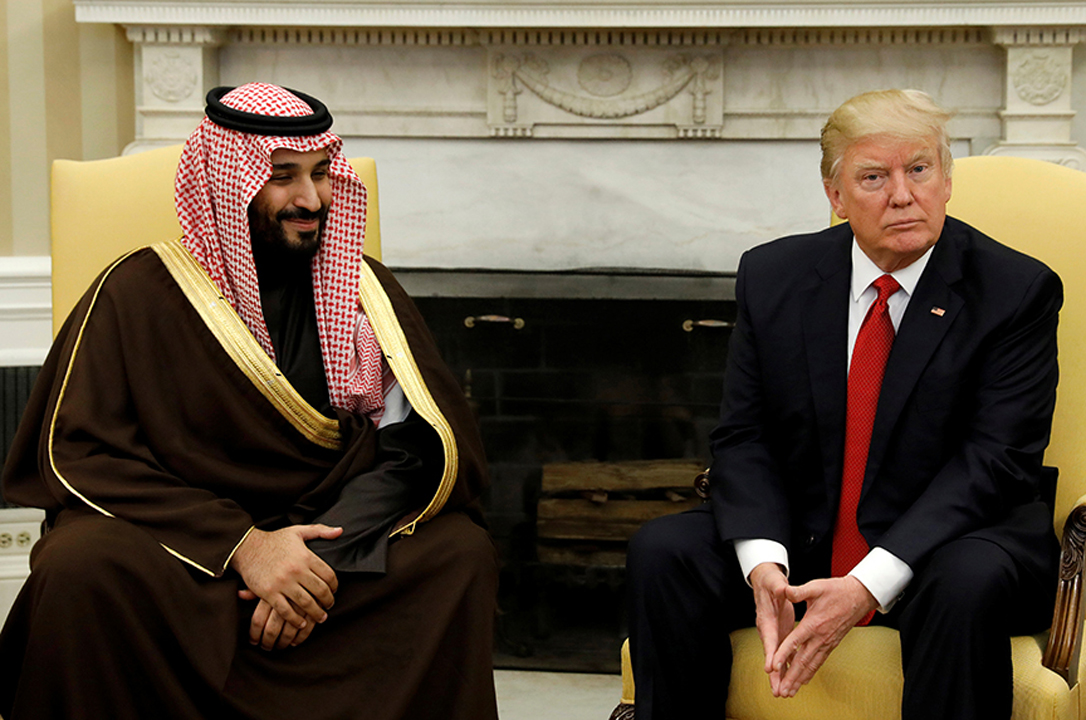
At its core, the Arms Export Control Act (AECA) was designed to ensure that selling weapons abroad would never be just a transactional affair. It established a congressional checkpoint — a deliberate speed bump — requiring the President to formally notify Congress at least 30 days before finalizing major foreign military sales. For close allies like NATO countries, Israel, Japan, and Australia, the notification window shrinks to 15 days, but the principle remains the same: Congress gets a chance to review, debate, and, if necessary, block deals that might entangle U.S. interests in unwelcome conflicts.
The thresholds are precise: $14 million or more for major defense equipment, $50 million for other defense articles or services, and $200 million for design and construction services. On the commercial side, private arms exporters must similarly notify Congress when direct sales cross comparable thresholds. These safeguards were meant to preserve Congressional leverage — to ensure that the Executive Branch did not unilaterally dictate American foreign policy with weapons deals made behind closed doors.

In theory, Congress wields a potent tool: it can pass a joint resolution of disapproval to halt a sale outright. In practice, this has proven almost impossible. No proposed arms sale has ever been successfully blocked by such a resolution. Procedural hurdles, political calculations, and partisan divides often paralyze congressional efforts, especially when facing the executive’s broad powers to frame these sales as matters of urgent national security. Thus, while Congress may grumble, stall, or grandstand, the sale usually proceeds — a dynamic that Trump’s team understood with clinical precision.
Even before a formal notification hits Capitol Hill, administrations traditionally provide an “informal notification” to key committees, giving lawmakers a chance to raise concerns quietly. This process allows for negotiation and adjustment behind the scenes, minimizing public confrontations. Yet under Trump, the informal system became less of a forum for compromise and more of a testing ground: if objections could be overridden or ignored early, the path to finalizing the deal became that much smoother. For an administration that prized speed and showmanship, the Congressional checkpoint was just another obstacle to bulldoze — or, better yet, negotiate around.
The Trump Move: Using Emergency Waivers
In May 2019, the Trump Administration made its boldest maneuver yet in the world of arms sales. Secretary of State Mike Pompeo, acting on the President’s directive, invoked the AECA’s emergency waiver provision to push through 22 separate arms deals totaling roughly $8 billion to Saudi Arabia, Jordan, and the United Arab Emirates. Normally, such an enormous transfer of advanced weaponry would face intense Congressional scrutiny. But by declaring an “emergency” — citing escalating threats from Iran — the Administration sidestepped the 30-day review window entirely, blindsiding many lawmakers and igniting a political firestorm.
The use of the emergency waiver was not without precedent. Previous administrations had invoked it in narrow circumstances: Israel during times of war, for instance, or emergency shipments to Gulf allies. But Trump’s move was unprecedented in scale and audacity. Rather than an isolated transaction, the waiver was applied en masse, covering everything from precision-guided munitions to aircraft support services. It was less an emergency exception than a reimagining of what counted as an emergency — another demonstration of Trump’s instinct for testing the elasticity of old rules without technically breaking them.
Congress responded with fury. Bipartisan majorities in both the House and Senate passed joint resolutions of disapproval aimed at blocking several of the sales, particularly the controversial transfer of Paveway bomb components and other precision-guided munitions. But Trump, wielding the veto pen with relish, shot down the resolutions. Efforts to override his vetoes failed. The message was clear: so long as the President framed arms sales as urgent matters of national security, Congress’s ability to intervene was more illusion than reality.
In the end, the 2019 emergency sales went forward largely unimpeded, a victory for Trump’s deal-making ethos. The art here was not just in making the sale, but in reshaping the political and legal environment to make resistance futile. Trump had turned a congressional safeguard into a speed bump, setting a precedent that future presidents — and America’s global competitors — would surely study with interest. In the business of war, as in real estate, timing and boldness often matter more than tradition.

These deals, totaling approximately $8.1 billion, were justified by the administration as necessary to counter Iranian aggression and to support the defense capabilities of key Middle Eastern allies. The emergency declaration allowed for the expedited processing of these sales without the standard Congressional review period.

Note: The specific details and dollar amounts for some of these deals are based on available public information and may be subject to further clarification or updates.

~~~~~~~~~~~~~~~~~~~~~~~~~~~~~~~~~~~~~~~~~~~~~~~~~~~~~~~~~~~~~~~~~~~~

Saudi Arabia: $1.8 billion for aircraft follow-on support and services, ensuring maintenance and readiness of existing aircraft fleets.

Saudi Arabia: $800 million for additional aircraft support, enhancing operational capabilities of various aircraft platforms.

Saudi Arabia: $136 million for continued Tactical Air Surveillance System aircraft support, bolstering surveillance and reconnaissance operations.

Saudi Arabia: $2.6 billion for aircraft logistics and support, covering platforms such as the F-5, F-15, C-130, and E-3, to maintain and upgrade fleet readiness.

United Arab Emirates (UAE): $900 million for 20,000 Advanced Precision Kill Weapon System II (APKWS) rockets, enhancing precision strike capabilities.

UAE: $102 million for 331 Javelin guided anti-tank missiles, strengthening ground force anti-armor capabilities.

UAE: $80 million for 20 RQ-21A Blackjack unmanned aerial systems, expanding intelligence, surveillance, and reconnaissance (ISR) operations.

UAE: $100 million for continued training of the UAE Presidential Guard by the U.S. Marine Corps, focusing on special operations and leadership development.

UAE: $1.5 billion for Patriot Guidance Enhanced Missiles (GEM-T), improving air and missile defense systems.

UAE: $500 million for AH-64 Apache helicopter equipment and support, enhancing attack helicopter fleet capabilities.

UAE: $350 million for F-16 aircraft support, ensuring sustained operational readiness of the fighter fleet.

UAE: $200 million for maintenance and support of various aircraft platforms, including C-17 and C-130 transport aircraft.

UAE: $150 million for logistics support services, covering a range of military equipment and systems.

UAE: $100 million for spare parts and components for multiple aircraft types, ensuring availability of critical replacement parts.

UAE: $50 million for support and maintenance of naval vessels, enhancing maritime security operations.

UAE: $25 million for training and support services for various military systems, improving operational proficiency.

UAE: $10 million for technical assistance and support for defense systems, facilitating effective system integration and use.

UAE: $5 million for cybersecurity support services, strengthening defense against cyber threats.

Jordan: $50 million for the transfer of precision-guided munitions (PGMs) from the UAE, enhancing Jordan's strike capabilities.

Jordan: $30 million for maintenance and support of F-16 fighter aircraft, ensuring continued air superiority.

Jordan: $20 million for logistics and support services for various military equipment, improving overall operational readiness.

Jordan: $10 million for training and technical assistance for defense systems, enhancing military effectiveness and interoperability.

Congress Strikes Back (or Tries To)
Faced with what they saw as a dangerous erosion of Congressional authority, lawmakers attempted to reassert control. In response to Trump’s emergency arms sales in 2019, both chambers of Congress moved swiftly to pass multiple joint resolutions of disapproval. These measures targeted not only the transactions themselves but also the broader precedent they feared Trump was setting — one where emergency powers could be invoked almost at will, turning Congress into a ceremonial bystander rather than a real check on executive action.
The legislative pushback was historic in its scope. Twenty-two separate resolutions were introduced, covering a wide range of weapons systems and technical services. The Senate, rarely united across party lines during Trump’s presidency, mustered bipartisan support for three key resolutions. The House quickly followed suit, signaling unusual Congressional alignment against the White House. But passing resolutions was one thing; overcoming a presidential veto was another. Trump vetoed all three resolutions with the confidence of a man who understood the odds — and the political math — were in his favor.
Overriding a presidential veto requires a two-thirds majority in both the House and Senate, a threshold rarely achieved even on the most pressing national debates. In the end, override attempts fell short, and the arms sales proceeded as Trump intended. Congress had flexed its muscles, but found them weaker than expected. The episode revealed a fundamental truth about the American system: while Congress possesses the tools to block arms sales in theory, in practice the process heavily favors a determined executive, particularly one skilled at framing every transaction as vital to national security.
Trump’s triumph was not merely procedural; it was psychological. By demonstrating that even massive bipartisan resistance could be overcome, he reinforced the idea that boldness — not deference — was the path to closing the biggest deals. In the high-stakes game of arms sales, Trump had once again proved his central thesis: it’s not about playing by the old rules. It’s about recognizing when the rules no longer apply — and having the will to seal the deal anyway.

The Numbers Game: Thresholds and Tricks
Beneath the headlines and veto drama, another dimension of the Trump Administration’s strategy emerged: a meticulous understanding of how to work the numbers. The Arms Export Control Act set specific value thresholds that triggered Congressional notification — $14 million for major defense equipment, $50 million for defense articles or services, and $200 million for construction. Deals falling below those thresholds could quietly proceed without the formal scrutiny that larger transactions required. In the Trump era, this technicality became a feature, not a bug, of the broader arms sales playbook.
One method involved breaking up large sales into smaller packages, keeping each under the reporting limits and thus sidestepping the need for early Congressional involvement. Another tactic relied on bundling approvals into broader emergency declarations, reducing the visibility of individual transactions within a larger, security-driven narrative. The result was a game of legislative hopscotch: moving billions in weapons while minimizing political obstacles by mastering the procedural maze laid out by Congress itself.
Even the informal notification process — designed as a goodwill gesture to allow Congressional committees to quietly raise concerns — became a strategic opportunity. If early objections emerged, they could be managed, neutralized, or simply overridden before any formal paperwork reached the broader legislative body. The Administration’s attitude toward informal holds was straightforward: they were advisory, not binding. In Trump’s world, a “hold” from a senator was just another opening bid in a negotiation, not a veto.
This numbers-driven finesse underscored a larger reality: success in arms sales wasn’t just about big speeches or sweeping declarations. It required detailed knowledge of the bureaucracy, a willingness to exploit gray areas, and an unapologetic focus on closing the deal. Trump’s team didn’t rewrite the laws; they simply played them more aggressively than their predecessors ever dared. In the art of the arms deal, knowing the fine print mattered just as much as sealing the handshake.

Other Administrations: A Brief Comparison
To be clear, Trump was not the first president to wield the emergency provisions of the Arms Export Control Act. Past administrations had also turned to these powers when rapid arms transfers seemed necessary. Ronald Reagan invoked emergency authority during the 1980s to expedite shipments to allies like Saudi Arabia. More recently, the Obama Administration used emergency procedures to accelerate support to key partners fighting terrorism in volatile regions. Emergencies, after all, are a built-in pressure valve for U.S. arms control policy — a recognition that the world rarely moves at the pace of legislative calendars.
Yet Trump’s use of the emergency clause was distinct, both in scale and tone. Previous emergency notifications typically focused on narrow, urgent needs: replenishing Israeli munitions during conflict, for example, or supplying specialized equipment to a nation under sudden attack. Trump’s 2019 move, by contrast, bundled 22 sales into a single, sweeping emergency declaration — a decision that dramatically expanded the traditional definition of what constituted an “urgent” requirement. It was less about responding to a crisis and more about restructuring the arms sales process itself.
Moreover, earlier presidents tended to frame emergency sales in diplomatic language, carefully emphasizing respect for Congressional prerogatives. Trump approached the matter differently. He treated arms sales like business contracts delayed by needless red tape — a bureaucratic bottleneck standing between America’s defense industry and lucrative foreign markets. Where past administrations sought quiet consensus, Trump welcomed public confrontation, betting that few lawmakers would ultimately risk appearing weak on national security.
In that sense, Trump’s approach to arms sales paralleled his broader foreign policy style: disruptive, transactional, and laser-focused on immediate wins. He didn’t merely use the existing rules — he redefined how aggressively a president could wield them. Future administrations, Democratic or Republican, now face a precedent where the emergency waiver is less a last resort and more a strategic lever — a tool of presidential power that Trump sharpened for all who follow.
The Legacy: Deals or Danger?
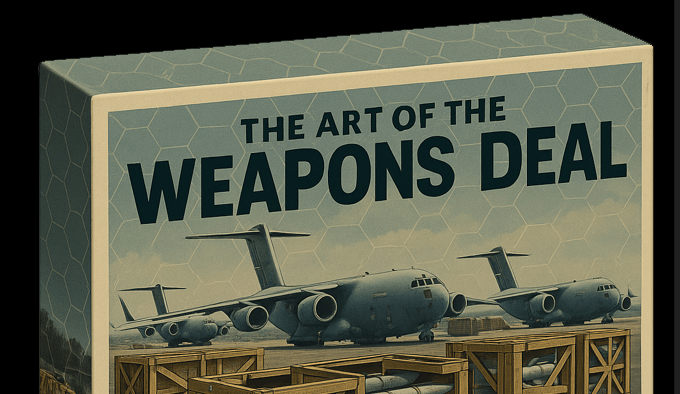
The Trump Administration’s aggressive arms sales strategy left behind a complex legacy. On one hand, it fueled a boom for American defense contractors, secured high-profile contracts with key regional allies, and reinforced the image of the United States as an indispensable supplier of advanced military technology. Factories in states like Texas, Arizona, and Pennsylvania — crucial electoral battlegrounds — benefited from the jobs and economic activity that came with large foreign military sales. In the short term, the art of the arms deal delivered tangible political and economic wins.
Yet beneath the surface, there were growing concerns about what had been sacrificed for speed. Congressional oversight — designed not merely to obstruct, but to safeguard America’s long-term strategic interests — was weakened by repeated emergency declarations. Arms sales to volatile regions carried the risk of unintended consequences: advanced U.S. weaponry could wind up fueling regional arms races, prolonging conflicts, or even being used in ways that contradicted broader American values and goals. Speed may have delivered deals, but it also increased the chances of downstream instability.
Moreover, Trump’s bold tactics blurred the lines between emergency necessity and executive convenience. If every foreign policy challenge could be labeled an “emergency,” then the very notion of Congressional review became a hollow formality. Critics argued that this approach hollowed out bipartisan norms that had, for decades, acted as a modest brake on the excesses of realpolitik. By sidelining Congress, the Trump Administration made it harder to distinguish between legitimate strategic urgency and mere political expediency.
In the end, Trump’s arms sales legacy offers a warning wrapped in a lesson. Deals can be won, profits can rise, and allies can be armed — but if the process undermines the institutions meant to balance power, the true cost may only become clear years later. The art of the deal, when applied to instruments of war, is not just about winning today’s headlines; it is about managing tomorrow’s consequences.

Top 6 Takeaways
Trump aggressively used emergency powers to bypass Congressional review of 22 major arms deals in 2019, reshaping how the Arms Export Control Act (AECA) is applied. (Source: CRS Report, 2025)
Congress has never successfully blocked an arms sale via joint resolution, despite numerous attempts — a structural weakness Trump fully exploited.
Breaking up sales and manipulating thresholds allowed the Trump Administration to avoid formal notifications and fast-track sensitive deals without full Congressional scrutiny.
Compared to past presidents, Trump expanded the use of emergency waivers from isolated, urgent needs to sweeping, multi-billion-dollar packages — setting a new, bolder precedent.
Trump reframed arms sales as jobs and business deals, prioritizing fast closures and economic benefits over slower diplomatic consensus-building.
The long-term risk: Future presidents may now view the AECA’s emergency clause as a routine tool rather than a rare exception, further weakening Congressional oversight on matters of war and peace.
Conclusion:

Donald Trump brought the instincts of a New York real estate mogul to the highest levels of foreign policy. In the world of arms sales, he viewed Congressional oversight not as a constitutional guardrail, but as just another hurdle to outmaneuver. He treated emergency powers as a closing tool — a way to finalize billion-dollar deals before opposition could gather enough strength to block them. In his view, the successful deal wasn’t the one that survived endless rounds of review; it was the one that got signed, sealed, and delivered before the market shifted.
The Trump Administration’s approach to arms sales revealed a core truth about the modern presidency: power often belongs not to those who write the rules, but to those willing to push them to their limits. Through aggressive use of emergency waivers, deft manipulation of notification thresholds, and a relentless focus on speed over ceremony, Trump reshaped the way America arms its allies — and, perhaps, how future presidents will view their own authority in this sensitive domain.
Still, questions remain. Will future administrations continue to stretch the meaning of “emergency” to expedite arms transfers? Will Congress find a way to reassert its role, or has the die been cast for a more executive-driven arms policy? The answers may determine not just the health of America’s constitutional balance, but the stability of regions flooded with U.S.-made weapons negotiated under increasingly relaxed norms.
In the end, Trump’s greatest arms deal wasn’t just the billions in defense sales pushed through under his watch. It was the broader, quieter deal he struck with the system itself — a bet that in the high-stakes business of power, boldness beats tradition, and speed beats caution. For better or worse, that’s the real art of the (weapons) deal.
About PWK International Advisers
PWK International Advisers is a boutique consulting firm specializing in strategic advisory services for embassies, defense attachés, foreign governments, and international organizations navigating the complex world of U.S. defense and security cooperation. We operate at the intersection of policy, acquisition, and technology innovation — empowering allies and partners to understand and engage with American defense institutions, from Capitol Hill to the Pentagon.
Our team brings deep, firsthand experience across U.S. government systems — from foreign military sales (FMS) and export controls to defense innovation ecosystems like DIU, DSCA, and DARPA. We help our clients align their priorities with U.S. defense strategies, translate their national requirements into actionable programs, and position themselves for meaningful security partnerships. Whether it’s understanding the arms transfer process, building technology roadmaps, or shaping multilateral agreements, we deliver practical expertise with geopolitical insight.
PWK International Advisers is trusted by missions and ministries that need clarity, context, and results. We act as your bridge into the defense-industrial landscape of the United States — helping you navigate the bureaucracy, shape policy engagement, and win outcomes that matter. In a world where strategy and access are everything, we offer both.


















 pwkinternational.com