

When someone says “Five-O,” most people think of sirens, handcuff’s and the phrase “book em Danno”. Five-O derived from the popular 1980’s television crime show has long been cultural shorthand for the police, the enforcers of the law who patrol our streets and chase criminal suspects. But the reality of policing in the twenty-first century stretches far beyond high speed car chases. Today, non-defense law enforcement agencies wield fleets of aircraft, command maritime units, and deploy advanced surveillance technologies—sometimes rivaling or even surpassing military organizations in size, budget, and operational scope.
This report takes readers behind the badge to explore the major law enforcement organizations around the world, tracing their origins, evolution, and missions. From the U.S. Customs and Border Protection’s Air and Marine Operations—the largest law enforcement agency in the world—to Europe’s gendarmeries, Asia’s paramilitary police, and transnational bodies like Europol, these institutions reveal how states enforce order at home and project authority abroad. Their growth underscores a critical truth: law enforcement is no longer a purely domestic enterprise but a global one.
This report will also unpack how investing in new technologies, upgrading investigative tradecraft, and aligning legal authority with organizational process, these agencies transformed outdated capacities into street-level results — big seizures, thousands of arrests, digital takedowns, and disrupted criminal networks. In each case, the move that made the difference wasn’t just buying sensors or deploying encryption, but embedding those tools in task forces and making law enforcement as data-driven and agile as any modern technology company.

Along the way, this report will reveal several lessons that cut across every case: one well-timed technical breakthrough can trigger waves of arrests across borders; international partnerships turn isolated wins into systemic disruption; and agencies that measure and publish results build the strongest case for sustained investment.
This report will also explore each organization in detail, why these agencies matter, and how they are frontline laboratories where modernization choices translate into measurable results — seizures tallied in tons, arrests counted in the thousands, and networks dismantled through data fusion and international coordination. This report takes a up-close look at the world’s leading non-defense law enforcement agencies, exploring their origins, missions, and the modernization initiatives that have allowed them to convert technology and authority into impact and public safety.
A New Era of Crime
The digital era has expanded the battlefield for law enforcement far beyond the traditional beat. Transnational organized crime continues to evolve, trafficking narcotics like cocaine, heroin, fentanyl, and meth while also exploiting vulnerable populations through human trafficking and migrant smuggling. Arms trafficking, once confined to regional black markets, now includes sophisticated systems such as MANPADS and explosives moving across porous borders. Counterfeit goods, intellectual property theft, and the exploitation of natural resources through illegal logging and poaching further reveal how criminal networks blend profit-seeking with destabilization, often extending their reach across continents.

“A new era of crime is under way unlike anything we have faced before in speed, scale and sophistication. The chaos and misery it is unleashing is destabilising countries, driving migration, destroying ecosystems and harming the lives and livelihoods of millions.”
— Stephen Kavanagh
Executive Director, INTERPOL
London, 28 May 2024
CAPTION: The Wheel of Algorithmically Boosted Chaos | Source: PWK International
At the same time, cyber and digital crime has become a defining feature of the twenty-first century. Ransomware attacks cripple hospitals, schools, and businesses; business email compromise schemes siphon billions annually; and identity theft and credential harvesting undermine consumer trust. Darknet marketplaces serve as hubs for illicit trade in drugs, weapons, and stolen data, while crypto jacking and cryptocurrency laundering create new financial pipelines for criminals. Perhaps most alarming is the persistence of online child exploitation, where anonymity and global connectivity magnify both the scale of abuse and the difficulty of enforcement.
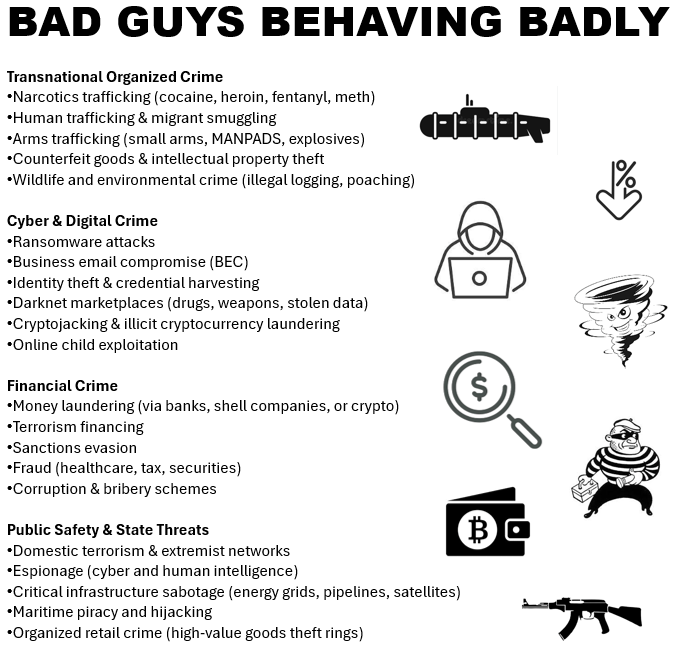
CAPTION: Bad Guys Behaving Badly | Source: PWK International
Overlaying these threats are financial crime and state-level dangers that challenge sovereignty itself. Money laundering through shell companies or cryptocurrency obscures the flow of billions, while terrorism financing and sanctions evasion weaponize financial systems against international order. Fraud in healthcare, securities, and taxation continues to erode trust in institutions, while corruption and bribery schemes hollow out governance from within. Add to this the rise of domestic terrorism, cyber-enabled espionage, critical infrastructure sabotage, maritime piracy, and even organized retail theft at scale, and the picture is clear: modern law enforcement faces a multipolar threat landscape where digital vectors, transnational logistics, and geopolitical rivalries converge.

United States — CBP: Air and Marine Operations (AMO)
Air and Marine Operations (AMO) is the aviation and maritime arm of U.S. Customs and Border Protection. Formed by integrating legacy aviation and marine units after the creation of DHS, AMO’s mission is interdiction, detection, and aerial/maritime domain awareness at and beyond U.S. borders. Today AMO operates across the U.S., Puerto Rico, and the U.S. Virgin Islands; its force includes roughly 1,800 agents and mission support personnel, ~240 aircraft and ~300 vessels, making it one of the largest single operational law-enforcement aviation/maritime forces in the world.
Compositionally, AMO blends federal Air and Marine Interdiction Agents, tactical flight crews, maintenance and sensor specialists, and a growing unmanned aircraft systems (UAS) capability. AMO’s operations are integrated with Border Patrol, ICE, and state/local partners—so its operational reach is often multiplied through task forces and information-sharing. Its legal authorities combine customs, immigration, and general federal law-enforcement powers, which lets AMO conduct everything from high-altitude surveillance to maritime interdictions.
Modernization Moves
AMO’s modernization focused on persistent domain awareness: expanded unmanned aircraft systems, longer-range fixed-wing ISR, and upgraded maritime intercept vessels connected by mission data links to Border Patrol and fusion centers. The result was simple and measurable: AMO has been a decisive participant in major maritime cocaine interdictions and hundreds of interdiction arrests. CBP’s FY reporting ties AMO-led operations to large, multi-ton seizures and a clear uptick in high-value interdictions, demonstrating that aerial persistence plus shoreline tasking cuts search time and increases positive intercepts. This outcome depended as much on tasking reform and interagency joint task forces as on the sensors themselves—showing modernization must be doctrinal as well as technical.
AMO’s headline results are recurring: large maritime drug interdictions, migrant interdictions, and target-of-interest apprehensions off the coasts and in the hinterland—operations that frequently supply the metrics used to justify continued fleet investment. Its scale and hardware-heavy posture make it a model of how policing once limited to streets now extends into the air, onto the ocean surface and even underneath it..

CBP AMO invested in persistent ISR with expanded UAS operations and multi-role enforcement fixed-wing aircraft, upgraded maritime intercept vessels, and stronger data links to Border Patrol and fusion centers — formalized in FY20–FY24 fleet and UAS reporting.
| Metric | Before (baseline) | After (latest FY24) |
| Force composition | 1,600 personnel; 200+ aircraft 275 vessels | 1,800 personnel 240 aircraft 300 vessels |
| Cocaine seizures | FY24: AMO enforcement actions contributed to 256,883 lb cocaine seizure (AMO FY23 summary). | FY24: AMO enforcement actions contributed to 485,230 lb cocaine seizure (AMO FY24 summary). |
| Arrests / Apprehensions | FY23: 1,004 arrests and 89,909 apprehensions attributed to AMO enforcement actions. | FY24: 1,009 arrests and 48,609 apprehensions attributed to AMO0 enforcement actions. |

United States — Federal Bureau of Investigation (FBI)
The FBI began in 1908 as the Bureau of Investigation and evolved into the FBI in 1935; it is the United States’ principal domestic intelligence and federal criminal investigative agency. The Bureau combines national-security functions (counterterrorism, counterintelligence) with criminal investigative authorities across hundreds of federal crimes. Its workforce is large and multi-disciplinary—special agents, analysts, forensic scientists, language specialists, and legal staff—numbering in the tens of thousands and maintaining domestic field offices plus a global LEGAT footprint.
Structurally the FBI blends traditional investigative squads with national-security directorates and mission priority teams; it plays a lead role in high-value arrests, cyber intrusions, counterintelligence takedowns, and organized-crime probes. The Bureau’s integration into the U.S. intelligence community and its legal authorities means it often bridges criminal law enforcement and national security operations—a hybrid role that increases its strategic value but also draws scrutiny over domestic surveillance and civil-liberties tradeoffs.
Modernization Moves
The FBI’s cyber modernization track—better malware forensics, cross-border legal coordination, and playbooks for server seizures and sink holing—made possible high-profile botnet disruptions like Emotet. The January 2021 multinational operation disrupted an infrastructure that had infected roughly 1.6 million machines globally and tens of thousands in the U.S., removing a major commodity for ransomware actors. The operation illustrates a broader point: offensive cyber law enforcement that pairs technical takedown capability with international legal bandwidth degrades criminal ecosystems at scale, but must be followed by recovery tooling and sustained analytic investment to preserve gains.
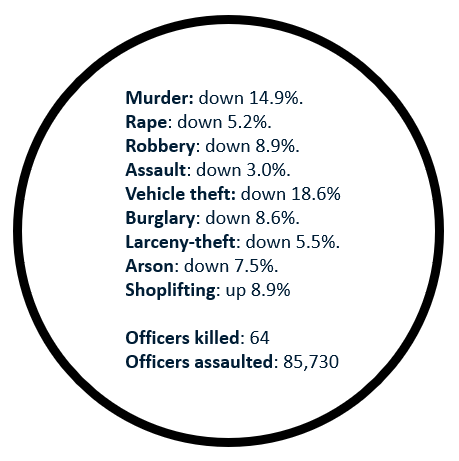
The FBI and international partners invested in coordinated cyber disruption playbooks: cross-border server seizures, sink holing, and forensic reverse-engineering to remove criminal infrastructure followed by improved malware analytics and incident response coordination.
In the January 2021 international operation: allied law-enforcement seized Emotet infrastructure, pushed updates to neutralize the malware, and announced the botnet disruption — a major, public win for coordinated cyber policing. Emotet is instructive for two reasons: it shows how a focused capability — international cyber-forensics plus coordinated domain seizure — can eliminate a dominant criminal infrastructure, and it underscores the follow-through required to convert disruption into durable benefit. The FBI’s modernization (tooling for malware analysis, overseas legal coordination, and partnerships with private sector incident responders) allowed a one-time technical takedown to produce immediate reductions in criminal capability and reduce downstream ransomware and fraud incidents that leveraged Emotet for initial access.
The operation’s impact was measurable in the short term (millions of compromised systems neutralized, command nodes seized) and provided a template for future campaigns against botnets and ransomware groups. For PWK readers, the Emotet case validates investment in offensive-style cyber law enforcement — but also points to sustainability problems: criminals adapt quickly, so takedowns work best when paired with resilient recovery tooling, public-private information sharing, and continuous talent investment.
The Bureau’s recent years have been defined by high-profile arrests and indictments (complex cyber and espionage cases, ransomware disruption, and organized crime prosecutions), and by organizational moves to better fuse intelligence and investigations as adversaries move online and across borders.

United States — Drug Enforcement Administration (DEA)
The DEA was created in 1973 to consolidate federal drug-control functions. Its mandate is aggressive: dismantle drug trafficking organizations, interdict shipments, and coordinate international counter narcotics efforts. DEA combines criminal investigators, intelligence analysts, foreign offices, and forensic capacity; it plays a leading role in tracking synthetic opioid flows and disrupting trafficking networks that operate across continents.
In personnel and posture the DEA fields domestic task forces and a broad overseas footprint embedded in U.S. embassies; it uses undercover operations, financial investigations, and forensic analysis to convert seizures into dismantled networks. The agency’s partnerships with local task forces, Homeland Security, and foreign counterparts are central to its success—especially against chemically produced drugs like fentanyl where supply-chain interdiction must be global.
Modernization has centered on opioid detection technologies, data-driven targeting, and cooperation with e-commerce platforms to stop pill presses and precursor chemical sales. Recent DEA reporting highlights record fentanyl seizures (tens of millions of pills and thousands of pounds of powder in 2023), demonstrating both the scale of the threat and DEA’s role in large, nationally-reported interdictions.
Modernization Moves
DEA’s modernization strategy recognizes that synthetic opioid threats require supply-chain disruption, not just arresting street sellers. By investing in forensic chemistry, precursor tracking, and international liaison networks, the agency has forced measurable interruptions: headline 2024 figures—tens of millions of pills and thousands of pounds of powder seized—signal a shift from tactical arrests to strategic interdiction of manufacturing and transport nodes.

DEA invested in precursor-chemical tracking, forensic pill testing, and expanded foreign liaison operations — coupled with a data-driven targeting approach focused on pill-press interdiction, precursor supply chains and darknet marketplaces. These moves were aimed at choking fentanyl supply lines, not merely street-level arrests.
Importantly, DEA’s results are data-driven: regional divisions report percentage surges in pill seizures (e.g., large increases in Washington Division seizures in 2023), which are then tied to foreign makes/shipments and to the takedown of production/packaging sites. For PWK readers the takeaway is clear: when law enforcement couples specialized science and overseas partnership with domestic task forces, outcomes scale — but the problem’s economics remain brutal (producers adapt, precursors shift). The performance gains are real and quantifiable, but they must be part of a broader public-health and interdiction strategy to reduce demand and sustain impact.

Europol (European Union Agency for Law Enforcement Cooperation)
Europol is a supranational policing hub created to coordinate cross-border investigations, intelligence exchange, and specialist analytical support across EU member states. Its mandate is not to arrest at scale itself but to enable national authorities—through operational support, data analytics, joint investigation teams, and centralized expertise in cybercrime, drugs, trafficking, and terrorism. Europol has grown steadily and, as of end-2023/early-2024 reporting, employed on the order of ~1,700 staff with plans and budget increases aimed at expanding capacity.
Europol’s strength is its data platforms (SIENA, Europol’s analysis capabilities), its European Cybercrime Centre, and its ability to host joint investigative teams that cross legal and bureaucratic borders. It has been central to major multinational operations—ransomware and EncroChat/Sky ECC disruptions, as well as coordinated anti-trafficking takedowns—where centralized collection and decryption of offender communications yielded numerous arrests.
Modernization priorities focus on scaling digital forensics, using AI for pattern detection, and lobbying for legal frameworks that let it process higher volumes of personal data while respecting privacy protections. As the EU debates enlarging Europol’s powers and budget, the agency is both a model of pooled capability and an example of the political tradeoffs inherent in supranational policing.
Modernization Moves
The EncroChat/Operation Emma sequence is the archetype: one major technical penetration produced more than 6,500 arrests across Europe and headline asset seizures in the hundreds of millions of euros. Crucially, the value came not from a single agency acting alone but from a supranational hub that could parse terabytes of data, create cross-border leads, and synchronize simultaneous national arrests. For PWK readers the lesson is leverage: centralized technical capacity and legal coordination turn one decrypted data source into hundreds of successful prosecutions.
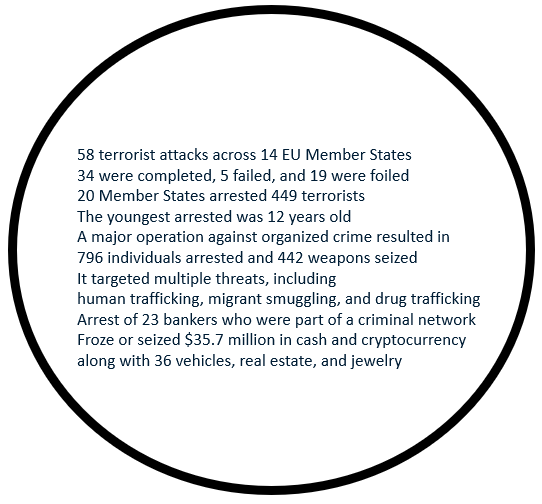
European cooperation invested in cross-border decryption, centralized digital forensics and joint investigative teams (JITs) — improving the ability to exploit encrypted services and coordinate multi-jurisdiction takedowns . . . and the payoff was exponential.
The EncroChat infiltration (2020–2023 follow-through) — malware on EncroChat devices allowed French/Dutch authorities to read live messages, which were passed through Europol/NCA channels and produced thousands of arrests and massive seizures. The operation is repeatedly cited as the premier example of pooled digital forensics delivering outsized prosecutorial outcomes.
EncroChat demonstrates the asymmetric effect of a single modernization axis: when agencies invest in coordinated decryption and pooled forensic capacity, one technical breakthrough can cascade into thousands of arrests and large financial seizures. Europol’s role was not to arrest at scale but to act as the glue — processing intercepted data, feeding leads to national authorities, and helping stand up JITs that could execute warrants simultaneously. The operational multiplier came from two places: (1) technical — the ability to ingest, parse, and turn encrypted message streams into actionable IDs at scale; and (2) organizational — tightly synchronized, multi-state warranting that prevented suspects from disappearing ahead of arrests. The EncroChat case also spotlighted legal and ethical tradeoffs (privacy vs. public safety), the need for clear cross-border legal frameworks, and the fact that technology upgrades only paid off because they were embedded in supranational procedures. The lesson is that joint capacity plus legal clearance equals leverage: one decryption can supply evidence for prosecutions across jurisdictions, multiplying the value of the original investment.

National Crime Agency
United Kingdom
The NCA was established in 2013 as the UK’s lead agency for serious and organised crime, often likened to a domestic FBI for complex, cross-border criminal networks. It brings together intelligence, operational teams, and specialist capabilities in cybercrime, economic crime, and child exploitation, and operates both at home and through overseas posts to coordinate transnational investigations.
Built as a national coordinating hub rather than a street-level force, the NCA supplies expertise, runs task forces, and supports local forces with arrests, seizures, and prosecutions in cases that exceed local capacity—modern drug networks, money-laundering syndicates, and cybercriminal marketplaces. Recent annual reporting highlights hundreds of tons of drugs seized, thousands of arrests supported, and tens of thousands of cyber and fraud interventions.
The NCA’s modernization agenda prioritizes cyber forensic expansion, large-scale financial investigations, and workforce recruitment to stem skill-shortages. Political and budgetary pressures—staff vacancies and pay competition—have stressed the agency even as threats grow, producing a call for sustained investment to preserve the NCA’s strategic edge.

Ministry of State Security (MSS)
China
China’s Ministry of State Security (MSS), formed in 1983 from predecessor counter-intelligence organizations, is the People’s Republic’s primary civilian intelligence, counterintelligence, and foreign espionage service. Its remit covers foreign intelligence collection, counterespionage, and cyber operations; it operates at both national and provincial levels and increasingly coordinates commercial and non-state actors into intelligence-gathering efforts.
Organizationally the MSS is opaque, with provincial bureaus, specialized cyber and foreign-targeting units, and liaison channels into state industries. Western reporting over recent years documents an assertive MSS posture: expanded cyber intrusions, economic espionage campaigns, and influence activities directed at shaping foreign political and technological outcomes. Under political leadership emphasizing “holistic national security,” MSS activity has been more visible and aggressively resourced.
Modernization priorities include offensive cyber tools, talent recruitment in tech sectors, and legal frameworks to mobilize private-sector cooperation. High-profile attribution of espionage and hacking incidents to Chinese actors (attributed in many public reports to MSS nexus elements) has sharpened global responses and led to tighter counterespionage coordination among Western partners. The MSS is thus both a national security instrument and a strategic competitor in the information and economic domains.

National Police Agency (NPA)
Japan
Japan’s National Police Agency (NPA) is a centralized coordinating authority for Japan’s prefectural police forces; while not a mass national constabulary in the Western sense, it sets standards, provides national units (like the Criminal Investigation Bureau), training, communications, and disaster response coordination. Japan’s overall police personnel numbers are large (well into the hundreds of thousands when prefectural forces are included), while the NPA itself is a compact central body of a few thousand staff.
The Japanese model emphasizes local policing carried out by prefectural forces under national guidelines, with the NPA providing technical expertise, national criminal databases, and coordination for complex crimes. Its strengths lie in a high level of public trust, strong investigatory institutions, and disciplined, community-oriented policing that can scale into national operations when required.
Modernization focuses on national-level cybercrime desks, forensic labs, and interoperable communications that knit prefectural units into a common operational picture. Japan’s NPA also invests in training and research institutes (police universities) to keep investigative and technical skills aligned with rapid technological change.

Australian Federal Police (AFP)
Australia
The AFP (formed in its modern form in 1979) is Australia’s national law-enforcement agency with responsibility for complex transnational crime, counterterrorism investigations, and protective services at the federal level. It combines domestic investigative teams with an overseas footprint and close cooperation with regional partners in the Pacific and Southeast Asia.
Compositionally the AFP blends investigators, intelligence analysts, and specialist units (cybercrime, human trafficking, maritime crime) and conducts joint operations with Australian Border Force, state police, and international partners. The AFP’s role in protecting critical national infrastructure and high-value assets has expanded alongside Australia’s strategic concerns (AUKUS-era infrastructure, for example).
Modernization trends include investments in digital forensics, AI-assisted analysis, and integrated protective services for sensitive sites; however, resource and pay pressures are recurring themes in public debate. The AFP continues to shift toward an intelligence-led model to tackle cyber-enabled and transnational organized crime.

Polícia Federal (Federal Police)
Brazil
Brazil’s Federal Police (Polícia Federal) is the federal criminal investigative agency responsible for crimes against federal institutions, border control, immigration, and major corruption and organized-crime investigations. It rose to global prominence during Operation Lava Jato (Car Wash) which uncovered massive political and corporate corruption—an investigation that led to hundreds of indictments and high-profile arrests and asset seizures.
The Federal Police combine uniformed border control units, investigative divisions, cyber and financial crime desks, and an extensive forensic apparatus. Their judicial police powers allow deep cooperation with prosecutors, which has historically made them a strong actor in anti-corruption and transnational organized-crime cases.
Modernization focuses on forensic capacity, cross-border money-laundering detection, and tools to combat digital crime; politically charged probes like Lava Jato also illustrate how federal policing can become central to national politics—strengthening accountability in some cases and prompting debates about prosecutorial overreach in others.
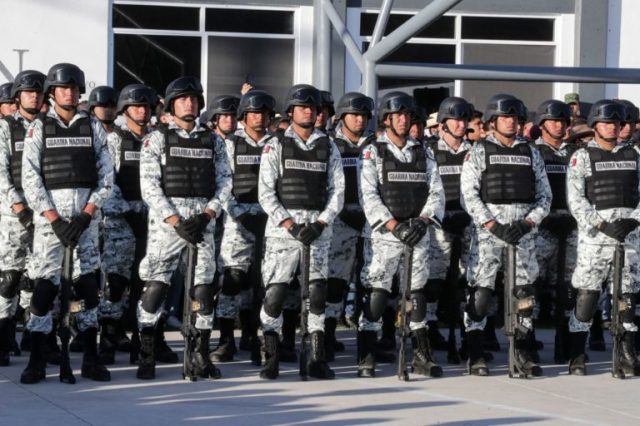
National Guard
Mexico
Mexico’s security architecture has shifted substantially in the last decade. The National Guard was created as a gendarmerie-style force to replace some federal police functions and to fight cartels, but it has increasingly been staffed by military personnel and, in 2024, its chain of command was formalized under military control—raising concerns about militarization of public security. The security landscape remains dominated by cartel violence, numerous federal/local police forces, and significant overlap between military and policing roles.
Operationally the National Guard conducts high-intensity security operations against cartel strongholds, highway protection, and public-order missions; it complements (and sometimes substitutes for) weakened federal policing institutions. Mexico’s federal police legacy, local police fragmentation, and judicial weaknesses complicate successful, sustainable law-enforcement outcomes.
Modernization efforts lean heavily on force posture (numbers, deployments, military equipment), intelligence sharing with the U.S., and legal/political reforms—yet human-rights advocates warn the militarized approach risks impunity. High-profile cartel arrests are frequently offset by rapid reorganizations and resilient criminal networks, making Mexico a difficult environment for classic law-enforcement success metrics.

U.S. Marshals Service (USMS)
United States
The U.S. Marshals Service is the nation’s oldest federal law-enforcement agency (established 1789). Traditionally responsible for judicial security, prisoner transport, witness protection, and fugitive apprehension, the Marshals have a unique, persistent operational role supporting the federal courts and executing high-risk arrests. Its workforce numbers in the several thousands (roughly ~5,500 employees in recent reports), with a large share dedicated to task-oriented tactical and fugitive teams.
Organizationally the Marshals combine a district-based posture (one U.S. Marshal per federal judicial district) with national special operations (fugitive task forces, special-missions units, and a heavy reliance on interagency task forces). The Service’s authorities also allow it to provide protective details when needed, operate the federal witness protection program, and manage detainee transportation and asset forfeiture operations.
Modernization has emphasized intelligence-led fugitive operations, advanced protective technologies, and closer integration with federal prosecutors and local partners. High-impact arrests—of violent fugitives and organized-crime figures—remain its hallmark, while its logistical and protective responsibilities often expand during national crises or when other agencies are re-tasked.
The Five – O Effect
Much like the covert, elite operators dramatized in Hawaii Five-O, real-world Navy SEAL veterans sometimes step into leadership roles that merge specialized tactics, technical capabilities, and jurisdictional power. Take, for instance, Cameron Hamilton, a former Navy SEAL who served as Acting Administrator of FEMA from January to May 2025. He leveraged his military-honed decisiveness and command mindset to resist politically driven organizational changes and push for FEMA’s continued operational integrity. Cameron Hamilton exemplifies how special operations experience translates into public service, resisting political interference while reinforcing operational readiness. His tenure shows how the mindset of special tactics leaders can extend beyond the battlefield to safeguarding entire nations.”

In another real-world echo of the Hawaii Five-O ethos, former Navy SEAL Commander Ryan Zinke transitioned into the role of U.S. Secretary of the Interior in March 2017, marking the first time a SEAL commanded a major Cabinet agency. Drawing on mission-driven discipline cultivated in the teams, Zinke brought an operations-oriented leadership style to overseeing vast federal law enforcement and land-management responsibilities, including coordinated jurisdiction over national parks and natural resources.
From the natural disaster response centers of FEMA under Cameron Hamilton, to the Cabinet-level stewardship of America’s natural resources by Ryan Zinke, Navy SEAL veterans have stepped from the battlefield into the command centers of federal agency power. Each example shows how the SEAL ethos — tactical precision, operational discipline, and the ability to integrate technology with mission focus — translates into data driven law enforcement, security, and governance. Together, they prove that the Hawaii Five-O archetype is no Hollywood screen writer fiction: elite operators have become indispensable public service leaders, reshaping how America defends, governs, and secures itself in the twenty-first century.
Conclusion
Law enforcement today is more than patrol cars and sirens — it is a global enterprise that increasingly mirrors the sophistication of the military. This report has explored how modernization within agencies like CBP Air and Marine Operations, Europol, the FBI, and the DEA has reshaped their reach and impact. Each has adapted to the demands of the twenty-first century by pairing new technologies with organizational reform, producing measurable results in the fight against narcotics, cybercrime, human trafficking, and other transnational threats.

The case studies show that modernization isn’t simply about adding drones, sensors, or encryption tools. Success came when agencies embedded those technologies into integrated processes and cross-border partnerships. CBP expanded aerial surveillance to close smuggling corridors; Europol leveraged digital wiretaps to break encrypted criminal networks; the FBI built cyber task forces capable of dismantling global botnets; and the DEA scaled its fentanyl seizures to record levels by aligning intelligence with interdiction.
Law enforcement agencies that can modernize effectively deliver not just big busts and seizures but also strategic deterrence, projecting state power in ways once reserved for military units.
Sources, Image Credits and Acknowledgements
{1} Disrupt Five-O | Big Busts with High Tech. Image Credit: PWK International. 08 SEP 2025
{2} The Wheel of Algorithmically Boosted Chaos | Source & Image Credit: PWK International. 06 SEP 2025
{3} Bad Guys Behaving Badly | Source & Image Credit: PWK International. 02 JAN 2025
{4} Narcotics Routes used by Latin and South America Drug Cartels. Source and Credit: US CBP Air and Marine.
{5} A police officer and an FBI agent search for a suspect in the Boston Marathon bombings. Photo Credit: Matt Rourke/AP 19 APR 2013
{6} A DEA agent apprehends a drug trafficker in a multi-force raid. Image Credit: Undisclosed.
{7} Special police forces stand guard outside the Council Chamber of Brussels two days after terror attacks. Photo Credit: Kenzo Tribouillard/AFP via Getty Images
{8} Advanced Technology Behind Big Busts. | Info Graphic Source & Image Credit: PWK International. 08 SEP 2025
{9} Hawaii Five-0 was a police procedural drama that aired on CBS from 2010 to 2020, rebooting the 1968 series. Developed by Peter M. Lenkov, the show followed a a fictional small, specialized Hawaii Department of Public Safety major crimes task force headed by former United States Navy SEAL Lieutenant Commander Steve McGarrett. The popular show shared the crime-fighting universe with other elite law enforcers like MacGyver, Magnum P.I. and even NCIS.
Additional Information
About PWK International
PWK International Advisers provides strategic counsel at the intersection of technology, geopolitics, and the business of government. We help companies and public-sector clients translate emerging capabilities into disciplined acquisition strategies, operational roadmaps, and measurable outcomes. Our analysis blends hands-on government experience with a clear focus on evidence, risk, data driven decisions and competitive advantage.
PWK International provides national security consulting and advisory services to clients including Hedge Funds, Financial Analysts, Investment Bankers, Entrepreneurs, Law Firms, Non-profits, Private Corporations, Technology Startups, Foreign Governments, Embassies & Defense Attaché’s, Humanitarian Aid organizations and more.
From cognitive partnerships, cyber security, data visualization and mission systems engineering, we bring insights from our direct experience with the U.S. Government and recommend bold plans that take calculated risks to deliver winning strategies in the national security and intelligence sector. PWK International – Your Mission, Assured.


















 pwkinternational.com