

Boston has long been a crucible of American innovation, but in robotics, the city has carved out an identity that reaches far beyond its academic reputation. What began as experimental projects in the halls of MIT has grown into a thriving ecosystem of companies, labs, and entrepreneurs shaping the way machines interact with the world. From the early visionaries who transformed science fiction concepts into real technologies, to today’s engineers pushing the boundaries of autonomy and artificial intelligence, Boston has emerged as the preeminent robotics hub in the United States.
The story of Boston’s robotics rise is as much about geopolitics as it is about technology. When roadside bombs became the weapon of choice for insurgents in Iraq and Afghanistan, robots designed and built in Boston helped American troops confront that deadly threat. The iRobot PackBot became a symbol of how innovation could save lives, giving soldiers a safer way to detect and disarm improvised explosive devices. Defense applications like these did more than secure contracts—they proved that robotics could move from lab experiments to battlefield necessities.
This report will explore how Boston’s robotics ecosystem developed from MIT’s research labs into a global leader in both commercial and defense robotics. It will trace the origins of companies like iRobot, Boston Dynamics, and Rethink Robotics, while highlighting the role of institutions like MassRobotics in knitting together academia, startups, venture capital, and government.
This report will also examine how Boston’s unique mix of talent, infrastructure, and mission-driven innovation made it fertile ground for breakthroughs that continue to shape the future of robotics. At its heart, this is a story about the convergence of innovation and necessity. Boston’s robots are not just consumer gadgets or research prototypes—they are machines that clear explosives, patrol the seas, and increasingly take on roles once reserved for humans. By understanding the forces that made Boston the epicenter of robotics, we gain a clearer picture of how technology ecosystems form, why they matter for national security, and what the next wave of breakthroughs might mean for the world.
Origins at MIT: From Vision to Venture
Boston’s robotics story begins not in a corporate boardroom but in the academic corridors of MIT. In the 1980s and 1990s, researchers at MIT’s Artificial Intelligence Laboratory (later CSAIL) were building robots that, while rudimentary by today’s standards, pushed the limits of machine autonomy and navigation. Among these innovators were Colin Angle, Helen Greiner, and Rodney Brooks, who saw potential far beyond academic publications. Their vision was simple yet radical: robots could leave the lab and become indispensable tools in homes, businesses, and battlefields.
The trio founded iRobot in 1990, marking a turning point where academic curiosity gave way to commercial ambition. Early creations included a mine-clearing robot and showcased both technical ingenuity and practical utility. These platforms revealed how robotics could solve real-world problems in defense, industry, and domestic life. Importantly, these projects were not just technical experiments—they became the building blocks of a business model where robots had clear, definable value in saving time, resources, and human lives.
MIT’s culture of entrepreneurial experimentation was central to this transformation. The university’s longstanding tradition of blending engineering with startup energy created a pipeline of innovators who could bridge theory with application. Just as Route 128 had fueled the growth of biotech and semiconductors, MIT became the nucleus of a new cluster: robotics. From this seedbed, Boston’s robotics ecosystem would begin to flourish.

MIT Spinoff Liquid AI is a startup that was spun out of MIT's Computer Science and Artificial Intelligence Laboratory (CSAIL) in 2023. The founding team of Liquid AI includes prominent MIT robotics professor Daniela Rus, along with researchers Ramin Hasani, Mathias Lechner, and Alexander Amini. The company is building next-generation AI models known as liquid neural networks, which are designed to be more efficient, capable, and explainable than existing foundation models. At an exclusive MIT event in 2024, Liquid AI unveiled its first products built on these models for use in financial services, biotech, and consumer electronics.
Robots at War: PackBot and the EOD Revolution
The wars in Iraq and Afghanistan exposed a deadly asymmetric vulnerability in modern conflict: improvised explosive devices. These roadside bombs claimed thousands of lives and left countless more wounded, forcing military leaders to seek technological solutions. Enter iRobot’s PackBot, a rugged, remotely operated robot designed in Boston and deployed by the U.S. military to neutralize explosive threats. PackBot’s design was a direct response to battlefield realities—it could crawl over rubble, climb stairs, and approach dangerous devices without risking a soldier’s life.
PackBot was not just another defense gadget; it was a lifeline. By allowing operators to inspect and defuse bombs from a safe distance, it drastically reduced casualties from IEDs. Military units that once relied on human courage alone now had a technological partner that could perform the most dangerous tasks. This practical application of robotics on the battlefield demonstrated a new truth: innovation wasn’t an abstract concept—it was survival. The U.S. military recognized the value quickly, awarding contracts that scaled deployment across theaters of war.
The legacy of PackBot is more than its tactical success. It marked the first time Boston robotics leapt into geopolitics, shifting the way nations think about integrating machines into military operations. By proving that robots could save lives in combat, Boston’s innovators helped redefine military doctrine and set the stage for broader adoption of unmanned systems across defense and security.
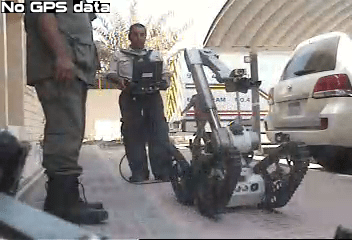
Boston Robots In The Fight
All images are from authors personal collection captured during a two (2) year mission to educate, train and equip US and Allied Military and Security Forces in the CENTCOM AOR.
Lebanese Armed Forces (LAF) Bomb Squad | Beirut Lebanon
A specially designed cradle allows PackBot to dig up and move an artillery round that has been converted into an IED.

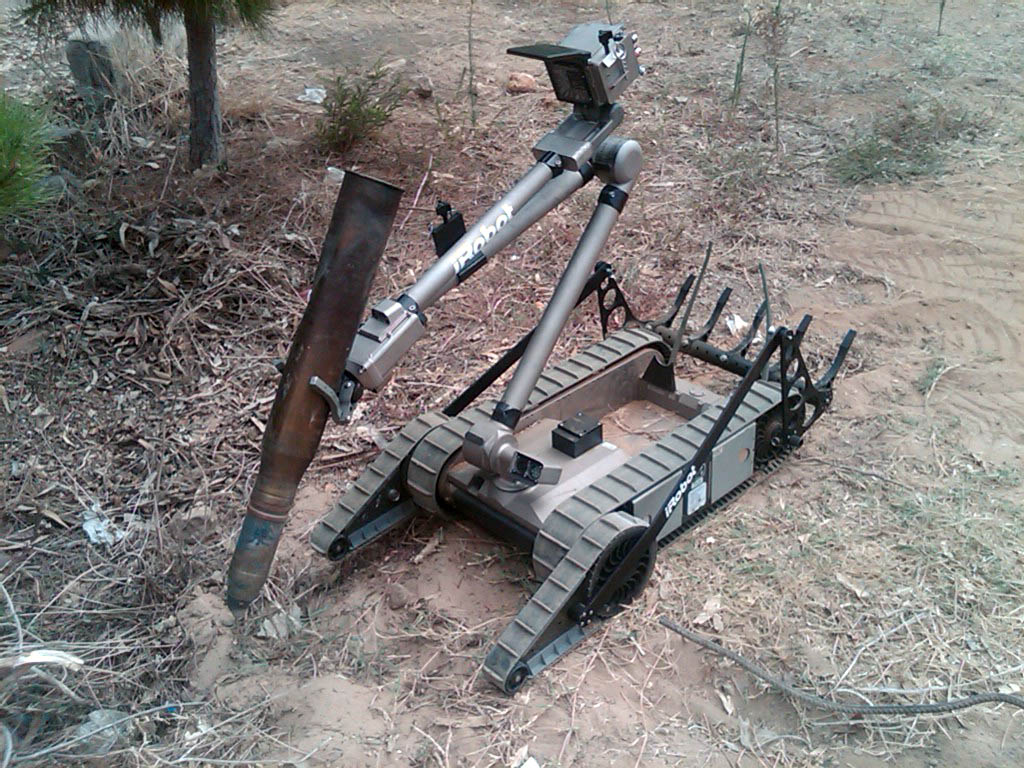
Lebanese Armed Forces (LAF) Bomb Squad | Beirut Lebanon
PackBot uses its dexterous manipulator to safely remove an unexploded Israeli rocket from a farm in the Beqaa Valley.
Jordan 71 Counter Terrorism Battalion | Aman Jordan
PackBot uses an electrically initiated firing mechanism and a C4 charge to blow the latching mechanism off a steel door in a new breaching concept of operation.

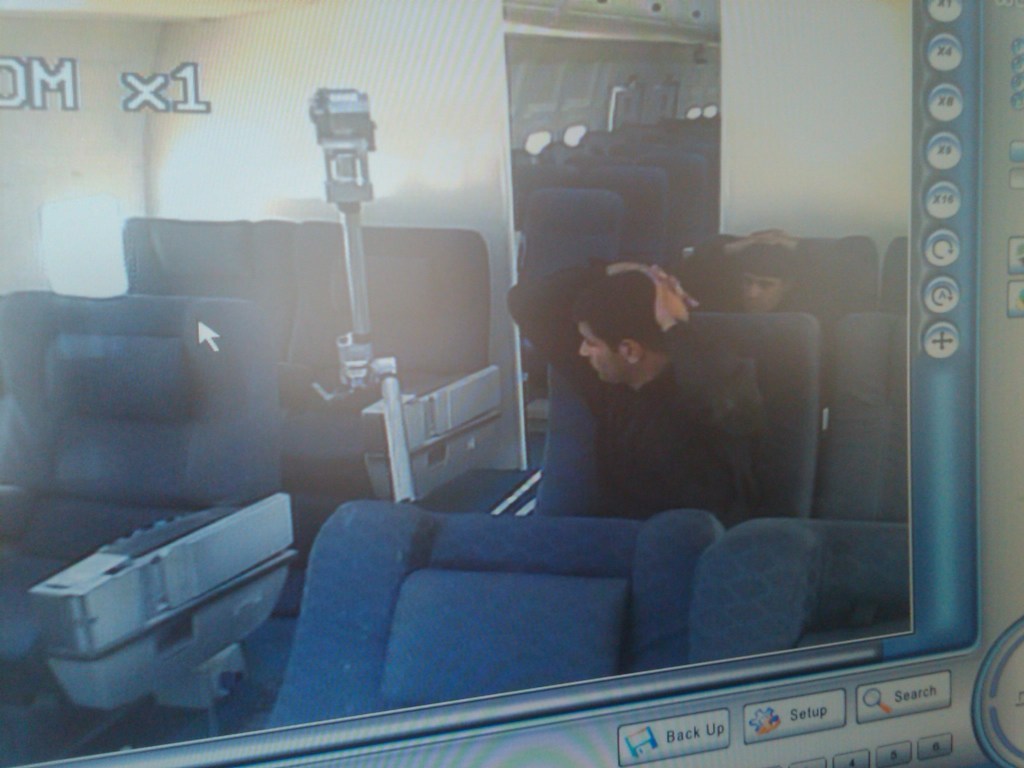
King Abdullah Special Operations Training Center (KASOTC) | Amman Jordan
Radical Islamic airline hijackers place their hands on their heads in surrender as PackBot enters the first class cabin and uses a built in microphone and speaker to relay instructions. Image from CCTV feed.
Kuwait Ministry of Interior Bomb Disposal Unit | Kuwait City Kuwait
A confirmed car bomb is moved into a safe zone by the heavy lift arm and tracked drive motors of the Warrior (Kobra) robot.


Egyptian Airports Authority Bomb Team | Cairo Egypt
Packbot uses a water jet disruptor to render safe a briefcase containing home made explosives (HME).
Kuwait Ministry of Interior Bomb Disposal Unit | Kuwait City Kuwait
A package bomb is rendered safe by a small unmanned ground vehicle (SUGV) fitted with a 20mm water jet disruptor in a first of its kind demonstration.
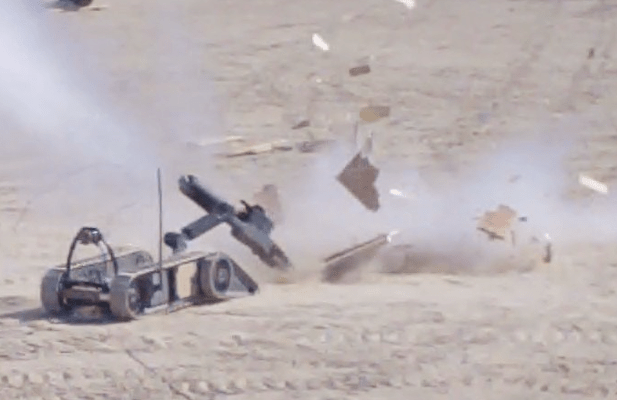
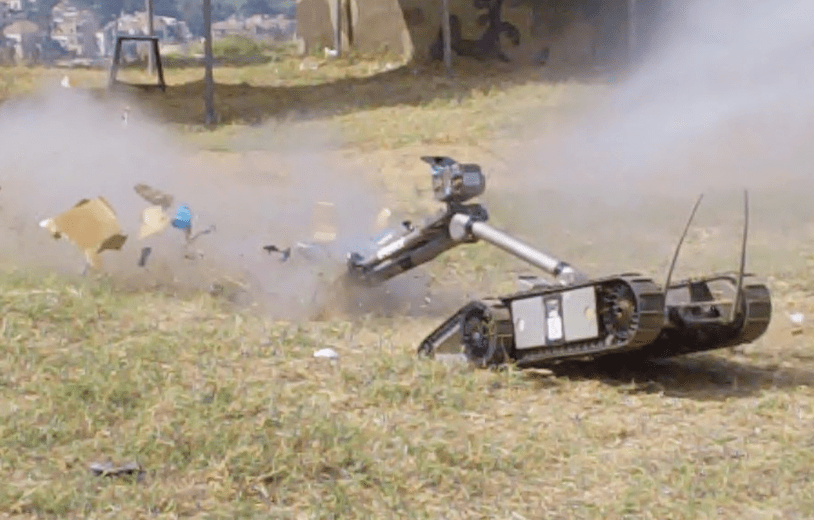
United Arab Emirates Special Forces | Abu Dhabi UAE
PackBot uses a water jet disruptor to precisely target the battery of a package bomb after an X-Ray back plane scanning system was used to safely locate it.
Building the Ecosystem: MassRobotics and Beyond
As Boston’s robotics companies matured, the need for a structured ecosystem became clear. Individual successes like iRobot and Boston Dynamics proved the potential, but the region lacked a unifying infrastructure to connect talent, capital, and industry partners. MassRobotics, founded in 2015, filled this gap. Positioned as a nonprofit innovation hub, it offered shared labs, prototyping facilities, mentorship, and a collaborative environment for entrepreneurs to scale their ideas into viable businesses.
MassRobotics also represented a deliberate effort to formalize what had been an informal network of academics and startups. By creating a physical and institutional hub, Boston secured its status as the world’s leading robotics cluster. Investors, policymakers, and global corporations began to view Boston not just as a city with robotics companies but as the place to find, fund, and partner with robotics innovators. This shift mattered: ecosystems attract talent, and talent accelerates innovation.

Beyond MassRobotics, the region benefitted from state support, venture capital inflows, and the density of universities like MIT, Harvard, and Northeastern. Together, these factors created an innovation pipeline where ideas flowed from classrooms to startups, and from startups to global markets. By the mid-2010s, Boston was no longer a promising robotics region—it had become the center of gravity for robotics worldwide.
The Major Players: Icons of the Boston Cluster
Boston’s robotics leadership is best illustrated by its flagship companies. iRobot, the pioneer of both consumer robots like the Roomba and defense platforms like the PackBot, demonstrated how one company could span domestic convenience and military necessity. Boston Dynamics, with its iconic legged robots such as BigDog, Spot, and Atlas, captured global attention by redefining mobility and balance. Meanwhile, Rethink Robotics brought collaborative robots—or cobots—into the factory, lowering barriers for industrial automation.
The region’s strength lies in its diversity of applications. Bluefin Robotics developed autonomous underwater vehicles, advancing maritime security and oceanographic research. CyPhy Works explored tethered drones with extended flight times for surveillance and defense. Harvest Automation, spun out by iRobot founders, turned its focus to agricultural robotics, showing how the same talent could pivot to entirely new sectors. These varied ventures prove that Boston’s ecosystem is not defined by one niche but by its breadth.
What unites these companies is their ability to move robotics from the theoretical to the practical. Whether in factories, oceans, fields, or battlefields, Boston’s robots are deployed in real-world environments where “tough tech” reliability matters as much as innovation. This diversity ensures resilience: while some companies rise and fall, the ecosystem as a whole thrives, continually feeding new ideas and applications.
When catastrophe strikes, it is often human courage that takes center stage — but in the shadows of some of the world’s greatest disasters, robots have quietly emerged as heroes. From the rubble of the World Trade Center, where rescue robots were deployed for the first time in history to search for survivors, to the depths of the Gulf of Mexico, where robotic submersibles worked tirelessly to contain the Deepwater Horizon oil spill, and into the radioactive heart of Fukushima, where machines ventured where no human could safely go, these mechanical first responders proved their worth in times of unimaginable crisis. Robot Heroics in Times of Crisis explores these stories, reminding us that technology is not just a tool of convenience or conflict — it can be a lifesaving ally when the world needs it most.
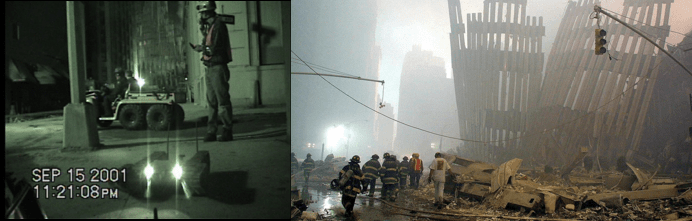
September 2001 World Trade Center Terrorist Attack | PackBot arrived at the WTC disaster site on 15 September 2001 and began using its advanced mobility, lights, cameras and listening sensors to help search for survivors. Government officials took immediate notice and expressed interest in PackBot.

April 2010 Operation Gumbo and the Deepwater Horizon Oil Spill Disaster | The Gulf Underwater Mobile Biochemical Observatory (GUMBO)featured a fleet of Sea Gliders that use fluorescence based detection of crude in a comprehensive Natural Resource Damage Assessment. Rapid deployment of long persistence Seaglider AUV sensing array and data assimilation systems provided near to long term environmental assessment and model impact prediction in the Gulf of Mexico. Chart depicts the moment that the well was capped.
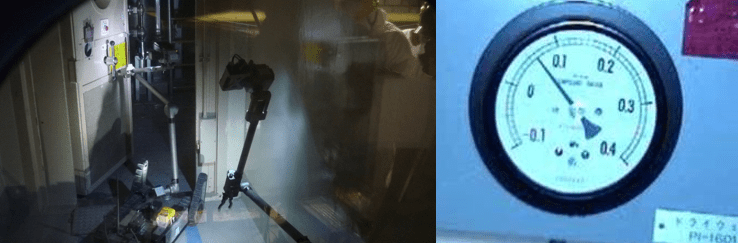
March 2011 Tokyo Electric and Power Company (TEPCO) Fukushima Daichi Nuclear Reactor Disaster | PackBot became the first robot to penetrate the crippled Fukushima Daiichi nuclear reactors in April 2011, remotely navigating into reactor buildings to open doors and gather critical readings on radioactivity, temperature, humidity, and oxygen levels data unobtainable by humans due to lethal radiation exposure. Image depicts the robot reading the analog pressure gauge of the primary containment vessel. (Images by Tokyo Electric and Power Company (TEPCO)).
Government, Policy, and the Business of Defense
Federal government funding has been an indispensable pillar of Boston’s robotics growth. DARPA programs seeded early innovations that companies like Boston Dynamics translated into breakthrough platforms. Defense contracts, particularly during the wars in Iraq and Afghanistan, sustained iRobot and validated the role of robotics in military operations. These partnerships underscored a recurring theme: the U.S. government often acts as both the customer and the catalyst for emerging technologies.
Policy decisions have also shaped the market. Post-9/11 priorities emphasized counterterrorism and asymmetric warfare, directly aligning with the strengths of Boston-based robotics firms. Contracts worth millions flowed into Massachusetts companies, allowing them to scale, refine, and deploy technologies under real-world conditions. The interplay between national security imperatives and local innovation became one of the ecosystem’s defining features.
This government-industry nexus also reveals the double-edged nature of robotics innovation. While defense funding accelerates breakthroughs, it also ties companies to the rhythms of geopolitics and budget cycles. Boston’s robotics ecosystem learned to balance these dependencies, diversifying into consumer and commercial applications while retaining deep ties to defense. That balance has been crucial in ensuring resilience and sustainability.

“Physical AI and humanoid robots will transform our business landscape to the next level. Through our collaboration, we will expedite the process to achieve leadership in the robotics industry.”
Jaehoon Chang, Vice Chair of Hyundai Motor Group
Geopolitics of Robotics: Boston on the World Stage
Boston’s robotics industry does not exist in a vacuum—it operates in a global arena where technological leadership has direct geopolitical consequences. Countries compete fiercely for dominance in robotics and artificial intelligence, viewing them as strategic assets that can tip the balance of economic and military power. In this contest, Boston plays a central role, not only as a hub of innovation but also as a supplier of technology with strategic value.
Robots designed and built in Boston have become instruments of soft power as well as hard defense. When allies adopt American-made robotic platforms, they are effectively aligning themselves with U.S. technological standards and supply chains. Conversely, adversaries take note, often spurring rival investments in autonomy and AI to close the gap. Boston’s robotics ecosystem thus becomes a proxy in the larger struggle over innovation supremacy.
This global dimension amplifies the significance of Boston’s local success. What happens in Kendall Square or at a MassRobotics demo day is not just of interest to venture capitalists—it matters to military planners, foreign governments, and multinational corporations. The Boston robotics ecosystem, in short, is not just a regional story but a strategic one.
Robot Events in Boston
Boston hosts a vibrant calendar of events that showcase innovation, talent, and industry leadership. Flagship gatherings like Robo Boston, which draws thousands of visitors for live demonstrations and career networking, and the Robotics Summit & Expo, which attracts international experts and companies, highlight the city’s role at the cutting edge of commercial robotics. Complementing these are community-driven initiatives such as the Women in Robotics Gala, celebrating diversity and inclusion, and specialized forums like Hub Week Tech Nights, MIT’s Robotics Seminar Series, and Northeastern’s ROBOTICA showcase. Together, these events create a thriving ecosystem where researchers, entrepreneurs, students, and the public converge to explore how robotics is shaping the future.

RoboBoston (Robot Block Party) – MassRobotics’ annual two-day public robotics showcase in Boston features over 100 robot demonstrations, hands-on experiences, school field trips, a career fair, and drew more than 6,500 visitors in 2024
Robotics Summit & Expo – This spring at the Boston Convention & Exhibition Center, the premier commercial robotics conference brought together over 5,000 industry professionals with inspiring keynote presentations and cutting-edge robot showcases


Form & Function Robotics Challenge – Held during the Robotics Summit, this design competition challenges university teams to build robots that balance aesthetic form with functional performance, awarding top performers onsite.
Women in Robotics Gala – MassRobotics’ annual black-tie gala honors outstanding women in robotics with the Robotics Medal ($50K) and Rising Star Award ($5K), with the most recent ceremony held in October 2024 at the MIT Samberg Conference Center.

Human Capital: Education, Talent, and the Workforce
At the core of Boston’s robotics dominance is its unmatched talent pipeline. MIT anchors the region, but the broader academic network—including Harvard, Northeastern, BU, and UMass—ensures a steady flow of engineers, computer scientists, and entrepreneurs. This concentration of intellectual capital creates a virtuous cycle: students learn from world-class faculty, join startups or labs, and then spin out their own ventures.
Talent cultivation extends well beyond higher education. Initiatives like iRobot’s acquisition of Root Robotics highlight how Boston companies invest in K-12 STEM education, introducing coding and robotics concepts at an early age. By engaging students early, Boston ensures that future generations are prepared to sustain its leadership in robotics.


CAPTION: Students from the Lesley Ellis Elementary school in Arlington Massachusetts are treated to a day of robot education and hands on fun. STEM curriculum & photography by David Tashji
The workforce dimension also includes retraining and collaboration with industry. Boston’s robotics firms have pioneered human-robot collaboration, designing machines that enhance—not replace—human labor. This approach not only makes robotics more accessible to industries like manufacturing and logistics but also reduces the social resistance often associated with automation. By investing in people as much as in machines, Boston has built a balanced model of technological growth.
Looking Ahead: The Next Chapter of Boston Robotics
Boston’s robotics ecosystem shows no signs of slowing down. Emerging startups are focusing on autonomous vehicles, warehouse automation, and AI-driven robotics that can adapt to dynamic environments. Meanwhile, advances in machine learning and quantum sensing are expanding the horizons of what robots can perceive and accomplish. The convergence of AI and robotics promises to unlock capabilities that seemed impossible only a decade ago.
Defense remains a central pillar of growth, particularly as great power competition intensifies. The Department of Defense continues to prioritize unmanned systems across domains—land, sea, air, and space—creating ongoing opportunities for Boston-based innovators. At the same time, commercial markets for logistics, healthcare, and home robotics are expanding, ensuring that the ecosystem is not dependent on a single sector.
The future also carries new challenges: global competition from China, ethical debates about autonomy in warfare, and the constant pressure to stay ahead in a fast-moving field. Yet if history is any guide, Boston’s unique combination of academic excellence, entrepreneurial drive, and government partnership positions it well to remain the world’s robotics capital.

Conclusion: Boston as Blueprint
Boston’s robotics journey illustrates how ecosystems are built at the intersection of necessity and vision. From MIT’s labs to iRobot’s PackBots, from Boston Dynamics’ acrobatic machines to MassRobotics’ innovation hub, the region has consistently shown an ability to turn ideas into world-shaping technologies. What began as an academic experiment has become a defining feature of both American industry and military capability.
This report has explored the ecosystem’s origins, its role in national defense, the major players shaping its direction, and the geopolitical implications of its success. The story of Boston robotics is not just a story about machines—it is about people, institutions, and policies that together created a model for innovation. Other regions may try to replicate it, but Boston’s unique mix of talent density, history, and mission-driven innovation is difficult to match.
As we look to the future, Boston offers more than a case study—it offers a blueprint. It shows how regions can harness academic talent, leverage government funding, and foster collaboration to become global leaders in critical technologies. In robotics, as in so many other fields, Boston has set the pace. The world is taking notice.
Acknowledgements and Image Credits
{1} Robots From Boston | Inside the Innovation Ecosystem. Image Credit: PWK International 08/29/2025
{2} Daniela L. Rus is the Andrew and Erna Viterbi Professor of Electrical Engineering and Computer Science and Director of MIT’s renowned Computer Science and Artificial Intelligence Laboratory (CSAIL) where she leads one of the world’s largest and most influential robotics and AI research centers, pioneering breakthroughs in distributed robotics, soft robotics, and autonomy to redefine how machines integrate into human life. Logo and Image Credit: MIT Computer Science and Artificial Intelligence Lab (CSAIL).
{3} Boston Robots in the Fight. Ground robots perform dangerous dirty jobs that help end crisis and save lives. They are used by Security Forces, Police, Fire Fighters, Combat Engineers, Special Forces, VIP Protection, Airport Security, Counter-Narcotics, Disaster Relief and Humanitarian Aide Organizations. I am proud of my team of three (3) engineers and our work to bring these important tools to the CENTCOM AOR Nations of Iraq, Kuwait, Jordan, Lebanon, Saudi Arabia, Afghanistan, United Arab Emirates, Egypt, Oman and deployed US forces in the region.
{4} Our un-biased report makes mention of numerous robot enterprises and their electro-mechanical assembly innovations. All registered trademarks and trade names are the property of the respective owners.
{4a}Massachusetts Institute of Technology (MIT, Cambridge, MA) – A world-leading research university whose pioneering work in artificial intelligence and robotics has seeded countless companies and innovators.
{4b} MIT Computer Science and Artificial Intelligence Laboratory (CSAIL, Cambridge, MA) – One of the most influential robotics and AI labs in the world, known for breakthrough research in autonomy, machine learning, and robot perception.
{4d} Helen Greiner (Cambridge, MA) – MIT graduate and co-founder of iRobot, praised for her visionary role in advancing robotics for defense and commercial use.
{4e} Rodney Brooks (Cambridge, MA) – MIT professor and co-founder of iRobot and Rethink Robotics, celebrated for shaping the field of robotics with groundbreaking research and entrepreneurial leadership.
{4f} iRobot (Bedford, MA) – A pioneering robotics company known globally for creating the Roomba home vacuum and the PackBot military robot, saving lives and transforming households.
{4g} Boston Dynamics (Waltham, MA) – A world-renowned robotics firm famous for advanced legged robots such as Spot, BigDog, and Atlas, pushing the boundaries of mobility and balance.
{4h} Rethink Robotics (Boston, MA) – An innovative company founded by Rodney Brooks, best known for its Baxter and Sawyer collaborative robots that brought automation to small and medium manufacturers.
{4i} MassRobotics (Boston, MA) – A nonprofit innovation hub that unites startups, academia, industry, and investors, providing shared labs and mentorship to grow the Boston robotics ecosystem.
{4j} Bluefin Robotics (Quincy, MA) – A leader in autonomous underwater vehicles, enhancing maritime security, exploration, and oceanographic research.
{4k} CyPhy Works (Danvers, MA) – A drone company founded by Helen Greiner, recognized for its tethered UAVs that enable long-duration surveillance and defense missions.
{4l} Harvest Automation (Billerica, MA) – A robotics company spun out of iRobot founders, known for developing agricultural robots that automate labor-intensive tasks in nurseries and greenhouses.
{4m} Root Robotics (Cambridge, MA; acquired by iRobot) – An education-focused robotics company dedicated to introducing children to coding and robotics through playful, interactive robots.
{4n} Defense Advanced Research Projects Agency (DARPA, Arlington, VA) – A U.S. government agency that funds high-risk, high-reward projects, instrumental in advancing Boston’s robotics breakthroughs.
{4o} Tokyo Electric Power Company (TEPCO, Tokyo, Japan) – Japan’s largest electric utility, recognized for deploying iRobot PackBots inside the damaged Fukushima Daiichi reactors to gather critical safety data.
{4p}{Below} Samuel Adams was a radical American revolutionary who helped organize colonial resistance to British rule through writings and protests. As a leader of the Sons of Liberty, he played a central role in key events like the Boston Tea Party. Adams was also a delegate to the Continental Congress, a signer of the Declaration of Independence, and later served as the governor of Massachusetts. Sam Adams (beer) is the flagship brew of the Boston Beer Company—born in Cambridge, MA—with its rich amber Boston Lager known as a craft-beer icon. “Your Cousin from Boston” is the delightfully abrasive yet lovable character in the Sam Adams ad campaign, whose thick Boston accent and social missteps capture all the charm—and comic edge—of your real cousin from Boston. All registered trademarks and trade names are the property of their respective owners. Source and Credit: Boston Beer Company, 1 Design Center Place, Suite 850, Boston, MA 02210. Samuel Adams Brewery 30 Germania Street, Jamaica Plain, Boston, MA 02130
About PWK International
PWK International Advisers is a technology consulting firm at the intersection of innovation, geopolitics, and government strategy. With direct experience inside U.S. government programs and the defense-industrial landscape, we help technology companies, investors, and decision-makers navigate the complexity of federal procurement, emerging technology adoption, and strategic growth opportunities. Our work blends sharp analysis with practical roadmaps—whether guiding startups through acquisition reform, advising established firms on competitive positioning, or translating breakthrough research into programs of record.
PWK International provides national security consulting and advisory services to clients including Hedge Funds, Financial Analysts, Investment Bankers, Entrepreneurs, Law Firms, Non-profits, Private Corporations, Technology Startups, Foreign Governments, Embassies & Defense Attaché’s, Humanitarian Aid organizations and more.
Services include telephone consultations, analytics & requirements, technology architectures, acquisition strategies, best practice blue prints and roadmaps, expert witness support, and more.
From cognitive partnerships, cyber security, data visualization and mission systems engineering, we bring insights from our direct experience with the U.S. Government and recommend bold plans that take calculated risks to deliver winning strategies in the national security and intelligence sector. PWK International – Your Mission, Assured.

















 pwkinternational.com
Pingback: China in New England |